Senegal’s 2026 budget revision: how the 555 billion FCFA investment cut will hit households, jobs and local businesses
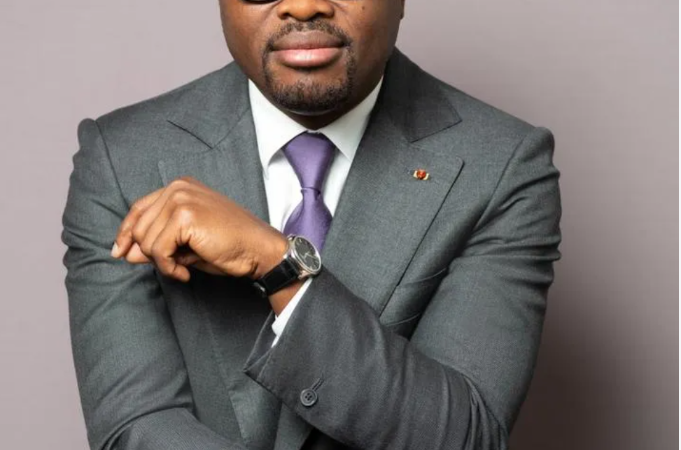
The revised 2026 finance bill sent to Senegal’s National Assembly on 18 September 2026 is not just a technical adjustment in Dakar’s budget books — it is a decision with immediate consequences for households, workers and businesses across the country. Growth projections have been cut from 5% to 2.7%, exposing the gap between earlier ambitions and the reality of resource mobilisation. With revenues falling short by 451.4 billion FCFA, the government has chosen to preserve day-to-day operations by slashing 555 billion FCFA from investment spending. In a column signed by Lansana Gagny Sakho, president of the Circle of Public Administrators and chairman of the board of APIX-SA, the verdict is blunt: a country cannot sustainably redistribute wealth it does not produce.
What the revised budget means for ordinary Senegalese
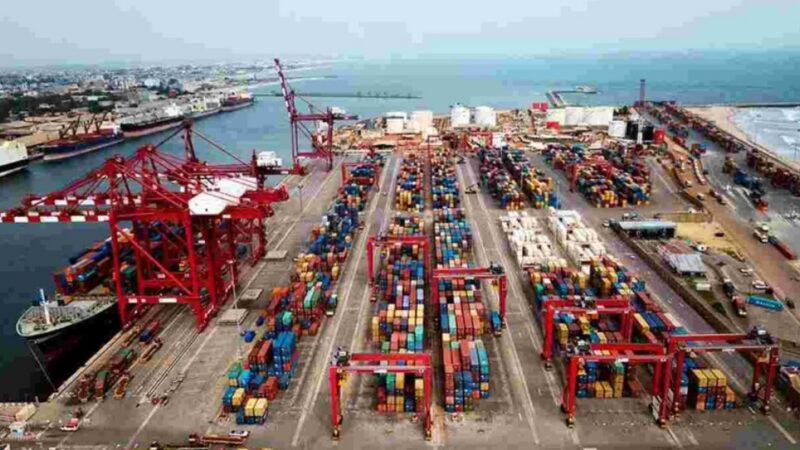
For families and small businesses, the effects of the 2026 budget revision are already becoming tangible. When the state postpones infrastructure projects, orders slow down for construction firms, suppliers and transporters. Delayed public works translate into fewer contracts for local companies, reduced demand for materials, and less hiring in sectors that depend on government spending. The 555 billion FCFA cut is not an abstract figure — it represents roads not built, equipment not purchased, and sites not opened, all of which would have generated income and jobs in local communities.
The shortfall of 451.4 billion FCFA in tax and non-tax revenues leaves the government with little room to manoeuvre. By prioritising operating expenses over capital accumulation, the executive is effectively trading short-term stability for long-term growth. That trade-off carries a direct cost for citizens who expected public investment to improve transport, energy, health and education infrastructure. The gap between the promised 5% growth and the revised 2.7% is a signal that the productive base is not keeping pace with public commitments.
Why public investment is the first casualty — and why it matters
Cutting investment is the easiest budget adjustment on paper, but the most damaging in practice. Infrastructure, equipment and flagship projects are precisely what determine future competitiveness and attractiveness. Postponing them delays the modernisation of the economy and weakens Senegal’s ability to attract private capital. In a context where African sovereign issuances are closely watched by markets, the credibility of Senegal’s macroeconomic framework becomes an asset that must be protected.
The deeper issue goes beyond this single revised finance law. It concerns the state’s capacity to align current spending with actual revenues, to streamline the public sector, and to redirect budgetary effort towards production. Without such an exercise, each fiscal year risks repeating the same pattern: optimistic forecasts, disappointing execution, and investment sacrificed to preserve operating budgets. The 2026 revision offers a textbook case of the limits of a model that distributes before it produces.
The political and economic stakes behind the adjustment
Lansana Gagny Sakho’s description of a poor country paying itself the privileges of a rich one captures a recurring criticism of Senegalese public spending. Salaries, benefits in kind, the lifestyle of the administration and the size of public agencies all feature in this diagnosis. The 2026 revised budget exposes the tension between these habits and a productive base that struggles to generate matching revenues. For a senior executive of APIX, the agency responsible for promoting investment and major works, the observation carries particular weight.
The current sequence questions the sustainability of Senegal’s model as it has been built, with a public sector sized for anticipated revenues that do not materialise as expected. Repeated recourse to borrowing and last-minute adjustments exposes Dakar to a gradual loss of room for manoeuvre with its financial partners. The parliamentary debate around the 2026 revised budget is already shaping up as a major political test for the executive.
The adjustment window remains open, however. The guidance given to the initial 2027 finance law — particularly on controlling the wage bill, rationalising agencies and relaunching targeted productive investment — will show whether Dakar intends to break with this dynamic.