Mali jihadists launch deadly attack on Ségou military base
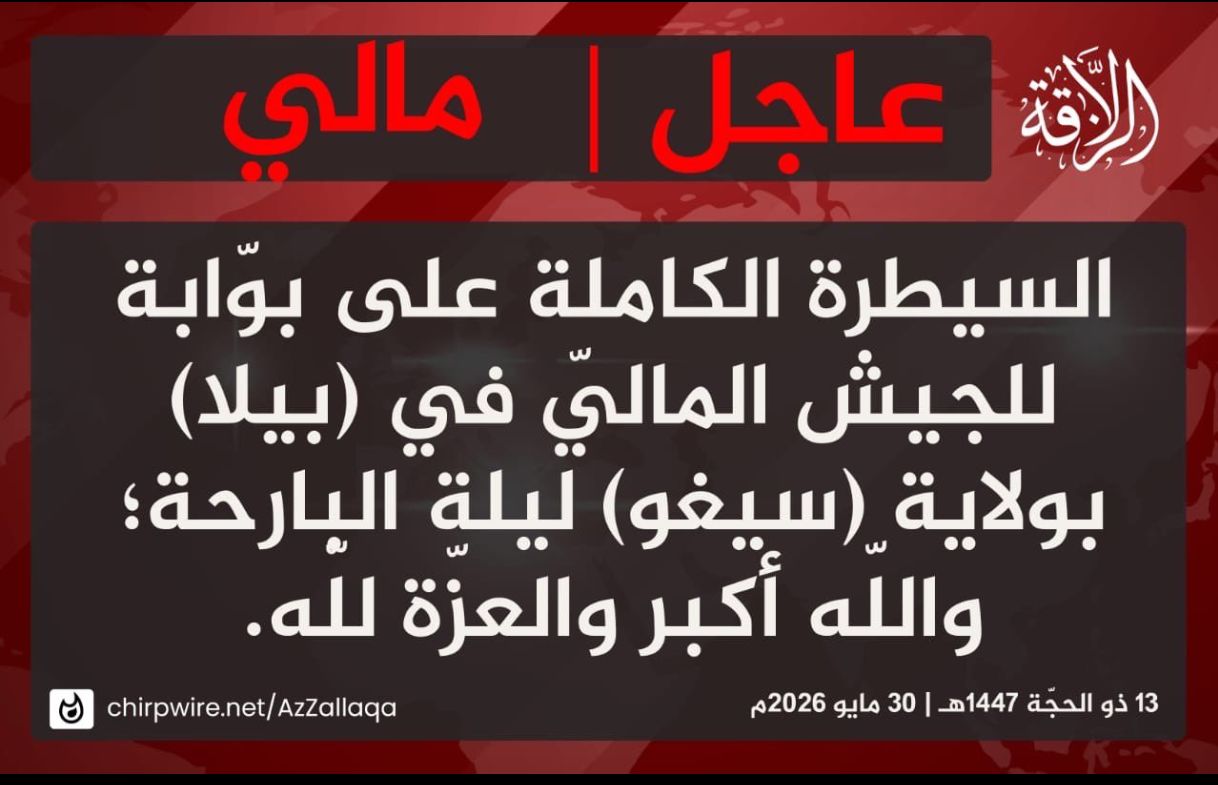
In the early hours of May 30, the Group for the Support of Islam and Muslims (JNIM), an al-Qaeda-affiliated jihadist coalition, announced it had overrun a Malian military outpost in the Ségou region. The assault, which unfolded under cover of darkness, left behind a trail of destroyed equipment and confirmed casualties, underscoring the Bamako junta’s mounting struggle to assert control over the embattled nation.
Ségou under siege: a coordinated jihadist offensive
The attack began the previous night and lasted until dawn, with JNIM fighters executing a meticulously planned operation against a strategic position held by the Malian Armed Forces (FAMa). In a statement released through its propaganda channels, the group claimed not only to have seized the base temporarily but also to have seized a significant cache of weapons and ammunition.
While local sources corroborate the intensity of the fighting, authorities in Bamako have yet to provide a transparent, independent assessment of the damage. The incident serves as another stark reminder that armed groups in central Mali retain formidable operational capacity, capable of striking even in areas heavily fortified and patrolled.
Security strategy in tatters: why the Russian partnership has failed
The military junta that seized power in Mali had pledged a full-scale recovery of national territory, pivoting away from Western partners and embracing a new alliance with Russian military advisors and contractors. Yet the outcome has fallen far short of expectations. The Ségou attack lays bare the shortcomings of this approach, which relies heavily on aerial displays of force and large-scale sweep operations.
Such tactics have proven ineffective against the mobile, asymmetric warfare favored by the JNIM. Rather than diminishing the threat, insecurity continues to spread, eroding public confidence in the transitional government’s ability to govern or protect its citizens.
From insecurity to starvation: how conflict fuels famine
The breakdown in security has triggered a chain reaction of humanitarian crises. The Ségou region, once a vital agricultural hub thanks to its proximity to the Niger River, now faces a deliberate blockade orchestrated by jihadist forces. Farmers are unable to till their fields, livestock markets have been looted, and improvised explosive devices have severed key trade routes.
The result is a deliberate weaponization of hunger. With local food production halted and supply lines cut, families across central Mali are sliding into acute food insecurity. The crisis is further compounded by the absence of meaningful state intervention or coordinated humanitarian response, leaving communities to fend for themselves.
Displaced and abandoned: the human cost of war
As violence intensifies and food shortages deepen, civilians are fleeing their homes in record numbers. Entire villages in the Ségou region have been emptied, as families seek refuge in urban centers they hope will offer safety—or at least survival. The displaced now crowd into overcrowded, under-resourced camps, where access to clean water, sanitation, and medical care is scarce.
Women and children bear the heaviest burden. With state resources diverted to military operations, social services have collapsed, and local NGOs are overwhelmed. The humanitarian system, stretched to its limits, struggles to provide even the most basic support to those most in need.
The JNIM’s brazen assault on the Ségou military base on May 29–30 is more than a tactical victory—it is a damning indictment of the junta’s governance. By prioritizing a purely military solution and clinging to an unproven partnership with foreign forces, the government has neglected the needs of its people. Without urgent action to restore civilian safety, rebuild public services, and address the growing hunger crisis, Mali risks irreversible social collapse.