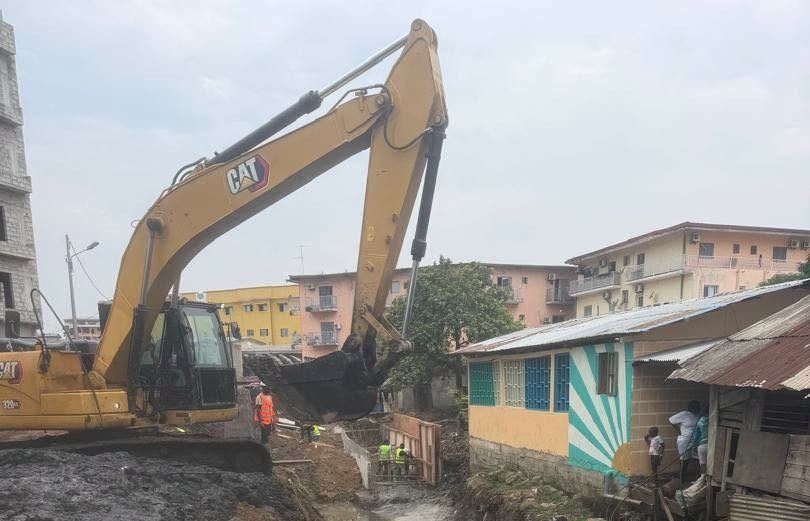
Libreville, June 25, 2026 — A major milestone in Gabon’s capital transformation awaits tomorrow. The first demolition operations will commence in the strategic Baie des Cochons area, located in Libreville’s third arrondissement, marking the beginning of an ambitious urban modernization drive.
More than just roadworks, this project represents one of the cornerstone initiatives under President Brice Clotaire Oligui Nguema’s urban development agenda. The overarching goal is to reshape traffic patterns, improve sanitation, and enhance territorial integration across several districts in the capital.
The initiative targets key locations including Sipagel, the Léon Mba intersection, and the corridor extending from the Gabon Energy and Water Company facilities to the Petit-Paris roundabout. While these works promise to alleviate chronic congestion, they also spotlight a pressing challenge facing African metropolises: how can cities modernize without displacing long-term residents?
Unlocking a capital in transition
The Baie des Cochons sits at a critical crossroads in Libreville’s urban layout. Sandwiched between the bustling Mont-Bouët market, the city center, Bessieux Boulevard, and surrounding neighborhoods, this zone has long been a bottleneck for both people and commerce.
Government plans call for a new main artery flanked by secondary roads to streamline movement and strengthen links between the Libreville University Teaching Hospital, Petit-Paris, the Léon Mba junction, and adjacent areas.
On June 23, Housing, Urban Planning, and Land Affairs Minister Mays Mouissi visited the site to outline the project’s objectives to residents. Authorities insist that clearing public land is a prerequisite before construction can begin in earnest.
Beyond traffic relief, the project aims to tackle another persistent issue plaguing local communities: flooding. Plans include dredging existing gutters, restoring degraded drainage systems, and installing new rainwater runoff channels.
In the government’s view, these efforts address two urgent urban priorities simultaneously: mobility and sanitation.
The human side of urban transformation
Large-scale development projects inevitably bring both promise and disruption. Many families have lived and worked in the targeted zone for years, relying on its commercial viability for their livelihoods. The impending demolitions have understandably sparked questions, concerns, and cautious optimism among residents.
Recent urban renewal efforts across Africa underscore a critical lesson: the success of a project hinges not only on the quality of its infrastructure but also on how humanely authorities manage the transition. Fair compensation, resettlement support, protection of local businesses, and robust social safeguards are just as vital as the construction itself.
The ministry has emphasized its commitment to dialogue with affected communities ahead of the works. The coming weeks will reveal whether these consultations translate into smooth, equitable implementation.
A defining moment for urban progress
The Baie des Cochons has become emblematic of a broader reality: Libreville can no longer expand using outdated models. Runaway population growth, rapid urbanization, and environmental strains demand modern infrastructure that keeps pace with demand. Chronic traffic jams, emergency response delays, sanitation failures, and neighborhood isolation now threaten the city’s economic vitality.
This project is the government’s answer to these challenges. Yet it is also a political litmus test—one that will gauge the state’s ability to push forward ambitious reforms without fracturing social cohesion. After all, a modern city is built on more than concrete and steel; it thrives on the trust and participation of its people.
As excavators prepare to break ground, all eyes are on Libreville. The true measure of this transformation will not be the length of new roads, but the tangible improvements in daily life for those who call this vibrant capital home.