Kinshasa leverages international reports to intensify legal and economic pressure on Kigali and M23
The government of the République démocratique du Congo is preparing to escalate its judicial and economic offensive following the release of damning reports concerning the security and humanitarian crisis in the eastern provinces. These documents, highlighting the exploitation of natural resources in territories held by the AFC/M23 rebellion, are being integrated into the nation’s broader strategy against foreign aggression.
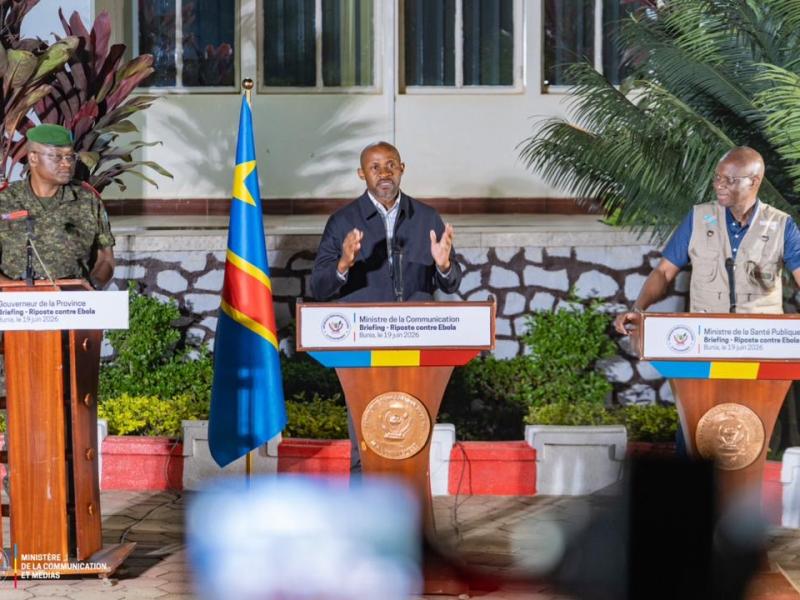
During a recent briefing, government spokesperson Patrick Muyaya explained that these findings did not come as a shock to the authorities. Instead, they serve as vital evidence for the RDC as it pursues accountability on multiple fronts. The Ministry of Justice is expected to launch new legal proceedings shortly, building on the data provided by international observers.
A dual strategy: Judicial and economic fronts
The strategy deployed by Kinshasa focuses heavily on dismantling the financial networks that sustain the conflict. According to the government, it is no longer enough to identify those extracting minerals at the source; the entire global supply chain must be scrutinized. This approach aims to expose the “war economy” that benefits Rwanda, which the RDC accuses of driving instability to profit from illicit mineral trade.
Efforts to address these commercial circuits have already involved high-level discussions in Genève, where the Prime Minister met with various international traders. The goal is to ensure that strategic minerals from conflict zones do not reach global markets through illegal channels, thereby cutting off the funding for the AFC/M23.
Addressing the forced recruitment of children
Beyond economic concerns, the government is highlighting the grave human rights violations documented in recent investigations, specifically the forced recruitment of minors. Reports indicate that the AFC/M23, lacking local support in the areas they occupy, have resorted to coercion and violence to fill their ranks.
Authorities in Kinshasa have noted that parents in occupied territories often fear sending their children to school due to the risk of abduction. These actions are classified as serious war crimes. The government intends to use this documented evidence to strengthen cases already submitted to both national and international judicial mechanisms.
International pressure and sanctions
The RDC views recent international actions, such as the sanctions imposed by the United States against high-ranking members of the Rwandan military, as a validation of its position. These sanctions target individuals allegedly involved in the illicit mineral trade and the destabilization of the Nord-Kivu and Sud-Kivu regions.
While the AFC/M23 continues to hold significant territory in the east, the government remains committed to a multi-faceted response. By combining on-the-ground intelligence with international reporting, Kinshasa aims to restore its sovereignty and hold those responsible for the ongoing violence accountable. Despite denials from Kigali regarding their involvement, the RDC continues to frame the conflict as a calculated economic war designed to plunder the nation’s mineral wealth.