How algers political elite weaponizes hatred against Morocco
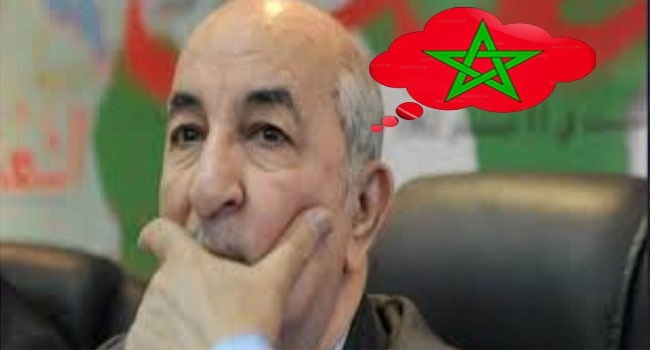
The Algerian political landscape has recently witnessed an alarming escalation in anti-Moroccan rhetoric, transforming what was once latent tension into an orchestrated campaign of hostility. Critics argue that this shift stems from the current administration’s unrelenting fixation on its western neighbor, a fixation that has morphed into a systematic strategy under President Abdelmadjid Tebboune’s leadership.
During the tenure of former President Abdelaziz Bouteflika, relations with Morocco remained strained but never reached the current level of outright hostility. Bouteflika’s approach was one of calculated restraint, a stark contrast to the vocal and aggressive stance adopted by his successor. While Bouteflika harbored resentment in private, Tebboune has made no secret of his disdain, openly stoking a climate of animosity.
Some observers attribute the surge in anti-Moroccan sentiment to the amplification effect of social media. Yet this explanation overlooks a critical factor: the launch of AL24 News, a state-backed television channel whose programming appears singularly dedicated to amplifying praise for Tebboune while unleashing torrents of vitriol against Morocco. Viewers tuning in to its broadcasts—whether live or via online platforms—cannot help but notice the gleeful malice with which certain presenters and commentators attack the Kingdom, each vying to deliver the most cutting insult or inflammatory soundbite, no matter how baseless.
The depths of this propaganda campaign are staggering. Official Algerian media outlets have resorted to absurd measures, such as omitting Morocco’s name from sports broadcasts to avoid what they term “glorifying the enemy.” This bizarre practice was on full display during the Qatar World Cup, when Morocco’s unprecedented run to the semifinals was met with conspicuous silence by Algerian broadcasters. Now, as anticipation builds for the 2026 tournament, the same pattern is repeating, with Moroccan achievements rendered unspeakable.
One commentator recently crossed into outright delusion, claiming Lionel Messi—who scored three goals against Algeria—was manipulated by “the Jewish lobby” as retribution for Algeria’s “support for the Western Sahara and Palestinian cause.”
The absurdity of this rhetoric defies reason. How can a nation pride itself on silencing the name of another simply to erase its sporting triumphs? The answer lies in the regime’s deliberate cultivation of division, a tactic that has now spiraled into a state-sponsored campaign of hatred.
Worse still, this propaganda has given voice to dangerous conspiracy theories, including blatant antisemitic tropes. The same television channels that claim to represent national pride have platformed individuals who peddle baseless accusations, portraying Morocco’s successes as part of a sinister plot orchestrated by global forces. These remarks, translated and circulated widely, have drawn international concern, painting Algeria as not just a purveyor of regional discord but as an enabler of institutionalized bigotry.
Under Tebboune’s leadership, the Algerian government has systematically redirected its resources and influence toward nurturing a culture of confrontation. This strategy has seeped into every facet of governance, poisoning relations not only with Morocco but with the broader Arab, Mediterranean, and African spheres. Since Tebboune assumed office, Algeria’s foreign policy has increasingly mirrored this confrontational ethos, leaving little room for diplomacy or reconciliation.
What emerges is a disturbing reality: hatred toward Morocco has become a lucrative political commodity in Algeria. Ascending the political ladder or securing influential positions now appears to hinge less on competence or vision and more on demonstrating an unwavering, even fanatical, opposition to Morocco. In some circles, this hatred is no longer a byproduct of policy—it is the policy itself, a prerequisite for power.