Touaregs and arab malians pushing for northern independence
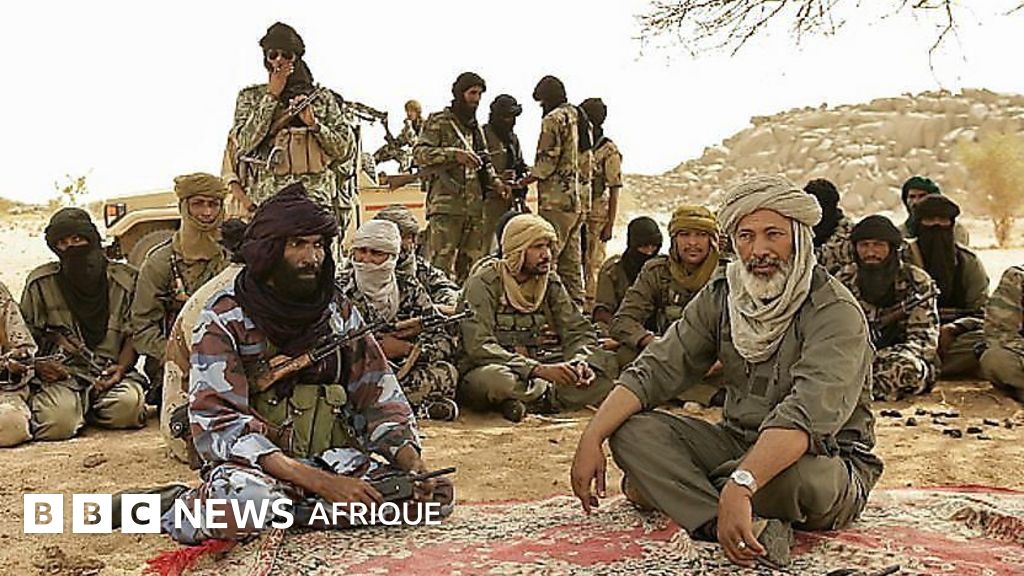
Touareg and Arab communities in Mali seek northern autonomy
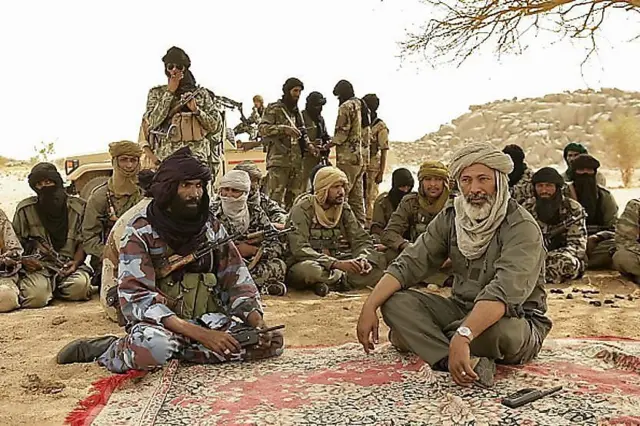
The Front de Libération de l’Azawad (FLA), a separatist alliance, has joined forces with the Jamaat Nusrat ul-Islam wal Muslimeen (JNIM)—an Al-Qaeda-linked group—to launch a fresh military campaign this weekend. Their goal: reclaim control over northern and central Mali, currently held by government forces.
This renewed offensive follows two months after the FLA and JNIM executed coordinated strikes across Mali on April 25, targeting strategic locations in the north, center, and even reaching the outskirts of Bamako. The assaults shook the Malian government after gunfire echoed through Kati, a stronghold of military power, and claimed the life of Defense Minister Sadio Camara while critically injuring intelligence chief Modibo Koné.
Prior to these attacks, the FLA had seized Kidal in 2023—a city symbolizing military success for Malian troops and Russian-backed Africa Corps forces. The rebels had briefly held the city before Malian forces reclaimed it in a swift counteroffensive.
In response, Malian authorities announced a $12.4 million bounty on April 4 for information leading to the capture or elimination of FLA and JNIM leaders. Meanwhile, military operations in the north have intensified, with significant investments in new equipment and troop deployments to counter further threats.
Who makes up the FLA?
The Forces de Libération de l’Azawad (FLA) emerged on November 30, 2024, in Tinzaouatene—a border town in northern Mali near Algeria—following the merger of several separatist factions. These included the Mouvement National de Libération de l’Azawad (MNLA), the Haut Conseil pour l’Unité de l’Azawad (HCUA), rebel factions of the Mouvement Arabe de l’Azawad (MAA), and the Groupe d’Autodéfense Touareg Imghadien et Alliés (GATIA).
The MNLA had previously declared the Azawad independent in 2012, a region encompassing Gao, Tombouctou, Kidal, and Ménaka. The FLA represents the latest evolution of this separatist movement, building on earlier coalitions like the Cadre Stratégique Permanent pour la Paix, la Sécurité et le Développement (CSP-PDA).
The FLA is led by Bilal Ag Acherif, born in Kidal in 1977, who serves as its president. His deputy, Alghabass Ag Intalla, commands military operations and oversees relations with the JNIM. Intalla hails from a prominent Ifoghas clan family; his late father, Intallah Ag Attaher, was a traditional leader until his death in 2014. The group’s spokesperson is Mohamed Ramadane.
What are the FLA’s goals?
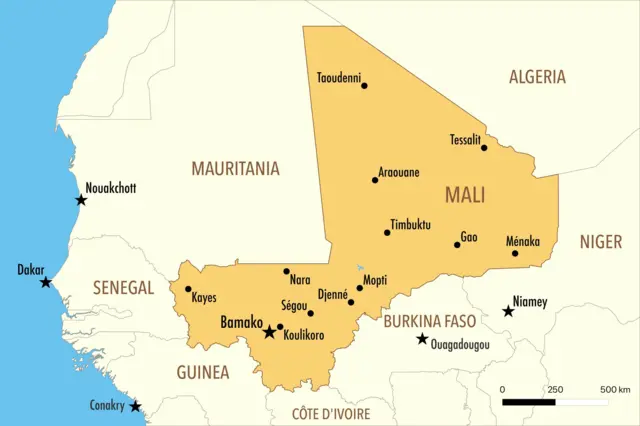
Tensions between Mali’s Arab and Tuareg communities and the central government date back to independence in 1960, sparking armed rebellions in 1962, the 1990s, and 2012. The FLA’s primary objective is the creation of an independent Azawad Republic, envisioned as a homeland for approximately two million Tuareg dispersed across West and North Africa due to colonial-era divisions.
The movement accuses Bamako of systemic political, economic, and cultural marginalization. Despite the north’s vast mineral wealth—including salt, uranium, gold, diamonds, and phosphates—local infrastructure remains severely neglected. Schools, hospitals, water systems, and roads are conspicuously underdeveloped.
Acherif has framed the push for independence as a restoration of historical justice, stating that the Azawad was “annexed to Mali without regard for its centuries-long independent civilization.”
The Malian government has accused neighboring Algeria and Mauritania of supporting the FLA, though Algiers mediated the 2015 Algiers Accords—an agreement Bamako abandoned in January 2024. Ukraine, Mauritania, and France have also been cited as potential backers, though no definitive evidence has been presented.
The FLA’s military footprint spans from the Mauritanian to the Algerian border, with key bases near Kidal and Tinzaouatene. While drone attacks dominated their 2024-2025 operations, the group frequently showcases images of armed fighters mounted on pickup trucks traversing the desert landscape.
Shifting alliances: FLA and JNIM’s evolving partnership
The JNIM’s leader, Iyad Ag Ghali, was once a leading figure in Tuareg rebellions before shifting allegiance to radical Islamist groups in the late 1990s. Formal cooperation between the FLA and JNIM began taking shape in mid-2024.
By May 2024, Alghabass Ag Intalla reportedly initiated talks between the CSP-PDA and the JNIM, leading to an unwritten non-aggression pact. In July, the CSP-PDA—with JNIM support—launched an attack in Tinzaouatene that killed dozens of Malian soldiers and Russian Wagner mercenaries.
However, tensions arose when the JNIM criticized the FLA for failing to acknowledge their contributions. By March 2025, both groups agreed to coordinate military efforts against Malian and Russian forces following negotiations. Their alliance was publicly acknowledged after the April 25 attacks.
The FLA framed the partnership as a “strategic convergence” to overthrow the military government, while the JNIM justified the collaboration by citing shared regional enemies. Acherif acknowledged ideological differences but emphasized pragmatic local solutions, stating, “We face the same adversary, even if our visions diverge.”
The durability of this alliance remains uncertain, given the stark contrasts in their ultimate goals and ideological foundations.