Two years of AES: sovereignty rhetoric vs. ground realities in Burkina Faso, Mali and Niger
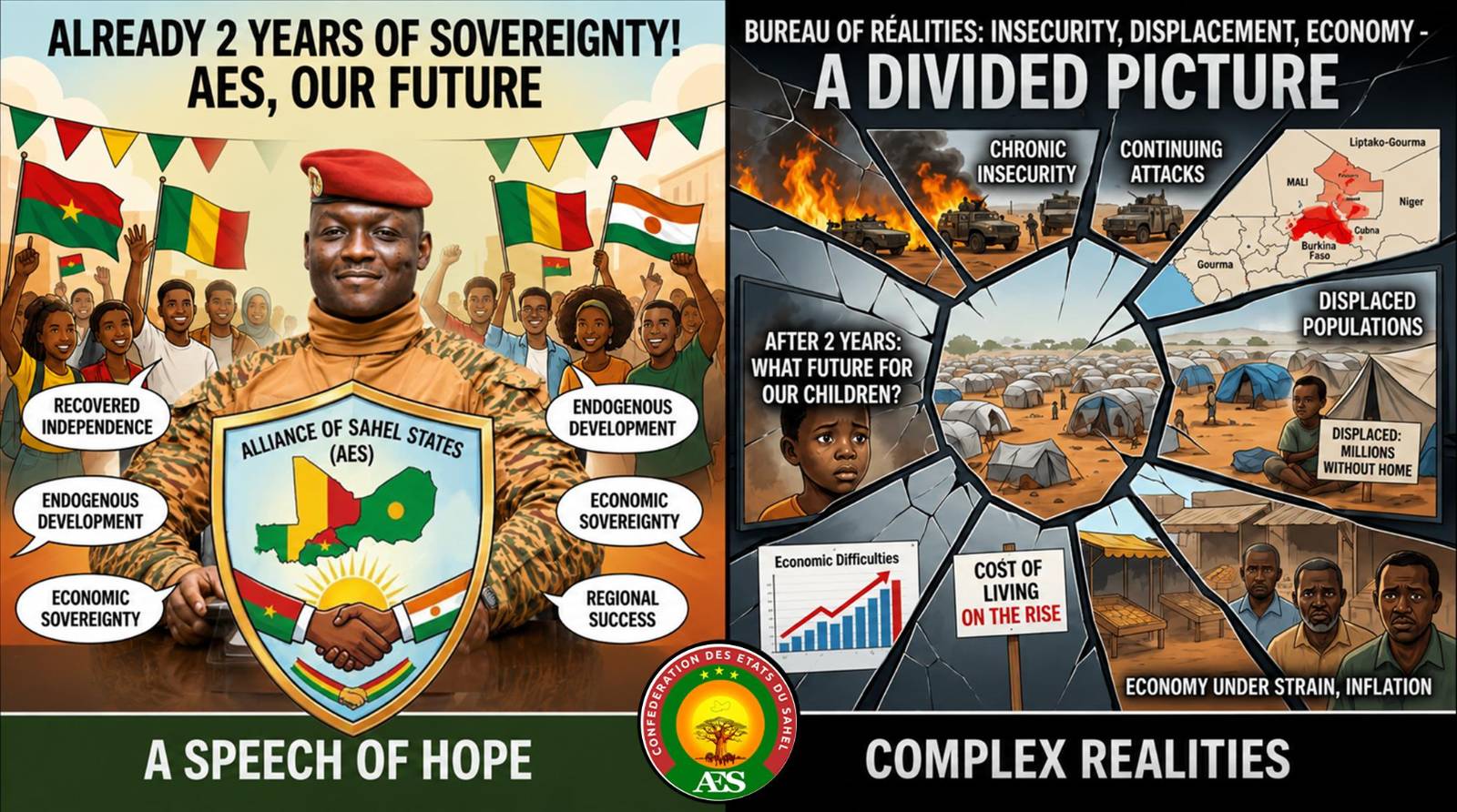
Two years after the formation of the Confederation of Sahel States (AES) by Burkina Faso, Mali, and Niger, Captain Ibrahim Traoré and other leaders frame the alliance as a strategic triumph rooted in sovereignty, mutual solidarity, and enhanced regional cooperation. This narrative resonates with a significant segment of public opinion, yet it struggles to gain universal acceptance among those demanding tangible progress.
The AES leadership asserts that the Confederation has achieved noteworthy advancements across diplomatic, military, and institutional fronts. However, on the ground, the fundamental challenges that prompted the alliance’s inception remain largely unresolved.
The emphasis on sovereignty has emerged as a defining political theme for AES authorities. Yet sovereignty extends beyond mere dissociation from traditional partners or a reshuffling of international alliances. It is fundamentally measured by a state’s ability to safeguard its citizens, ensure institutional functionality, protect economic stability, and create opportunities for its youth.
Despite repeated claims of military success, armed groups continue to operate across multiple regions in all three countries. Civilian populations remain under constant threat of violence, displacement persists, and humanitarian crises endure as daily realities. These conditions underscore the persistent gap between declared achievements and lived experiences.
Economically, the anticipated benefits of regional integration have yet to materialize in any visible form. Trade flows remain constrained, fiscal constraints persist, and purchasing power continues to decline for many households. Critics argue that the projected advantages of the Confederation remain largely aspirational rather than realized.
The growing rhetoric around political independence does not, in itself, address the core expectations of the people. Citizens assess their leaders primarily on tangible improvements in quality of life—security, access to healthcare, education, employment, and infrastructure development. These are the true benchmarks of effective governance.
Moreover, the intense focus on sovereignty occasionally overshadows critical governance issues such as transparency, accountability, and institutional robustness. A regional union cannot earn the enduring trust of its people without establishing strong institutions, implementing effective public policies, and demonstrating responsible resource management.
Undeniably, the AES represents a significant shift in West Africa’s political landscape. Yet its long-term success cannot be gauged solely by official declarations. It will be determined by the Confederation’s capacity to deliver measurable improvements in the lives of citizens across Burkina Faso, Mali, and Niger. Ultimately, it is concrete outcomes—not intentions—that will define the legacy of the Confederation of Sahel States.