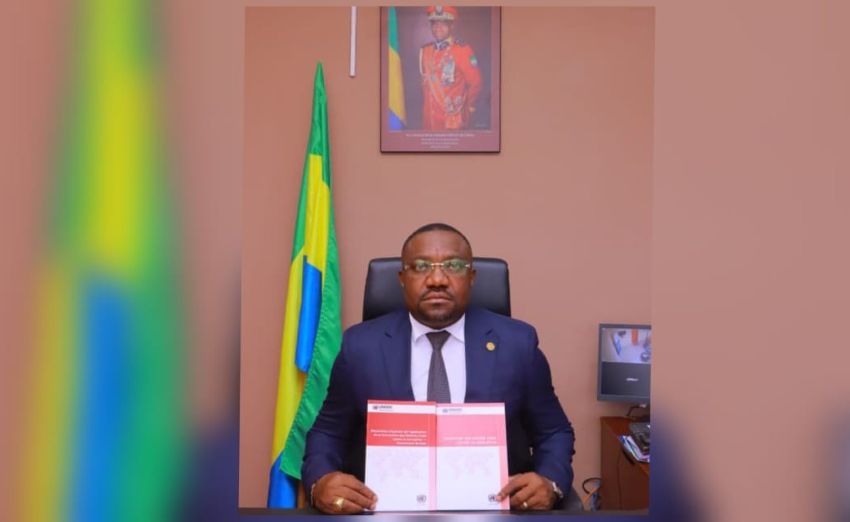
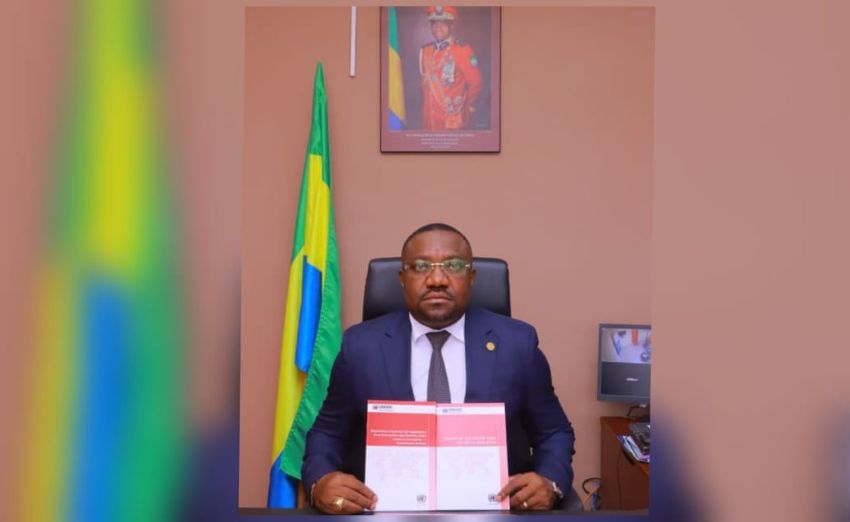
Libreville, Friday, June 19, 2026 (Infos Gabon) – As June concludes, Libreville is set to host more than just a United Nations technical mission. Gabon will welcome one of the most rigorous international exercises focused on public governance, financial transparency, and the global fight against corruption.
For three days, from June 29 to July 1, 2026, experts mandated by the United Nations Office on Drugs and Crime (UNODC) will conduct an in-depth assessment of the nation’s capabilities in preventing corruption, detecting illicit financial flows, and recovering assets derived from economic criminality.
Beyond the formal institutional protocol lies a profoundly strategic reality. In a global landscape where a state’s credibility is increasingly measured by the robustness of its institutions and the strength of its economy, this upcoming evaluation represents a pivotal test of international confidence for Gabon.
Governance under close scrutiny
This mission forms an integral part of the second cycle of the review mechanism for the United Nations Convention Against Corruption (UNCAC), which stands as the world’s primary legal instrument for combating corrupt practices.
Gabon formally embarked on this comprehensive process in October 2025, subsequently submitting its self-assessment report to the examining states, Chad and Libya, as well as to UNODC experts. The phase now commencing in Libreville is the most decisive, as it will enable evaluators to compare written policies and legal frameworks with their practical operational implementation.
The review will concentrate on two fundamental pillars of the Convention. The first addresses preventive measures designed to mitigate corruption risks within public administration. The second delves into asset recovery, which has emerged as one of the most critical challenges in international cooperation.
Experts will meticulously analyze various mechanisms, including asset declaration systems, public procurement procedures, ethical guidelines applicable to public officials, budgetary control frameworks, and national provisions for combating money laundering.
Key institutions such as the National Commission for the Fight Against Corruption and Illicit Enrichment, the National Financial Investigation Agency, economic and financial administrative bodies, judicial authorities, security services, and regulatory agencies will be directly engaged in this extensive exercise.
The global battle for illicit assets
The core of the evaluation undoubtedly lies in the chapter dedicated to the recovery of assets. Today, the embezzlement of public funds, transnational corruption, and money laundering schemes rely on increasingly sophisticated financial mechanisms. Illicit capital often traverses multiple jurisdictions, utilizes complex structures, and can vanish behind intricate, international arrangements that are notoriously difficult to trace.
In this challenging environment, a state’s capacity to effectively identify, seize, confiscate, and repatriate these ill-gotten resources has become a crucial indicator of its institutional maturity.
For Gabon, the stakes are twofold. Firstly, it must demonstrate that its national frameworks align with rigorous international standards. Secondly, it needs to prove that its institutions possess the requisite technical and legal capabilities to safeguard public resources. This particular dimension is under close observation by international financial partners, credit rating agencies, donors, and investors, all of whom increasingly prioritize robust governance criteria.
Consolidating credibility
Beyond the technical conclusions that will emerge from the mission, the profound significance of this exercise resides in the powerful signal it conveys. In a global landscape characterized by an insistent demand for transparency and public accountability, states that willingly subject their institutions to independent scrutiny demonstrate a genuine commitment to progress, rather than complacency.
Gabon precisely aims to align with this progressive mindset. The Libreville mission is not merely intended to provide an assessment. It seeks to pinpoint existing weaknesses, fortify current mechanisms, and enhance cooperation with international partners.
Through this comprehensive review, the nation is engaging far more than a simple administrative evaluation. It is staking a significant portion of its institutional credibility. In a global economy where trust has transformed into a strategic resource, the quality of governance now holds as much weight as a nation’s natural wealth.
The Libreville meeting, therefore, represents much more than a conventional obligation. It offers a rare opportunity for Gabon to unequivocally demonstrate that the fight against corruption is no longer just political rhetoric, but a tangible and ongoing project for the modernization of the state. For Gabon, the challenge extends beyond merely being evaluated; it is about convincing the world.