Aimé boji warns against renouncing national identity in occupied eastern drc territories
- Sécurité
The President of the National Assembly, Aimé Boji Sangara, recently commended the remarkable resilience of communities affected by armed conflicts across the eastern region of the Democratic Republic of Congo. He firmly reiterated the legislative body’s unwavering commitment to the nation’s unity and territorial integrity.
During his address on Monday, June 15, 2026, marking the conclusion of the ordinary session for March 2026, President Boji first paid tribute to the internally displaced persons and refugees, whose humanitarian plight remains a critical concern. He then conveyed a message of profound solidarity and hope to the residents of Nord-Kivu, Sud-Kivu, and Ituri, acknowledging their enduring struggles amidst the ongoing armed conflicts.
“This moment allows me to commend the extraordinary resilience of our fellow citizens, both internally displaced and refugees. Their suffering remains at the very core of our national representation’s concerns. I extend a message of solidarity and optimism to our brothers and sisters in Nord-Kivu, Sud-Kivu, and Ituri, who continue to demonstrate immense resilience and resistance in the face of hardships imposed by Rwandan troops and their proxies, the AFC/M23,” he declared.
Speaking in both Swahili and French, the leader of the lower house of parliament unequivocally affirmed the steadfast belonging of the eastern territories to the Democratic Republic of Congo, asserting that the current state of occupation cannot be permanent.
“Nord-Kivu, Sud-Kivu, and Ituri are, and will always remain, integral parts of the Democratic Republic of Congo—a blessed gift from God, a sacred heritage bequeathed by our ancestors. We are convinced that the illegal occupation our nation endures in its eastern part is neither definitive nor irreversible. Like all unjust situations throughout human history, this barbaric occupation will ultimately cease.”
Addressing those advocating for the nation’s balkanization, Aimé Boji Sangara issued a stern warning against any attempts to challenge national unity or the allegiance of populations residing in occupied zones. He emphasized the unbroken bond among Congolese citizens, despite the current security crisis characterized by aggression and occupation attributed to the Rwandan-backed AFC/M23.
“It is imperative to state clearly to all who believe our brothers and sisters in occupied territories might forsake their Eastern DRC national identity or conspire against the homeland, that they are mistaken. We remain in perfect communion with them and continue relentlessly to defend national unity, territorial integrity, and the sovereignty of our country. Indeed, our greatest weapon against adversity is not merely military; it is, above all, our profound sense of patriotism, our national unity, and our resilience,” he articulated.
He vehemently rejected any efforts to divide or exploit the people of Eastern DRC. He reaffirmed the indivisible nature of the Democratic Republic of Congo and the steadfast resolve of its institutions to protect every segment of its national territory.
“Let the dark forces aggressing our country in the East, who seek to disorient our compatriots living in occupied areas, understand that we will stand against them with an unyielding wall of solidarity. The Democratic Republic of Congo is one, indivisible, and plural. Whether you are in Goma, Muanda, Gemena, or Lubumbashi, the blood spilled in the East is our own. National unity is not an empty phrase; it is the bedrock of our survival and our greatness. Let them be fully aware that we will defend every last square millimeter of our territory,” he asserted.
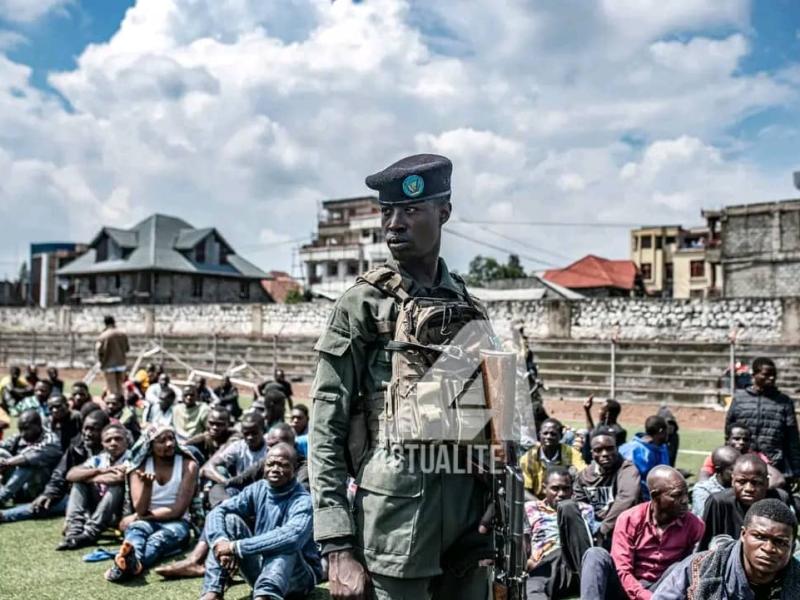
Nevertheless, the security situation in this vital region continues to worsen. Despite the Washington Agreement, brokered by the United States of America, and the Doha process, led by the State of Qatar with support from the African Union, and despite successive evaluation meetings, the security and humanitarian conditions in Eastern DRC remain deeply concerning. Civilian populations in this part of the Democratic Republic of Congo continue to bear the brunt of violence and forced displacement, exacerbating an already catastrophic humanitarian crisis, particularly as international funding for aid declines. This challenge highlights critical issues in African politics and governance Africa.
In response to this dire situation, calls continue to emanate from national, regional, and international levels, urging all stakeholders to honor their commitments made under various peace initiatives. However, these appeals have, to date, yielded no significant impact. The objective of bridging the persistent gap between ground realities and the diplomatic progress documented on paper is struggling to materialize. Each party, in effect, continues to interpret the provisions of the agreements according to its own understanding, rendering their implementation increasingly uncertain.