Who is Kémi Séba, the pan-african influencer accused of spreading russian propaganda
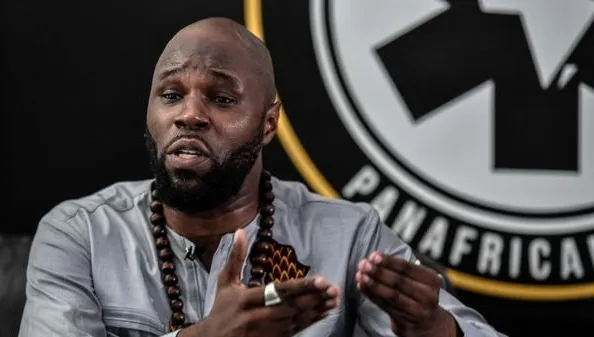
In Africa, digital platforms have become a battleground for geopolitical influence. Among the most prominent voices in this arena is Kémi Séba, a 42-year-old Béninois activist whose anti-Western rhetoric has earned him a massive following across French-speaking Africa. Recently, French authorities stripped him of his citizenship via a decree published on July 9, following his public celebration of the decision on social media: “No more French nationality, glory to God. I am free from this burden.”
Once a leader of the now-dissolved supremacist group Tribu Ka—which propagated racist and antisemitic ideologies—Séba rebranded himself as a modern pan-African revolutionary. His online presence is formidable: over a million Facebook followers and viral YouTube content with hundreds of thousands of views per video. His influence extends beyond the digital sphere, drawing thousands to his public speeches and conferences worldwide.
From fringe figure to Kremlin ally?
Kémi Séba’s rise to prominence caught the attention of Russian authorities nearly a decade ago. Reports, including an investigation by Jeune Afrique in 2023, suggest that Evgueni Prigojine, the late founder of the Wagner Group, directly funded and coordinated Séba’s activities. Prigojine, who perished in a 2023 plane crash, played a pivotal role in expanding Russian influence in Africa through mercenary operations, resource extraction, and propaganda networks.
Séba’s activities align closely with Moscow’s interests. His NGO Urgence Panafricaines has organized high-profile conferences in countries like Brazil, Iran, Russia, and Venezuela. He was even a guest at the Russia-Africa Summit in Saint-Petersburg, an event hosted by Vladimir Poutine. In France, Séba has been publicly labeled by the National Assembly’s Defense Commission as a “relay of Russian propaganda” and an instrument of a foreign power “fueling anti-French sentiment.”
Targeting colonial legacies
Séba’s rhetoric focuses heavily on dismantling what he terms the “Françafrique” system and the CFA franc, a currency he denounces as a colonial relic. Despite denying direct ties to the Kremlin, he consistently supports African nations that pivot toward Moscow after severing ties with France. His approval of recent coups in Niger, Mali, and Burkina Faso underscores his alignment with anti-Western geopolitical shifts: “More countries will join this movement. We are working on it.”
His provocative statements and alliances have cemented his role as a polarizing yet undeniably influential figure in Africa’s evolving political landscape.