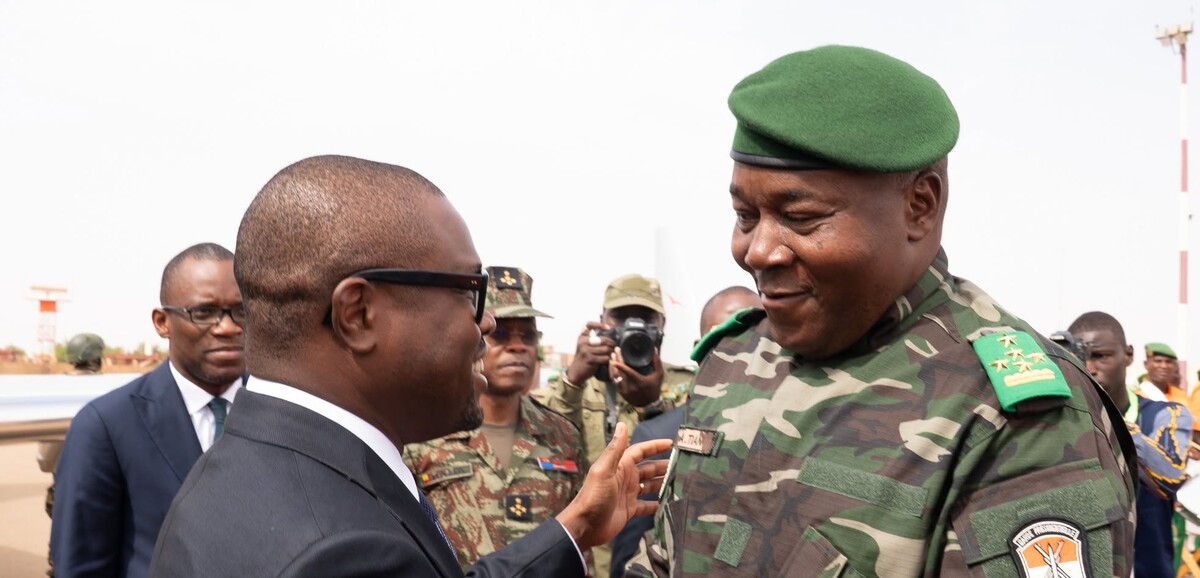
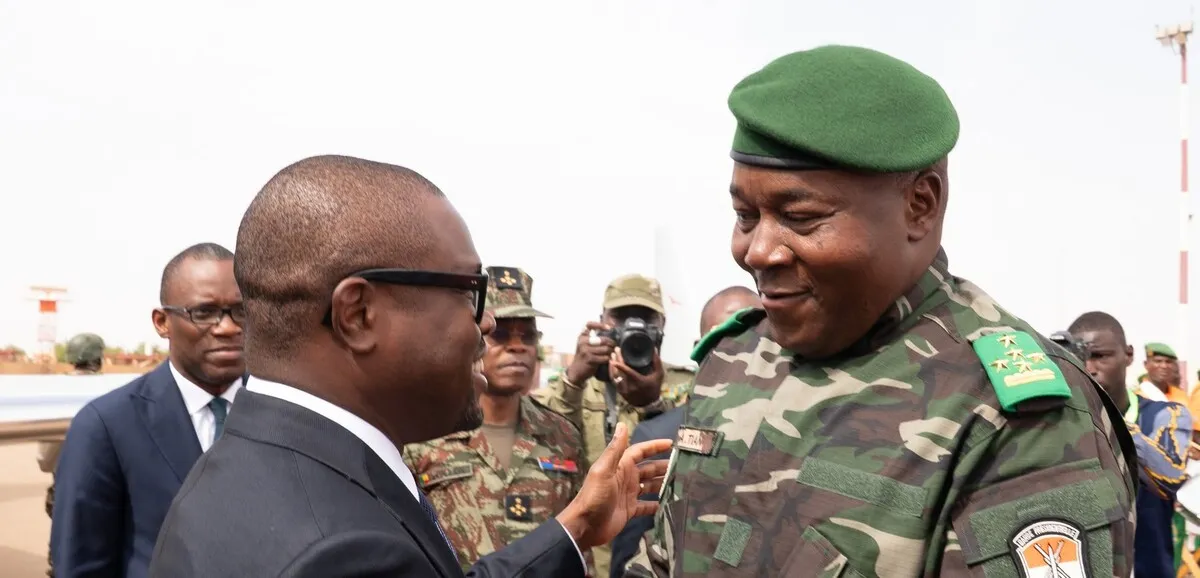
The Nigerien Interior Minister, General Mohamed Toumba, engaged in high-level discussions in Cotonou last Saturday, June 20, with a Beninese expert committee tasked with resolving the border dispute.
During the meeting, he emphasized two non-negotiable demands: “the formalization of a defense agreement” and “a binding security framework that guarantees neither nation will permit its territory to be used against the other.”
General Toumba also insisted on “full disclosure of all foreign military deployments near the shared border, which follows the course of the Niger River.”
Niger has repeatedly accused Benin of hosting French military installations along their mutual frontier—a claim both Cotonou and Paris have consistently refuted.
The border closure, now entering its third year, was enforced shortly after Niamey‘s military leadership took power in July 2023, alleging that Benin, with external backing, was attempting to destabilize the country.
Diplomatic thaw between neighboring states
Recent high-level engagements, including Benin‘s President Romuald Wadagni’s early June visit to Niger, signal a gradual easing of tensions between the two nations—both grappling with escalating jihadist violence linked to Al-Qaïda and the Islamic State.
The Nigerien Interior Minister, a key figure in the ruling junta, further proposed the “operationalization of a joint intelligence fusion unit” to enable coordinated military responses against cross-border threats, stating that “our enemies do not recognize borders—neither should our defenses.”