Jailing lawyer Lirwana in Niger: the costly fallout for families, businesses and a fragile economy
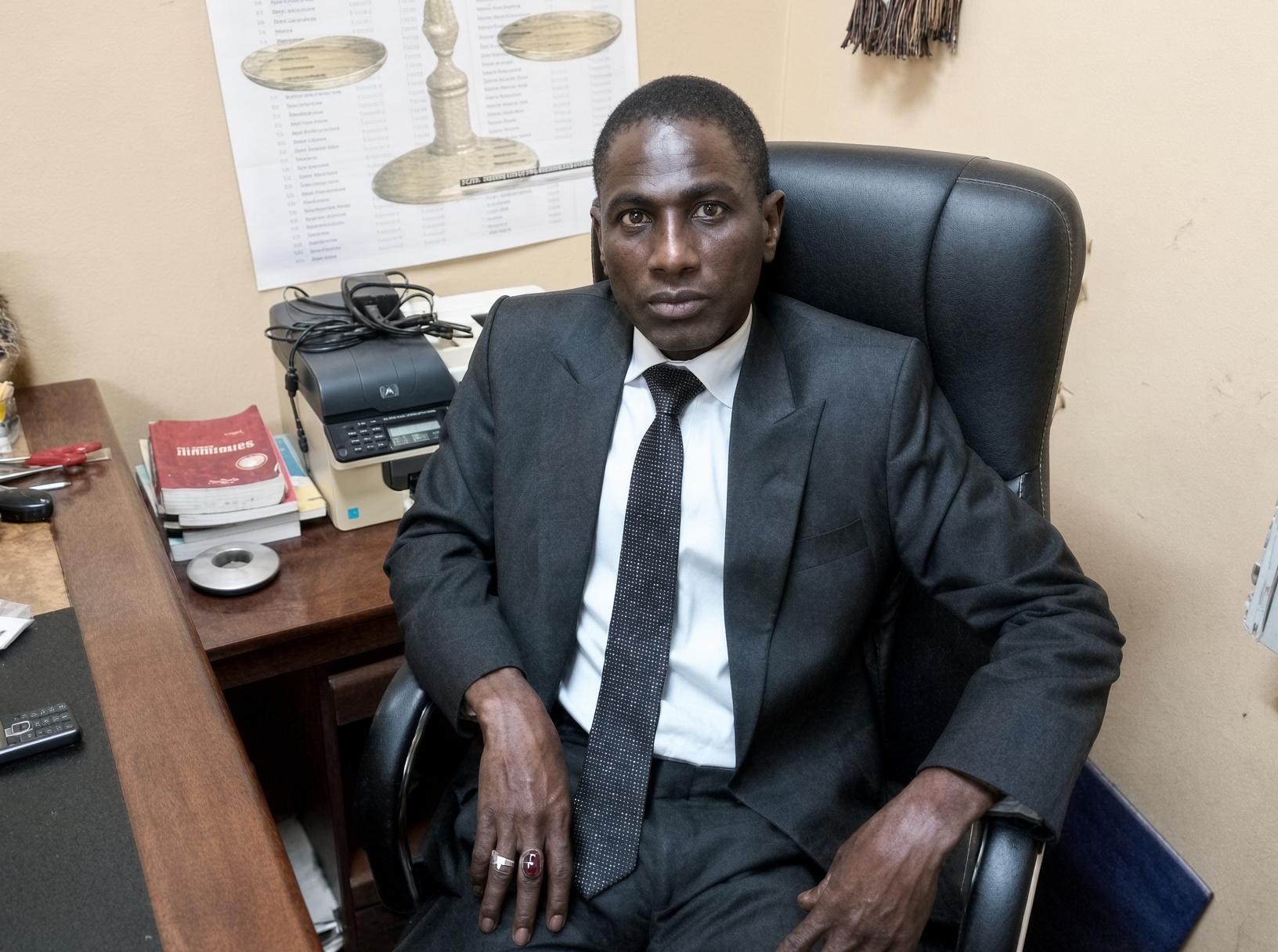
The arrest and imprisonment of lawyer Abdourahamane Lirwana is not just a legal matter confined to courtrooms and detention cells. It carries a direct, measurable cost for ordinary Nigeriens, for entrepreneurs trying to keep their businesses afloat, and for an economy already straining under multiple pressures. When a prominent human rights defender and active member of the Mouvement patriotique pour une citoyenneté responsable (MPCR) is taken off the streets and placed behind bars, the consequences ripple far beyond one individual.
A justice system that punishes opinion, not crime
How far will the pursuit of dissenting voices go in Niger? How wide will this climate of permanent suspicion spread, where simply offering an opinion, raising a criticism or questioning how public affairs are managed can expose a citizen to the full weight of the judicial apparatus?
The detention of Maître Abdourahamane Lirwana — a lawyer, a human rights advocate and a committed civil society figure — is no routine procedure. It amounts to a frontal attack on the legal profession, a blow to the rule of law and a display of arbitrary force that should concern anyone who values fundamental freedoms.
The sequence of events has become painfully predictable. Summoned to the Direction de la Police judiciaire in Niamey on 21 September 2026, the lawyer was placed in police custody before being brought before the prosecutor the very next day. He was then committed to Niamey’s main prison, facing charges of “disseminating data likely to disturb public order” under Article 31 of the cybercrime ordinance.
His alleged offence? A Facebook post published on 12 September containing reflections on the situation and morale of the Nigerien army. Under what legal framework does a jurist’s analysis, or a citizen’s opinion about the military institution, justify up to five years of imprisonment? The method is clearly designed to instil widespread self-censorship across the population — and self-censorship has an economic price of its own.
The economic price of a silenced civic space
This latest incarceration fits a pattern of systematic suffocation of civic space. For more than a year, arbitrary detentions and prosecutions targeting civil society figures and media professionals have followed one another, including proceedings against other civil society actors and well-known journalists.
The practical fallout is hard to ignore. When lawyers fear taking on sensitive cases, access to legal representation narrows for everyone — from small traders entangled in disputes to families seeking justice. When journalists and commentators pull their punches, the flow of reliable information that investors, shopkeepers and farmers rely on to make decisions dries up. Uncertainty breeds caution, and caution slows the everyday transactions that keep markets moving.
Beyond the courtroom, the country’s international commitments are also at stake — notably the International Covenant on Civil and Political Rights and the African Charter on Human and Peoples’ Rights, which formally guarantee freedom of expression and the right to a fair trial. Repeated violations of these texts send a signal to partners, lenders and foreign businesses that predictability and legal security cannot be taken for granted.
What is at stake for citizens and businesses
- For citizens: a shrinking space to speak, organise or seek redress, with a chilling effect that reaches far beyond activists.
- For businesses: a climate of legal uncertainty that discourages investment, delays contracts and raises the cost of doing business.
- For the economy: weakened confidence among international partners, reduced flows of trade and cooperation, and long-term damage to the country’s reputation as a place to work and invest.
The harassment has been firmly condemned by the Observatory for the Protection of Human Rights Defenders (FIDH-OMCT). In such circumstances, silence amounts to consent.
A demand: release him unconditionally
Maître Abdourahamane Lirwana has committed no crime. He exercised his constitutional and civic right to freedom of expression. The Nigerien judicial and political authorities must release him immediately and unconditionally, drop all charges against him, and guarantee full respect for the work of human rights defenders across the country. Anything less will continue to cost Niger — in freedoms lost, in opportunities forgone, and in the daily livelihoods of the people who can least afford it.