Burkina Faso
since 2008

Burkina Faso
intervention areas


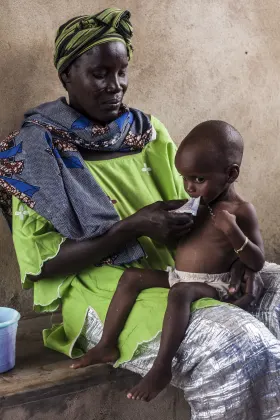
since 2019, Burkina Faso has been grappling with a severe humanitarian crisis driven by political instability, security threats, and climate shocks. In 2024, over 2,938 security incidents were recorded, leaving 6.3 million people in need of assistance—including 2.4 million internally displaced persons. Among them, 2.7 million face food insecurity, while 611,500 individuals (480,000 children and 131,500 women) suffer from severe malnutrition. Additionally, 1.7 million people require urgent water, sanitation, and hygiene (WASH) support.
to address these challenges, Action Against Hunger (ACF) implements an integrated approach combining emergency relief with long-term development strategies. The RRM-Frontline mechanism enables rapid interventions across most regions, providing food aid, shelter kits, WASH support, and improved access to clean water and sanitation. In partnership with the Swedish International Development Cooperation Agency and the BHA, ACF delivers large-scale, multi-sector responses in seven regions. These efforts include emergency healthcare via mobile clinics, bolstering local health centers, economic recovery programs, and strengthening water and sanitation infrastructure. Mental health and psychosocial support are also prioritized to mitigate the crisis’s impact on vulnerable populations. The RESAN project focuses on food security and nutrition, distributing food aid, fortified supplements, and income-generating activities, while the PAMUCE project enhances healthcare and mental health services in facilities and communities.
ACF also embraces resilience-building frameworks like the Nexus approach to strengthen Burkina Faso’s capacity to manage prolonged crises. In 2024, through the USAID PREPARE initiative, ACF improved reproductive, maternal, neonatal, and nutritional health services—particularly in underserved areas. In western Burkina Faso, the BEOOLGO project decentralizes healthcare by training local staff and supporting health structures. Meanwhile, the YERETALI program (Burkina Faso/Côte d’Ivoire) aids recovery in the southwest by enhancing living conditions and promoting sustainable livelihoods.
these coordinated, multi-faceted initiatives—delivered in collaboration with international partners—ensure comprehensive and effective support for Burkina Faso’s most vulnerable communities.