Benin’s bold step toward free emergency healthcare
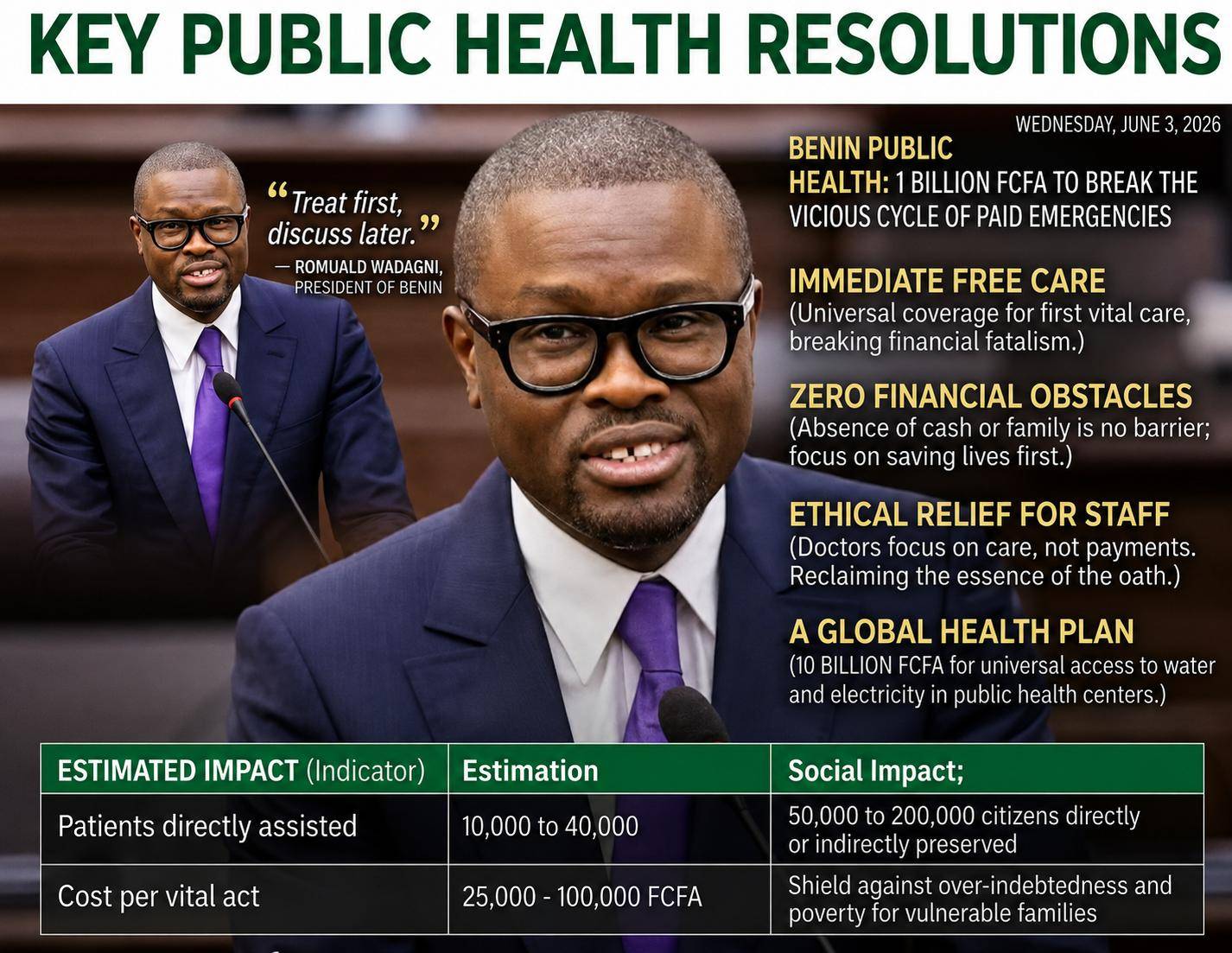
In a decisive move to address one of the most pressing yet overlooked challenges in public health, President Romuald Wadagni announced on June 3, 2026, the release of a substantial one billion CFA franc allocation. This unprecedented funding, directed exclusively to public health facilities, is designed to eliminate financial barriers to essential emergency care, safeguarding countless lives and alleviating the burden on vulnerable households.
Ending the tragedy of preventable deaths
With the clear directive, “Treat first, discuss later,” the Head of State underscored the moral imperative behind this initiative. The immediate disbursement of funds establishes a permanent financial safeguard for public hospitals, ensuring that critical emergencies—such as road accidents, severe obstetric complications, respiratory distress, and cardiac arrests—receive prompt and uninterrupted care. No longer will financial constraints or the absence of family members prevent the administration of life-saving interventions.
The allocation targets “vital emergencies,” covering initial stabilization procedures, emergency medical kits, and essential consumables. Estimates based on standard pricing in public health facilities suggest the measure will directly benefit between 10,000 and 40,000 patients, representing a significant stride toward equitable healthcare access.
Protecting families from financial ruin
The ramifications of a medical emergency extend far beyond the patient, often plunging entire families into economic hardship. By removing the immediate financial burden of emergency care, this initiative not only saves lives but also shields households from crippling debt, asset liquidation, or the devastating loss of a breadwinner. The ripple effect could extend to an estimated 50,000 to 200,000 individuals, fostering economic stability among the most vulnerable communities.
Restoring the ethical foundation of healthcare
For healthcare professionals, this policy marks a long-awaited relief. Doctors and nurses in public hospitals have long faced an agonizing ethical dilemma: prioritizing patient survival over bureaucratic hurdles. The absence of upfront payments and the guarantee of uninterrupted care will allow medical staff to focus solely on their primary mission—saving lives. President Wadagni emphasized this shift, stating, “No life should be lost because funds were unavailable at the moment of urgency. Human life is priceless.”
A broader vision for accessible healthcare
This one billion CFA franc initiative is part of a larger, coordinated effort to strengthen Benin’s healthcare system. Complementing the emergency care funding, an additional 10 billion CFA francs has been allocated to ensure universal access to clean water and reliable electricity in public health centers. These concurrent measures signal a transformative leap toward achieving universal healthcare coverage by 2030, demonstrating that medical efficacy and social justice must advance in tandem.
As the Ministry of Health prepares for the technical rollout and rigorous management of these funds, the nation watches closely. The success of this policy will hinge on its flawless execution, ensuring that every franc translates into preserved lives and resilient families.