The United States has signaled a major pivot in its strategy toward three West African nations currently fighting Islamist extremists. As the military administrations in these countries distance themselves from France to forge closer ties with Russia, Washington is seeking to redefine its role in the region.
The State Department recently announced that Nick Checker, head of the Bureau of African Affairs, would travel to Bamako, the capital of Mali. His objective is to convey American respect for the sovereignty of Mali and to establish a “new direction” for bilateral relations, moving beyond previous diplomatic friction. Furthermore, the U.S. expressed a desire to collaborate with Mali‘s neighbors, Burkina Faso and Niger, on mutual security and economic interests.
Notably absent from this new agenda is the traditional American emphasis on democratic transitions and human rights. While the previous administration under Biden had paused military cooperation following the series of coups that ousted civilian leaders like Mohamed Bazoum in Niger, the current stance reflects a more pragmatic approach that has intensified since Donald Trump returned to power.
Prioritizing security and resources
The policy shift became apparent early in the new presidential term with the closure of USAID operations in the region. Since then, signals have pointed toward a narrower focus on counter-terrorism and access to mineral wealth, while governance and developmental aid have been sidelined.
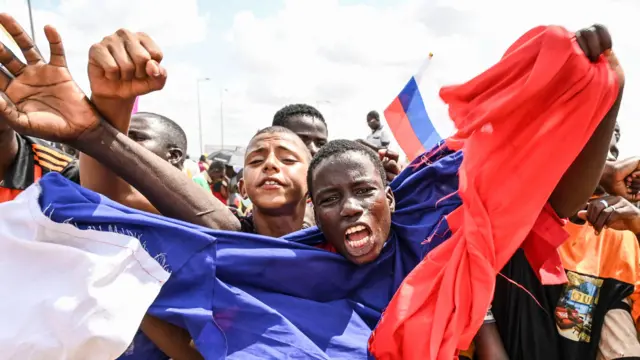
By explicitly mentioning respect for Mali‘s sovereignty, Washington is using language that resonates with military leaders in Bamako and beyond. These leaders, such as Captain Ibrahim Traoré in Burkina Faso, have cultivated immense popularity by positioning themselves as champions against “imperialism” and “neo-colonialism,” particularly through social media outreach to African youth.
Massad Boulos, a senior advisor to Trump, recently clarified that the U.S. does not intend to interfere in the internal political structures of other nations, stating that people are free to choose their own systems. This marks a sharp turn from the era of General Michael Langley at Africom, who previously linked military aid to good governance and environmental stability.
Countering the global epicenter of terrorism
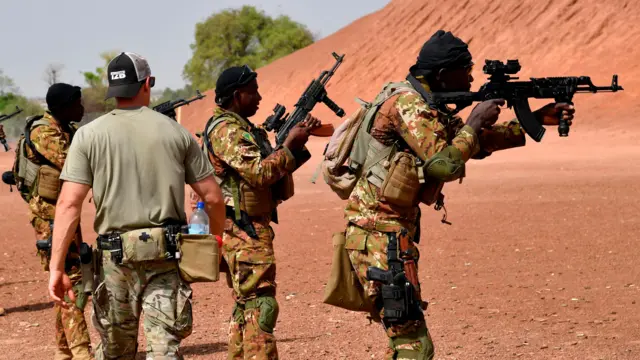
The Sahel has increasingly become a focal point for global security concerns. Experts now refer to the region as the “epicenter of global terrorism,” accounting for a staggering portion of terrorism-related fatalities worldwide. The United States is particularly worried about the Islamic State in the Greater Sahara (ISGS), which remains highly active in the border regions of Mali, Burkina Faso, and Niger. A recent strike on the airport in Niamey, Niger‘s capital, underscored the persistent threat.
Beyond security, the region’s vast natural resources are a major factor. Mali is a key producer of gold and lithium, while Niger holds critical uranium reserves. After Niger‘s military government took control of mines previously operated by the French company Orano, they began exploring partnerships with Russia, a move Washington wishes to counter by remaining an active security partner.
Balancing influence and military limits
While Russia has deployed approximately 1,000 security personnel to Mali and smaller groups to Burkina Faso and Niger, the United States is no longer treating Moscow’s presence as an automatic deal-breaker. Instead, Washington seeks to provide its own intelligence and potential weaponry to ensure it isn’t completely replaced as a strategic ally.
However, this cooperation has clear boundaries. The U.S. is not looking to return to large-scale troop deployments or reopen the drone base in Agadez, Niger, from which it was expelled. Instead, the focus is on intelligence sharing and support for the three countries as they consolidate their own Alliance of Sahel States (AES) following their exit from ECOWAS (CEDEAO).
As the threat of insurgency spreads toward coastal nations like Bénin, Côte d’Ivoire, Ghana, Togo, and Nigeria, the need for effective counter-terrorism is urgent. Yet, history suggests that advanced military technology alone cannot solve the crisis without addressing the deep-seated social and economic hardships facing the Sahel.