Unexpected Russian inaction as Malian rebels launch major offensives
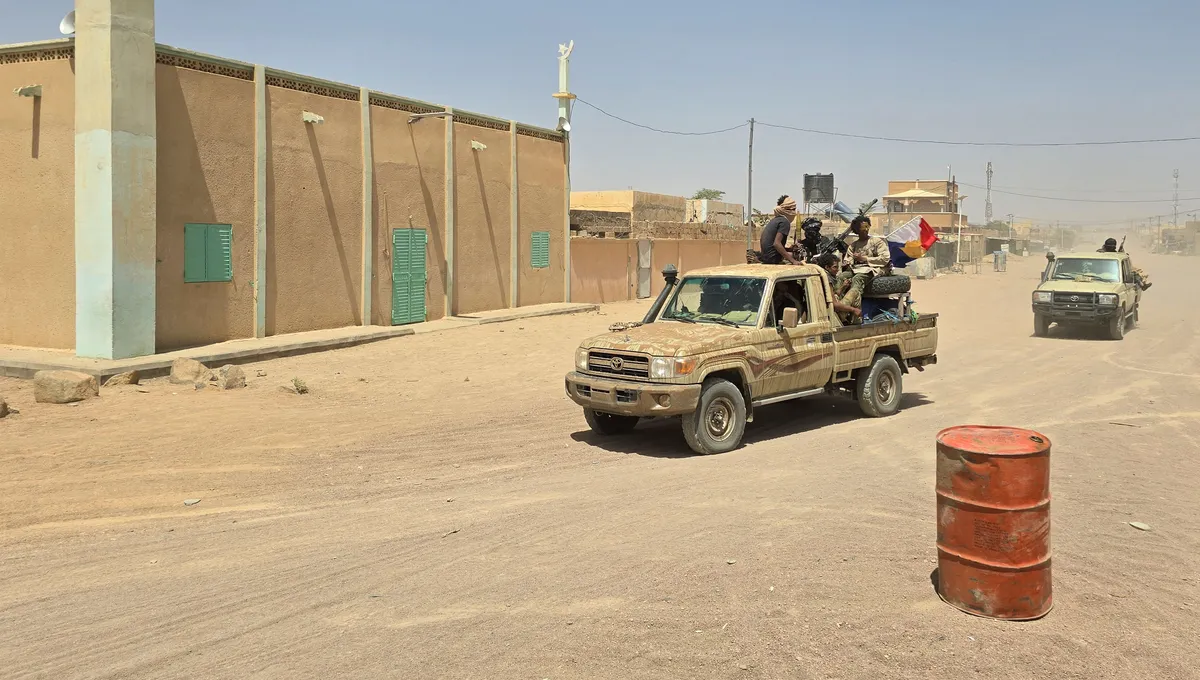
The Malian military government is currently under intense pressure following coordinated strikes across various urban centers, including the capital, Bamako. These offensives, carried out by Tuareg insurgents in league with extremist factions, have exposed vulnerabilities in the nation’s security. Surprisingly, the Russian forces stationed there to support the junta opted to withdraw from the northern stronghold of Kidal without engaging the enemy.
Startling footage has emerged showing a convoy of Russian troops departing Kidal. This retreat occurred without a single bullet being fired, effectively handing control of the city to a coalition of Tuareg rebels and jihadist fighters. In the landscape of African politics, this marks a significant shift in the territorial control of northern Mali.
The significance of this Russian withdrawal is heightened by recent claims from the GNIM (Group for the Support of Islam and Muslims). The group took responsibility for a series of synchronized raids throughout Mali, reaching as far as Bamako. Notably, their official statement included a specific warning to Russian units to remain on the sidelines to avoid jeopardizing potential future interactions.
Approximately 2,500 personnel from the Africa Corps—the successor to the Wagner Group—have maintained a passive stance during this turmoil. This lack of intervention comes as Bamako faces its most severe safety threat since the military took control five years ago. For the junta leaders, who expelled French forces in 2022 in favor of Moscow’s help, this development represents a major setback in governance Africa and a blow to Russia’s reputation as a regional protector.
Severe blows dealt to the Malian administration
The administration suffered a devastating loss when the Minister of Defence was killed during a raid on his home. Furthermore, the ability of insurgent groups to strike multiple targets simultaneously without detection suggests they have successfully expanded their influence over large sections of the country, a frequent topic in Africa news English reports.
Kidal holds immense symbolic value. In 2023, the Malian army, with Russian backing, had managed to reclaim this Tuareg rebel stronghold after it spent over a decade under the control of Azawad separatists. That achievement, following the exit of UN peacekeepers and French troops, had initially bolstered the standing of Colonel Assimi Goïta, the leader of the junta.
The current strategy appears to be failing
Dissatisfaction is growing among the citizenry due to the suspension of political parties and the absence of democratic elections. The population often finds itself trapped between warring factions. Recently, Bamako endured a blockade that cut off vital fuel supplies from neighboring states. While the total collapse of the government remains uncertain, its current position is undeniably precarious within the context of society Africa.
The dangers are twofold. Internally, Mali faces potential fragmentation between northern separatists and competing extremist cells. Regionally, the GNIM’s affiliation with Al Qaeda poses a threat to the entire Sahel. Should Bamako fall, members of the Alliance of Sahel States, such as Niger and Burkina Faso, could be next. Even coastal nations are increasingly wary of spillover violence, a concern frequently highlighted by African Tribune news.
A decade of failed security initiatives
The security situation has come full circle since the 2014 French intervention that initially pushed back northern insurgents. Despite early successes, the subsequent years failed to provide lasting stability. This stagnation fueled the public anger that led to military takeovers and the replacement of French oversight with Russian cooperation. Now, several years later, the cycle of failure continues to haunt the local population, emphasizing the need for independent African journalism to document these shifts.