Turkish arms to Niger before payment reveals strategic barter costs
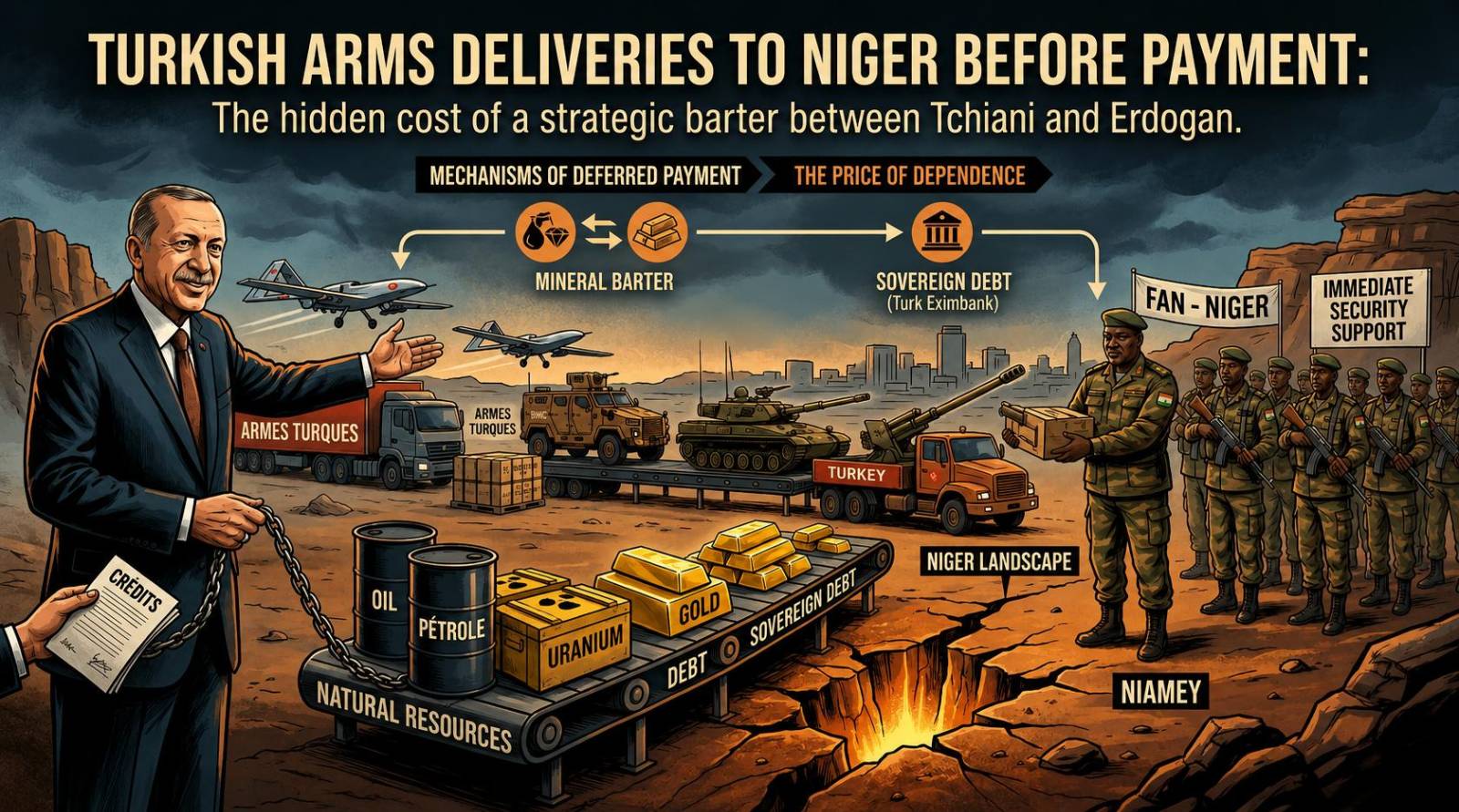
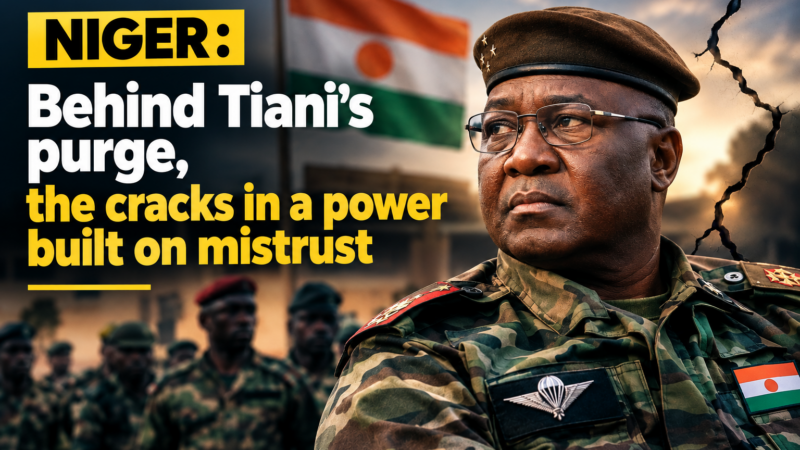
During his official visit to Ankara, General Abdourahamane Tchiani disclosed that President Recep Tayyip Erdogan had authorised the delivery of military equipment to Niger prior to any financial settlement. Behind the solidarity showcased by the Niamey authorities, this deviation from the strict norms of international arms trade exposes the inner workings of a partnership that encumbers part of Nigerien sovereignty.
Hidden financial realities: Deferred payment mechanisms
International commerce follows an immutable rule: any delivered matériel must eventually be paid for, in one form or another. To circumvent Niamey’s immediate fiscal constraints, several compensatory mechanisms are activated behind the scenes:
Resource barter: The ‘arms for minerals’ model
Niger’s subsoil is among the richest in West Africa in uranium, oil, and gold. By agreeing to deliver equipment upfront, Ankara secures exclusive exploration rights or mining concessions for its own national enterprises in return.
Sovereign credit lines and debt
These supplies are not a gift. The invoices are backed by loans from institutions such as Turk Eximbank. Niger converts its immediate security crisis into long-term financial debt to Ankara.
The price of dependence: Trading national sovereignty
For General Tchiani, this alliance is vital to equip the Nigerien Armed Forces (FAN) following the departure of Western troops. Yet this pragmatic short-term choice places a heavy mortgage on the country’s future.
The reality of over-indebtedness: By accepting Bayraktar TB2 drones, armoured vehicles, and communication systems on credit, Niamey exposes itself to direct Turkish oversight of its future economic and mining policies.
Potential strategic counterparts
- Privileged access to Niger’s uranium and oil deposits
- Establishment of Turkish logistical bases or installations
- Automatic diplomatic backing from Ankara in the Sahel region
Erdogan’s strategy: Anchoring Turkish power in the Sahel
For President Erdogan, the financial flexibility granted to military regimes in the Sahel is a highly profitable geopolitical investment serving three major objectives:
- Permanently displacing Western powers from the region.
- Countering Russian hegemony (Africa Corps) by positioning Turkey as the indispensable technology supplier.
- Securing outlets for its defence industry, the modern showcase of Turkish power.
An immediate political victory, an uncertain economic awakening
General Tchiani gains an internal political victory by bringing in weapons without immediately depleting state coffers. But the illusion of independence collides with the reality of material dependence. Between security outsourced to Moscow and technological debt contracted to Ankara, Niger has not broken free from foreign influence dynamics—it has simply changed creditors, at a price yet to be determined for the Nigerien people.