- Featured
- Politics
Sonko’s sharp stance on Senegal’s IMF deal raises transparency questions
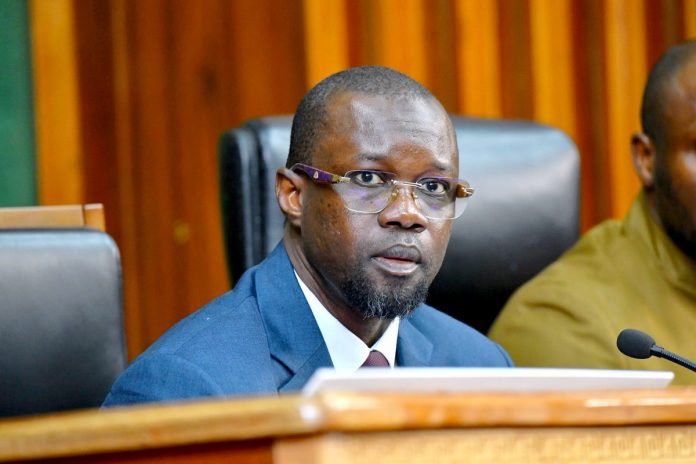
Ousmane Sonko, former Prime Minister and current President of Senegal’s National Assembly, has taken a firm public position on the recently announced agreement between the International Monetary Fund (IMF) and the Senegalese government.
In a statement following the revelation of a new IMF loan package worth over $2 billion (approximately 1,245 billion CFA francs) to support Dakar, Sonko raised critical concerns about the lack of transparency surrounding the deal. He had previously exposed a hidden debt issue that led to the suspension of Senegal’s IMF program in 2024, prompting renewed scrutiny of the current negotiations.
«We have closely monitored the successive announcements from both the IMF and the Senegalese government regarding this technical agreement, which remains pending final approval by the IMF’s executive board,» Sonko stated. However, he emphasized that the diplomatic language used by both parties fails to clarify crucial details about Senegal’s commitments as outlined in the IMF’s official communiqué.
Key concerns raised by Sonko
- Debt management: What are Senegal’s specific commitments regarding debt treatment?
- Reforms: Which major reforms are planned under the agreement, including public finance sustainability, protection of vulnerable households, domestic resource mobilization, rationalization of public spending, social safety nets, oversight of state-owned enterprises, and business environment improvements?
- Debt audits: Will the international debt audits, previously demanded, finally be conducted?
«These commitments directly impact all Senegalese citizens, who will bear the consequences of these agreements today and in the future,» Sonko declared. «Without full transparency, how can we ensure these decisions truly serve the public interest?»
Having participated in months of negotiations and being aware of certain orientations that echo past mistakes, Sonko is calling for absolute transparency. He insists that the draft economic and financial policy memorandum—finalized by both parties—must be made public to enable informed public debate.
In the absence of publication, Sonko urges the government to submit the document to the National Assembly, Senegal’s representative body, for scrutiny. He emphasized that the broad outlines of these commitments will likely be reflected in either a revised finance law or the 2027 finance bill, slated for parliamentary review in October 2026.
«The debate will happen—with or without the government’s cooperation,» Sonko concluded, underscoring the need for accountability in Senegal’s economic governance.