Kinshasa launches bold national dialogue to reshape Democratic Republic of Congo
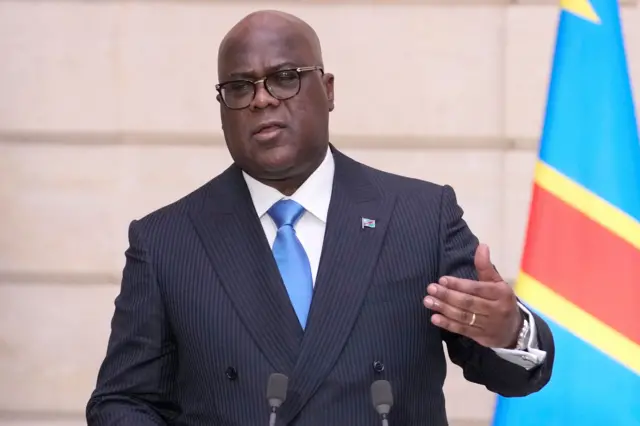
President Félix Tshisekedi has unveiled a groundbreaking initiative to address the Democratic Republic of Congo’s persistent crises through a nationwide dialogue process. Speaking in a nationally televised address, the Congolese leader introduced the ‘National Dialogue for Peace, Cohesion and State Rebuilding’, positioning it as a transformative response to decades of insecurity, political fragmentation and social unrest.
Unlike previous attempts to foster national consensus, this initiative breaks with tradition by launching consultations directly in all 26 provinces before convening a final gathering in Kinshasa. The president emphasized this territorial anchoring as a core innovation: ‘This dialogue will not begin in Kinshasa but in our provinces, territories and communities.’
Building a Congolese-driven process
At the heart of the initiative lies a commitment to a process ‘designed by and for Congolese people’. The president stressed the need to move beyond superficial solutions by addressing the root causes of recurrent crises—ranging from systemic insecurity and communal tensions to administrative inefficiencies and development disparities.
Provincial forums will bring together national and provincial elected officials, representatives from ruling and opposition parties, civil society leaders, customary chiefs, religious leaders, and economic, academic and scientific figures. Each province will conduct an independent assessment of its challenges, including:
- Security threats and insurgencies
- Land and customary disputes
- Communal tensions and ethnic divisions
- Governance gaps and administrative failures
- Socioeconomic inequalities and underdevelopment
- Required institutional reforms
These local findings will feed into a national assembly in Kinshasa, where recommendations will be synthesized into actionable reforms. The entire process is slated to conclude within three months, culminating in a ‘National Pact’ accompanied by a permanent monitoring mechanism to ensure accountability.
Structuring the dialogue with presidential ordinances
To formalize the framework, President Tshisekedi announced the signing of two key presidential ordinances. The first establishes an organizing committee tasked with handling administrative, logistical and material preparations. The second officially convenes the dialogue, outlining participant representation rules, process stages and implementation mechanisms for the recommendations.
The president has framed these measures as essential to ensuring transparency and efficiency, with the stated goal of delivering tangible outcomes within a tight timeframe.
Defining red lines and limits
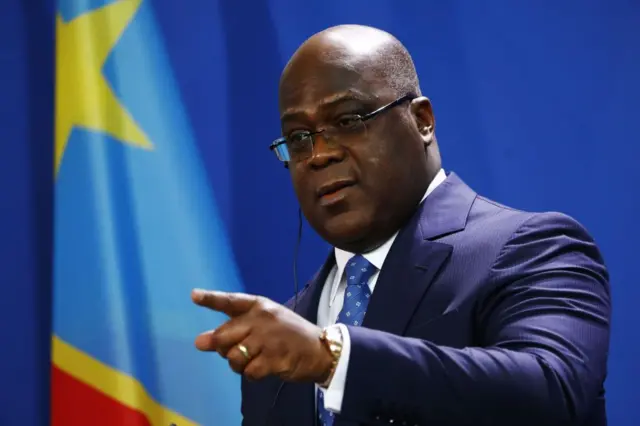
While the initiative aims to foster inclusivity, the president set clear boundaries. He explicitly rejected any interpretation of the dialogue as a forum for power-sharing, declaring: ‘We have too often responded to crises with power-sharing rather than state consolidation.’
Tshisekedi also affirmed the inviolability of the 2023 electoral institutions and constitutional order. Crucially, he ruled out participation by armed groups, stating: ‘No one will be excluded based on opinions, political affiliation, ethnicity or religion—but no one can claim a seat at the national table while taking up arms against it.’
This stance notably excludes active rebel factions in the eastern regions, even as parallel peace talks with the M23 rebel group continue in Doha. The president reassured that the national dialogue would complement—not replace—regional and international diplomatic efforts.
Mixed reactions from civil society and opposition
Civil society and opposition figures have responded with cautious skepticism. While some welcomed the initiative’s structural innovations, others criticized its perceived limitations. Opposition leader Claudel Lubaya described the address as lacking ‘vision, urgency or substantive solutions’, calling it a ‘missed rendezvous with history’ that fails to meet the demands of the Congolese people.
Christian Mwando Nsimba, an opposition deputy from the Ensemble pour la République party, questioned the process’s inclusivity, remarking: ‘What President Tshisekedi proposes is a grand carnival that will not end the conflict.’ He raised concerns about the absence of the term ‘inclusive’ in the president’s discourse and the potential overlap with the Doha peace talks.
In contrast, human rights advocate Jean-Claude Katende welcomed elements of the president’s address, particularly the rejection of power-sharing and the emphasis on citizen participation and accountability mechanisms. However, he cautioned: ‘I support the president’s stance with the hope that all commitments are honored—not reduced to empty rhetoric.’
A political trial for the regime
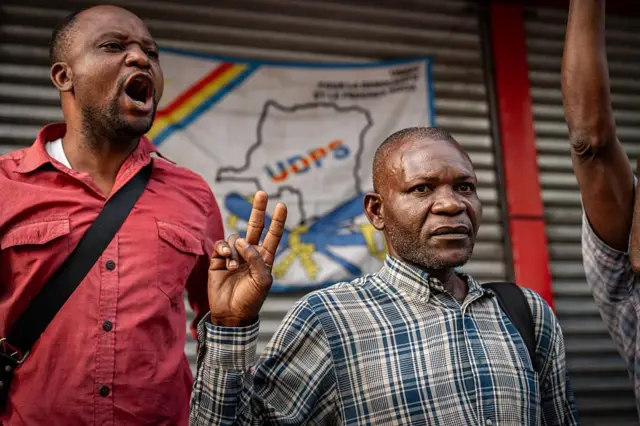
The national dialogue marks a critical juncture for President Tshisekedi’s administration. With the eastern DRC engulfed in persistent insurgencies and internal political tensions simmering, the initiative presents both an opportunity and a test. Can the government convince political actors, civil society and the broader public that this process will yield meaningful results?
For the opposition, the key question remains whether the dialogue will serve as a genuine platform for national healing or primarily advance the agenda of the ruling coalition. The upcoming ordinances will reveal more about the composition of the preparatory committee and the precise modalities for participation in the national assembly.