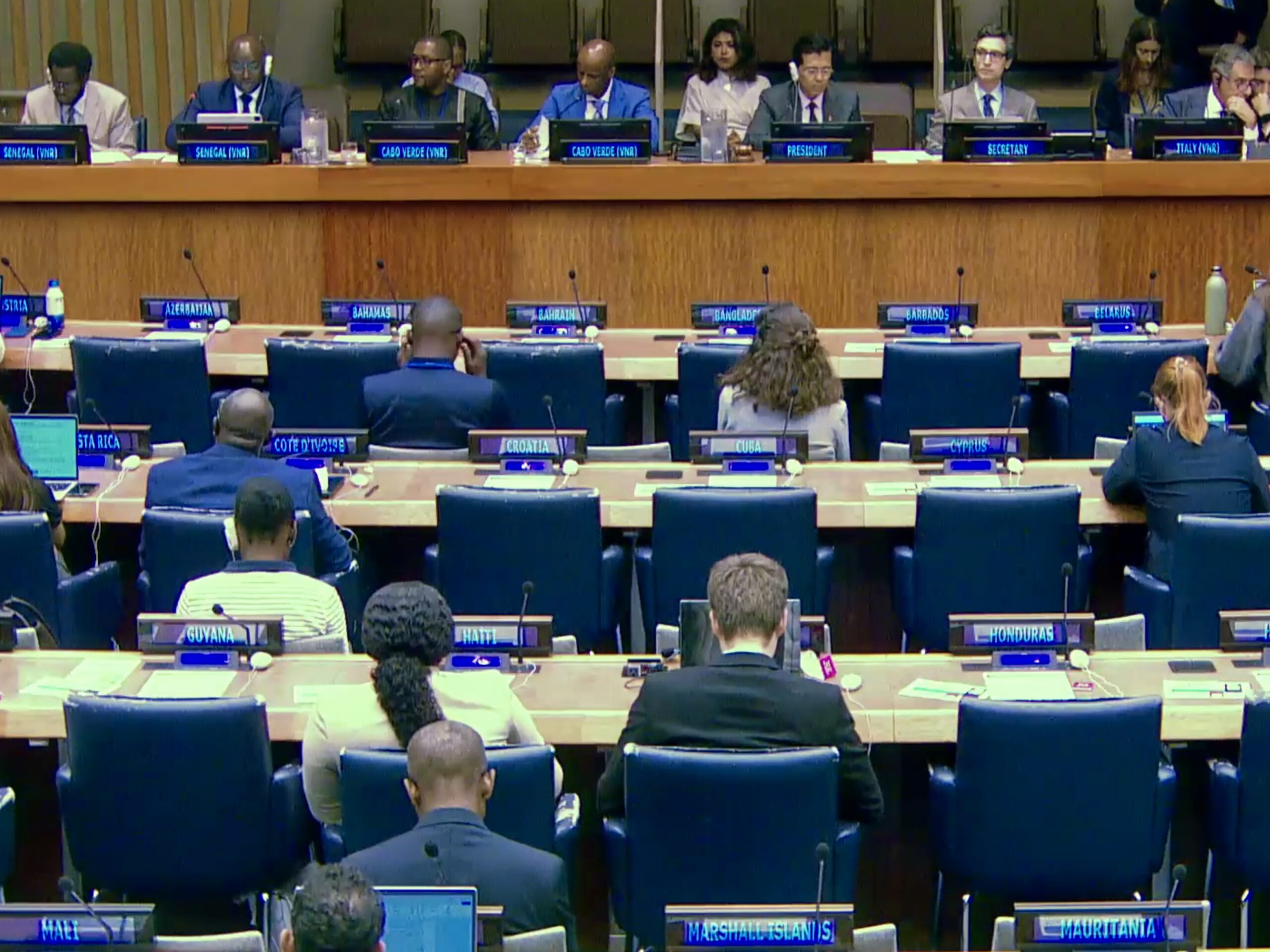
Senegal’s UN voluntary review highlights transformative decade-long achievements in key development sectors
In a decade marked by remarkable strides, Senegal has transformed its rural electrification landscape, propelling access from one in three households to seven out of ten today. Minister Cheikh Tidiane Dièye, overseeing Hydraulics and Sanitation, presented these milestones on July 13, 2026, during the United Nations’ High-Level Political Forum in New York, where the country submitted its third Voluntary National Review (VNR) before global delegates.
From July 7 to 15, the Forum convened under the theme of transformative, equitable, and coordinated action for the 2030 Agenda, with deep dives into five pivotal Sustainable Development Goals (SDGs): clean water and sanitation, affordable and clean energy, infrastructure and innovation, sustainable cities, and global partnerships. Senegal joined 35 other nations—including Cabo Verde and Italy—in sharing its progress, with ten West and Central African countries among the presenters.
Decade of development: key milestones and national pride
Minister Dièye underscored the participatory nature of the review process, stating, “Since our first VNR in 2018 and the second in 2022, this third edition reflects our unwavering commitment to tracking progress under the 2030 Agenda.” The review incorporated contributions from government ministries, local authorities, civil society, the private sector, and UN agencies, alongside innovative inputs such as alternative civil society reports, consultations with disability advocacy groups, and Pikine’s pioneering local voluntary review.
A Voluntary National Review is a self-assessment where governments evaluate their progress toward the 17 SDGs, highlighting achievements, pinpointing lagging areas, and sharing lessons with peers. The findings are presented at the High-Level Political Forum, the UN’s flagship platform for monitoring the 2030 Agenda’s implementation.
The SDGs are embedded in Senegal’s Senegal 2050 transformation agenda and the 2025–2029 National Development Strategy (NDS). Nearly 93% of SDG indicators are now tracked through the national monitoring and evaluation system, bolstered by an annual joint review that fosters dialogue and accountability.
Tangible progress for citizens
Water and sanitation: Access to clean drinking water has surged to 97.8% in urban areas and over 96% in rural zones—up nearly nine percentage points in a decade. Sanitation coverage in rural areas has doubled from 37.5% to 64.5% since 2015, while urban areas improved from 62.5% to 73.65%.
Energy transition: National electricity access climbed from 62% in 2015 to 86% by 2024, with renewables now accounting for 29.1% of installed capacity, up from a mere 3% in 2016. The government aims for renewables to comprise 40% of the energy mix by 2030.
Urban mobility: Dakar’s Electric Bus Rapid Transit (BRT) system has cut CO2 emissions by over 53,000 tons annually, while the Regional Express Train (TER) saw passenger numbers soar from 2.7 million in 2015 to 23.1 million in 2025.
Challenges remain: With over half of Senegal’s population now urban, the housing deficit exceeds 500,000 units. Public debt stands at 116.1% of GDP, though domestic revenue now funds 69.7% of the national budget—a significant rise from 54.8% in 2015. Air quality in Dakar has also improved, with fine particulate levels dropping from 35 to 21.8 micrograms per cubic meter.
Four acceleration levers for 2030
Minister Dièye outlined a four-pillar strategy to fast-track SDG progress:
- Economic transformation: Focusing on eight strategic sectors, territorial hubs, and special economic zones.
- Water security: Implementing the National Water Security Compact to ensure sustainable access and sanitation.
- Climate action: Upgrading the Nationally Determined Contribution (NDC 3.0) and accelerating renewable energy adoption.
- Sustainable financing: Strengthening partnerships, including ongoing cooperation with the IMF, and launching a National Transition Strategy to graduate from Least Developed Country status.
Global dialogue: transparency, migration, and football
During the interactive Q&A, delegates praised Senegal’s progress while posing pointed questions. The Gambia highlighted the “unique and enduring ties” between the two nations, querying how Senegal enhances transparency and anti-corruption measures. Minister Dièye cited the National Anti-Fraud and Corruption Office (OFNAC), the National Financial Intelligence Unit (CENTIF), and the new Financial Judicial Pool, noting that the Financial Action Task Force (FATF) removed Senegal from its enhanced monitoring list in October 2024—a status reaffirmed in June 2026.
Spain’s delegation explored how the diaspora can further contribute to development. The minister responded, “Migration creates shared benefits: host countries gain skilled labor and economic growth, while origin countries benefit from remittances, skills transfers, and stronger economic ties.” He emphasized Senegal’s commitment to “balanced cooperation” with Spain to govern migration sustainably.
The conversation even touched on football, with Ireland congratulating Senegal’s Lions of Teranga team on their recent FIFA World Cup performance.
The minister concluded with a forward-looking message: “Senegal remains fully committed to the 2030 Agenda and will continue this journey with the international community.”