Senegal slashes hundreds of billions in spending to fix budget gap
The government of Senegal is implementing budget cuts worth hundreds of billions of CFA francs to safeguard the balance of public accounts. This decision comes as the Economic and Social Recovery Plan (PRES) underperforms, with expected revenues falling short of projections. The administration led by Prime Minister Ousmane Sonko now seeks to close a fiscal gap that directly threatens the financial trajectory set at the start of the fiscal year.
PRES revenue shortfall forces cuts
Positioned as the backbone of the new government’s fiscal consolidation strategy, the PRES was designed to mobilise additional resources to reduce the inherited deficit and fund social priorities. However, initial accounting reports tell a different story. Tax and non-tax revenues programmed under this plan show a worrying lag, undermining the macroeconomic assumptions underpinning the current budget law.
The revenue shortfall forces difficult trade-offs. Rather than widening the deficit or resorting to heavy new borrowing in an environment where debt costs have risen sharply, Senegalese authorities have chosen austerity. Concretely, hundreds of billions of CFA francs in spending authorisations are being frozen or cut across several ministerial portfolios to realign outflows with actual inflows.
Budget balance under strain in Dakar
The internal warning is clear: without immediate correction, the budget balance would be threatened. This phrase, repeated in framing documents, underscores the urgency of a response. Senegal has committed to strict deficit targets under its programme with multilateral partners, led by the International Monetary Fund. Any deviation would jeopardise future disbursements and increase the cost of accessing international financial markets.
The regional context also weighs heavily. Within the West African Economic and Monetary Union (UEMOA), Dakar must keep its public deficit below 3% of GDP, a convergence standard regularly emphasised by community institutions. Revelations in September 2024 by the Court of Auditors about the true scale of public debt had already forced the country to renegotiate its relationship with donors. The announced cuts follow logically from that accounting rectification.
Political stakes high for Sonko
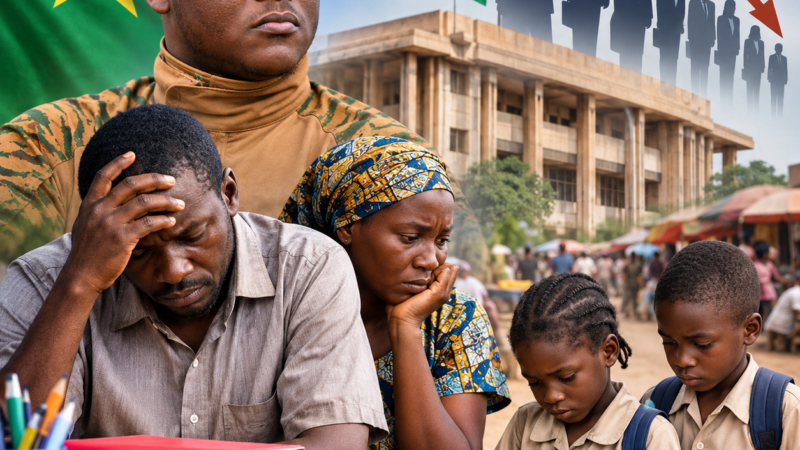
For the executive tandem of President Bassirou Diomaye Faye and his Prime Minister, the exercise is delicate. Elected on promises of economic rupture and tangible improvements in living conditions, they must reconcile fiscal orthodoxy with strong social expectations. The cuts will inevitably affect investment spending, easier to postpone than operating costs, but also some transfers. Several ministries will see their budgets slashed to levels not seen in several fiscal years.
The chosen path carries political risk. Reducing infrastructure credits or sectoral subsidies in a country emerging from a period of institutional instability could fuel discontent. Conversely, letting the deficit spiral would expose Senegal to a rapid downgrade of its sovereign credit rating, already under watch by agencies. Moody’s and S&P Global Ratings are closely monitoring the government’s ability to keep its fiscal promises.
Timing is also critical. The announced cuts must take effect before the fiscal year closes, requiring swift implementation of freeze circulars and strict discipline from spending controllers. Oversight will fall mainly to the Ministry of Finance and Budget, in close coordination with the Prime Minister’s office. The ability to rebuild revenues in 2025 through more effective tax reform and better mobilisation of domestic resources will determine how long this austerity cure lasts.
Beyond the immediate shock, this episode highlights the narrow room for manoeuvre Senegal actually has to finance its economic transformation ambitions. The trade-offs involve hundreds of billions of CFA francs and explicitly aim to preserve the budget balance threatened by the PRES underperformance.