While the world’s gaze remains fixed on conflicts in Eastern Europe and the Middle East, a silent humanitarian catastrophe is unfolding across the Sahel. In 2026, over 24 million people in the region will require immediate assistance, according to United Nations assessments, marking one of the most severe and critically underfunded crises globally.
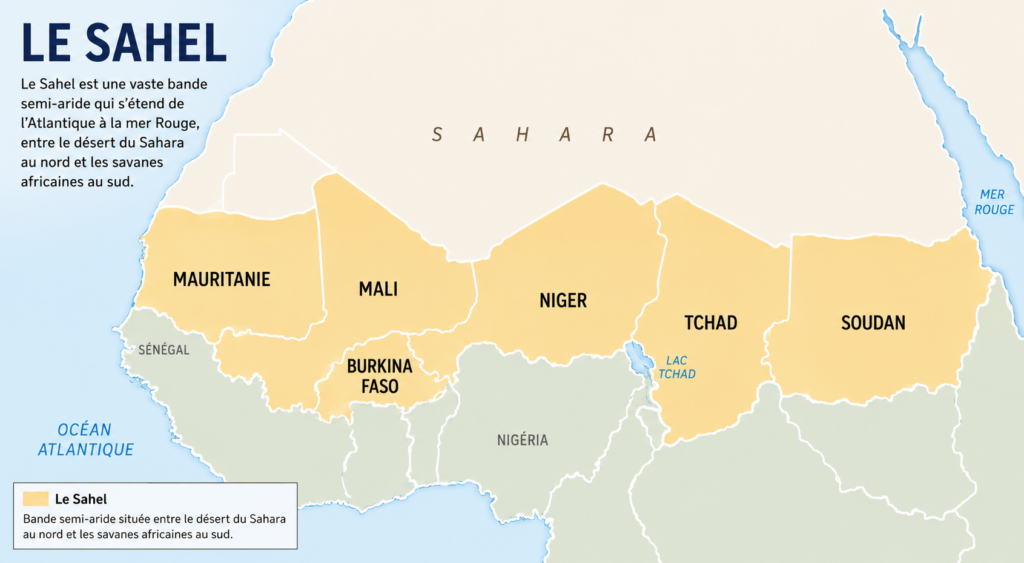
The Sahel’s humanitarian emergency spans from Mauritania to Chad, encompassing Mali, Burkina Faso, and Niger. Communities here face a perfect storm of challenges that are eroding their ability to cope: armed conflicts, mass displacement, spiraling inflation, climate shocks, and severe food insecurity. These overlapping crises have pushed millions of families to the brink of survival.
The United Nations Office for the Coordination of Humanitarian Affairs (OCHA) paints a stark picture of the coming months. Between June and August—the lean season before harvests—an estimated 15.5 million people may face food crises or worse conditions. Among them, over 1.5 million could slip into emergency levels of food insecurity, requiring urgent intervention.
The numbers translate into real suffering: families skipping meals, farmers unable to afford seeds or fertilizer, children losing access to education, and entire communities displaced by violence. The region’s stability hangs in the balance as these pressures mount.
Global funding gaps leave millions at risk
Humanitarian agencies warn that the most alarming aspect of this crisis is the dramatic shortfall in international funding. In 2025, only 29% of the required humanitarian funds for the Sahel were secured—the lowest level in years. This funding gap is forcing aid organizations to scale back operations, suspend critical programs, or withdraw from the most vulnerable areas entirely.
The timing could not be worse. Global economic pressures—fueled by tensions in the Middle East—are driving up energy, transport, and agricultural input costs. These price surges hit communities that are already struggling to meet basic needs. For the United Nations, every dollar cut from humanitarian budgets directly translates to human suffering: less food aid, reduced protection for women and children, and diminished access to healthcare and schooling.
Security vacuum fuels humanitarian collapse
The food crisis is both a symptom and a driver of escalating insecurity. Violence that once concentrated in the central Sahel has now spread to coastal West African nations. Armed groups continue to expand their influence, triggering massive population displacements and forcing the closure of essential services. Nearly 12,900 schools have shut down, leaving over 2.3 million children without education.
Humanitarian experts warn that this educational deprivation threatens generations to come. In regions where economic opportunities are scarce and armed groups prey on vulnerable youth, a lost generation risks being left without skills or hope for the future.
Climate change amplifies human suffering
Compounding these challenges is the Sahel’s vulnerability to climate change. Since the start of 2026, nearly 590,000 people have been affected by severe flooding. Meanwhile, prolonged droughts and creeping desertification are steadily depleting natural resources, shrinking agricultural land, and exacerbating food shortages.
The Sahel, despite contributing minimally to global warming, bears the brunt of its consequences. The region sits at the nexus of multiple global crises—political instability, economic shocks, and environmental degradation—each intensifying the others in a devastating cycle.
United Nations officials emphasize that solutions exist, but they require immediate and substantial investment. Without urgent funding increases, millions more could face catastrophic deterioration in their living conditions within months.