Russia’s security role in Mali and the Sahel under the spotlight
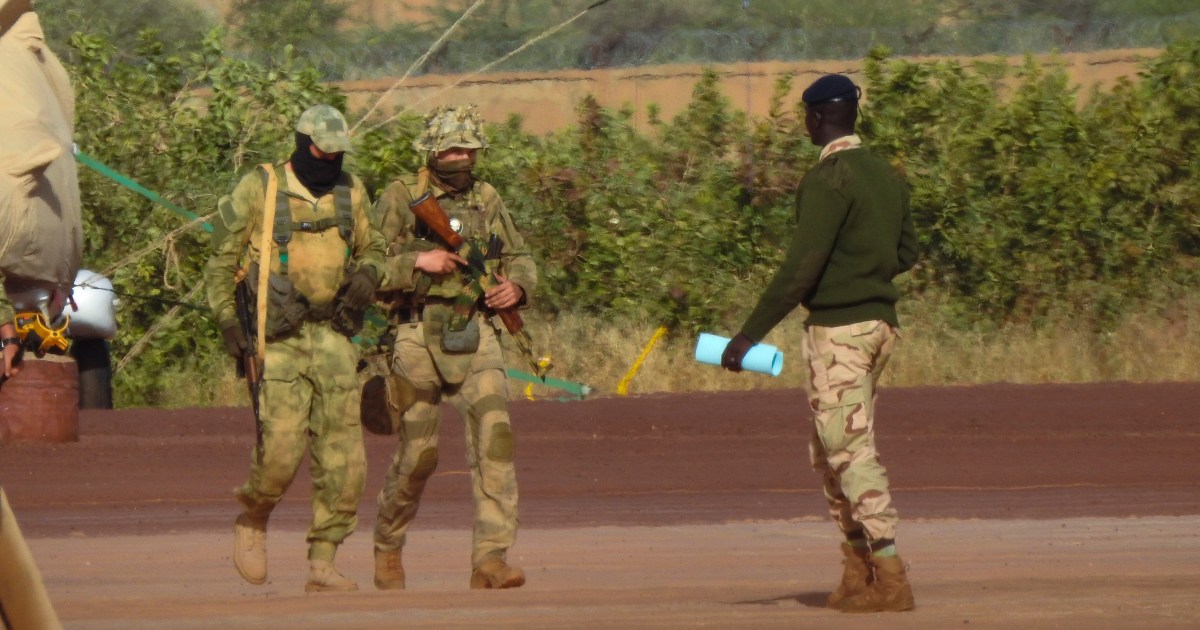
Following a series of intense raids on Malian Armed Forces installations, the nation’s military leader, Assimi Goita, announced on Tuesday that the government has the situation “under control.” This stability is reportedly bolstered by Russian aerial assistance, which prevented insurgent groups from seizing strategic locations, including the presidential headquarters in Bamako.
Despite these assurances, the security landscape in Mali remains precarious. The administration is struggling to reclaim territory from Tuareg rebels and al-Qaeda-affiliated militants, who have threatened a complete blockade of the capital city.
Recommended Stories
A massive, synchronized offensive launched on Saturday across several urban centers, including Bamako, sent shockwaves through West Africa. The conflict resulted in the death of Mali’s Defence Minister, Sadio Camara, and the fall of several northern hubs, most notably Kidal. While the military junta claims to have neutralized over 200 insurgents, the loss of key territory has raised alarms.
Observers are now interrogating the reliability of Bamako’s defense pact with Russia. Reports indicate that Russian personnel abandoned their posts in Kidal, a city they had been defending alongside Malian troops. These fighters belong to the Africa Corps, a paramilitary organization under the jurisdiction of the Russian government.
On Monday, Africa Corps verified their departure from Kidal, characterizing it as a strategic move coordinated with Malian authorities. However, this has not silenced critics. In Mali and across social media, citizens and analysts are questioning the efficacy of Russian military aid in the Sahel, particularly as Burkina Faso and Niger also face escalating violence.
The Africa Corps emerged as the successor to the Wagner Group following the 2022 expulsion of French forces—numbering over 4,000—at the request of Goita. This shift coincided with Mali, Burkina Faso, and Niger forming the Alliance of Sahel States (AES) and distancing themselves from the Economic Community of West African States (ECOWAS).
What was the fate of Russian personnel during the recent strikes?
The weekend assaults were a joint venture between the Azawad Liberation Front (FLA) and Jama’at Nusrat al Islam wal Muslimin (JNIM). Their targets included vital military installations in Kidal, Gao, Sevare, and Kati.
Mali has been plagued by instability since 2012. Approximately 2,000 Russian personnel have been active in the country since 2021, filling the vacuum left by the withdrawal of French and UN peacekeepers. While many former Wagner members transitioned into the Africa Corps, experts note a change in methodology: the new unit appears significantly more risk-averse and defensive than its predecessor.
All parties involved—the Malian army, Russian contractors, and insurgent groups—face allegations of civilian mistreatment that could constitute war crimes. During the Saturday crisis, Russian units were observed retreating from Kidal in convoys, allegedly following exit negotiations facilitated by Algeria. Meanwhile, an unknown number of Malian soldiers were captured and disarmed.
How has Moscow responded?
Via Telegram, Africa Corps maintained that their Kidal exit was a mutual decision. They stated that units withdrew alongside Malian personnel after prioritizing the evacuation of the injured and heavy weaponry. They insisted that their mission continues despite the “difficult” environment.
The Russian Defence Ministry further asserted that their forces provided critical air cover during the Bamako attacks. They also alleged, without providing evidence, that the thousands of insurgents involved were coached by European and Ukrainian operatives. The Malian government has remained silent regarding the specifics of the Russian withdrawal.
Contradictory reports suggest that local officials in Kidal had warned the mercenaries of the impending attack days in advance, but no preventative action was taken. Some sources speculate that an exit strategy had been negotiated well before the first shots were fired.
What does this mean for Russia’s influence in the Sahel?
Russia has positioned itself as an anti-colonial alternative to Western powers in Africa. Beyond Mali, their footprint extends to the Central African Republic, Libya, and Sudan. In Niger and Burkina Faso, the Russian presence is smaller, focusing primarily on advisory roles.
While the Wagner Group had previously seen success in helping the Malian army retake Kidal in 2023, the recent fall of the city and the assassination of a key pro-Russia minister have tarnished Moscow’s reputation. Analysts suggest that the Africa Corps failed to demonstrate the necessary resolve during the crisis, leaving behind significant hardware, including drone equipment.
As JNIM militants threaten to encircle Bamako, the remaining Malian government presence has retreated toward Gao. The perceived failure of Russian forces to hold their ground may deter other African nations from seeking similar security partnerships. For many, the recent events represent a significant blow to the credibility of Russia’s military exports in the region.
Despite the setback, the Kremlin continues to release footage of ongoing strikes against militant positions, attempting to project a narrative of continued engagement. However, the shadow of doubt regarding their long-term effectiveness in the Sahel remains.