Russia’s rising influence in west africa’s Sahel region
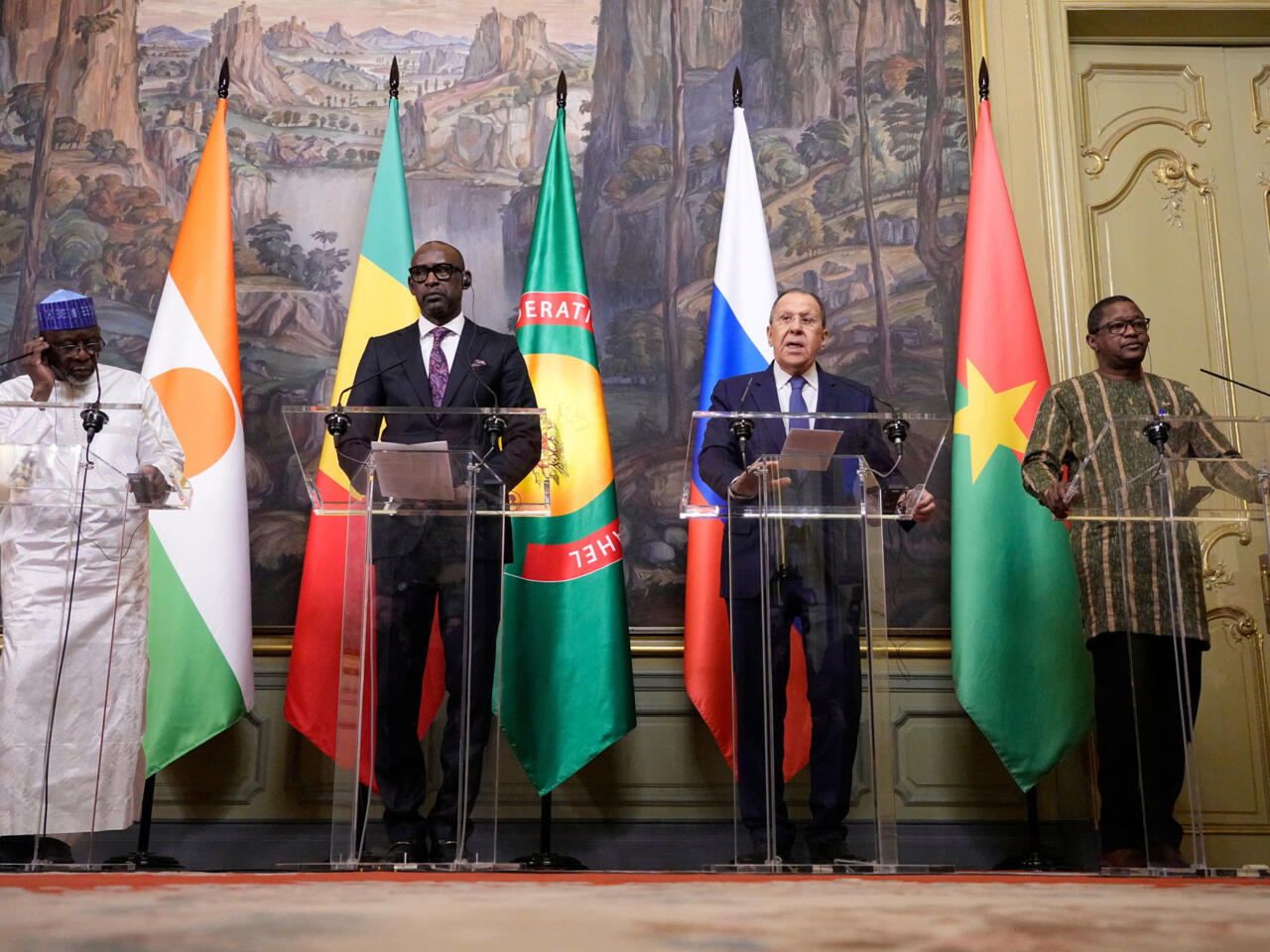
The military governments of West Africa’s Sahel region—Mali, Burkina Faso, and Niger—are deepening their collaboration under a new security and political alliance, deliberately moving away from traditional Western partners. Russia has emerged as the key architect of this bloc, filling the strategic void left by the declining presence of the United States and its allies in the region.
Through strategic military partnerships, arms transfers, and the deployment of private military entities, Moscow is steadily expanding its influence over fragile Sahelian regimes. This growing Russian footprint poses a direct threat to U.S. interests by disrupting Washington’s long-standing counterterrorism efforts in the area. The withdrawal of U.S. military bases and intelligence networks has weakened America’s ability to track and counter jihadist movements, while granting Russia access to critical natural resources and political leverage in unstable states.
As a result, U.S. influence in Africa is eroding, setting a dangerous precedent that could inspire similar shifts elsewhere on the continent. Heightened anti-Western rhetoric, amplified by Russian disinformation campaigns, is further complicating any potential return of Western engagement in the region. The formation of new security alliances that exclude Western participation not only undermines joint counterterrorism efforts but also increases the likelihood of a permanent U.S. displacement from the Sahel.
Russia’s strategy in the Sahel combines military, political, and informational tactics to reshape the geopolitical landscape.
The Sahel is currently trapped in a cycle of prolonged instability, driven by weak governance and the unchecked rise of extremist groups. After a series of military coups in Mali, Burkina Faso, and Niger, the new ruling juntas began reevaluating their international alliances, accusing Western nations of:
- failing to effectively combat terrorism, and
- interfering in domestic affairs.
These grievances have created an opportunity for Russia to position itself as a viable alternative partner.
Moscow deploys a flexible toolkit of influence, including:
- military advisers,
- security service contracts, and
- bilateral defense agreements.
What makes Russia particularly appealing to authoritarian regimes in the Sahel is its offer of partnership without political preconditions. Meanwhile, deep-seated socioeconomic challenges—such as widespread poverty and climate-induced pressures—further destabilize the region, making it more susceptible to foreign interference and manipulation.
Russia is capitalizing on the security void left by the West’s withdrawal from the Sahel, enabling it to swiftly and cost-effectively expand its influence. This approach carries long-term risks for U.S. strategic interests in Africa.
Key consequences of Russia’s expanding role in the Sahel:
Loss of U.S. military access weakens counterterrorism efforts
Without access to regional bases and intelligence networks, the United States faces a sharp decline in operational capacity. This gap could allow extremist organizations to gain ground not only in West Africa but also beyond, potentially posing future threats to U.S. security.
New Sahel alliances disrupt international security cooperation
The formation of regional security blocs that exclude Western participation reduces the effectiveness of coordinated counterterrorism operations and complicates the development of unified defense strategies.
Russian disinformation fuels anti-Western sentiment
Moscow’s propaganda efforts amplify anti-American narratives among both local populations and political elites, making it increasingly difficult for the West to regain a foothold in the region.
Natural resources become a strategic bargaining chip
The Sahel’s vast mineral deposits—including gold, uranium, and rare earth elements—hold significant economic and geopolitical value for Russia. Strengthening its influence in the region could allow Moscow to reshape global commodity markets and shift political alliances in its favor, further sidelining the United States.
Why military juntas favor Russia’s partnership model
Sahel’s military-led governments increasingly prefer cooperation with Russia for several key reasons:
- No demands for democratic reforms or governance improvements,
- Rapid delivery of military equipment and logistical support,
- Security assistance focused on regime survival,
- Diplomatic backing against international sanctions, and
- Information campaigns that reinforce narratives of sovereignty and anti-colonial resistance.
This transactional approach strengthens authoritarian rule while reducing incentives for political liberalization.
The Sahel as a new battleground in great power rivalry
The strategic rivalry between the United States and Russia in the Sahel is intensifying and shows no signs of abating. Moscow is transforming the region into a long-term zone of influence, converting Western retrenchment into geopolitical advantage.
If present trends continue, Russia could solidify the Sahel as:
- a long-term anti-Western political bloc,
- a corridor for resource extraction, and
- a launchpad for projecting influence deeper into Africa.
The consolidation of military rule in Mali, Burkina Faso, and Niger under a Russian-backed alliance represents one of the most significant geopolitical shifts in Africa over the past decade. What appears to be a regional security partnership is, in fact, the emergence of a Russian-backed political-security architecture aimed at replacing Western influence in the Sahel. By leveraging anti-Western grievances, institutional weaknesses, and the retreat of U.S. and European forces, Moscow is turning the Sahel into a key theater of asymmetric competition against the United States and its allies.
Russia’s strategy is not opportunistic but systematic and deliberate. Through arms supplies, military advisers, intelligence sharing, and the deployment of Kremlin-linked private military companies, Moscow is embedding itself within the security apparatuses of Sahelian juntas. Unlike Western partnerships, which often tie assistance to governance reforms, Russia offers unconditional support that prioritizes regime stability over democratic accountability. This model is especially attractive to military governments seeking legitimacy, internal control, and protection from external democratic pressures.
Why the Sahel matters strategically
The Sahel occupies a critical geopolitical zone stretching across West and North Africa, connecting the Atlantic to the Red Sea and bordering regions vital to migration, terrorism, and mineral supply chains. Control over this belt directly affects:
- Counterterrorism operations targeting ISIS-Sahel and al-Qaeda affiliates,
- Access to uranium, gold, lithium, manganese, and rare-earth minerals,
- Migration flows toward North Africa and Europe, and
- Military transit routes across Francophone Africa.
For Washington, the Sahel has long been a frontline in the fight against extremism. U.S. drone bases in Niger, intelligence assets in the region, and joint operations with European allies provided critical early-warning capabilities against jihadist networks. The expulsion or withdrawal of Western forces from these states does not only represent a diplomatic setback—it risks strategic blindness in one of the world’s most rapidly expanding extremist zones.
Russia’s strategic goals in the Sahel
Moscow pursues multiple interconnected objectives in the Sahel:
Undermining Western security structures
Russia aims to dismantle the Western-led security framework that has been in place for decades by replacing the roles of France, the EU, and the U.S. with Russian defense arrangements. This not only weakens NATO-aligned influence but also positions Moscow as an indispensable partner in the region.
Building an anti-Western political coalition
The alliance between Mali, Burkina Faso, and Niger is evolving into a coordinated anti-Western bloc. Their withdrawal from ECOWAS and alignment against French and U.S. presence is forming a group politically aligned with Russia’s narratives of “sovereignty against neocolonialism.” Securing access to strategic resources
Russia’s access to mining concessions—particularly gold in Mali and uranium-related opportunities in Niger—provides both economic gains and sanctions resilience. These resource agreements can finance Russia’s regional operations while bypassing Western-controlled financial systems.
Expanding influence across Africa
Success in the Sahel serves as a model for Russia to replicate in other fragile African states. By demonstrating its ability to replace Western partners in regions with anti-Western coups or elite discontent, Moscow is signaling its growing role as a global alternative to Western influence.
Why Sahel juntas choose Russia over Western partners
The military governments of the Sahel increasingly view Russia as a preferable partner for five main reasons:
- No conditions tied to governance or democracy,
- Fast-track delivery of weapons and military hardware,
- Security support focused on regime protection,
- Diplomatic cover against international sanctions, and
- Information campaigns that validate anti-Western legitimacy.
This transactional model reinforces authoritarian resilience while weakening the push for political reform.
The tools Russia uses to expand its influence
Russia’s strategy in the Sahel relies on a hybrid toolkit combining military, political, and informational instruments:
Military tools
- Arms sales and ammunition deliveries,
- Deployment of military advisers and trainers,
- Private military contractors protecting regime assets, and
- Intelligence-sharing agreements.
Political tools
- Diplomatic backing in international organizations,
- Legitimization of coup governments, and
- Bilateral agreements that avoid multilateral oversight.
Informational tools
- State-linked propaganda targeting France and the U.S.,
- Social media disinformation campaigns, and
- Narratives portraying Russia as a defender against colonialism.
This multi-faceted approach allows Moscow to gain strategic depth at relatively low cost.
Strategic implications for the United States
Erosion of counterterrorism capabilities
Without forward operating bases in Niger and neighboring countries, U.S. intelligence, surveillance, and reconnaissance (ISR) capabilities are severely diminished. This reduces early detection of extremist movements across borders.
Limited crisis response capacity
The loss of airfields and logistical hubs restricts rapid deployment options in West Africa and hampers evacuation or stabilization missions.
Damage to U.S. credibility in Africa
The perceived retreat of the United States may be interpreted by African governments as a sign of declining strategic commitment, pushing them toward partnerships with Russia or China.
Rise of jihadist safe havens
Russia-backed regimes often prioritize their own survival over broader governance reforms, leaving underlying drivers of extremism unaddressed and potentially worsening insurgent expansion.
Threats to regional stability
While the Russian-backed Sahel alliance may offer short-term regime stability, it carries significant long-term risks:
- Militarization of governance without building strong institutions,
- Increased repression fueling local grievances,
- Fragmentation of regional counterterrorism cooperation,
- Resource exploitation driving corruption, and
- Greater exposure to proxy conflicts between global powers.
The absence of transparent governance mechanisms makes these alliances fragile and prone to crises.
Future outlook: 2026–2030
If current trends persist, three potential scenarios may unfold:
Scenario A: Consolidated Russian sphere (high probability)
Russia solidifies its position as the dominant security actor in the Sahel, making Western re-engagement politically unfeasible.
Scenario B: Competitive multipolar rivalry (moderate probability)
Countries such as Turkey, China, Gulf states, and Russia compete for influence, resulting in fragmented alignments.
Scenario C: Regime collapse and strategic vacuum (moderate risk)
If military governments fail to contain insurgencies or economic decline accelerates, state failure may create uncontrollable conflict zones beyond Russia’s capacity to manage.
Policy recommendations for Washington
To counter strategic displacement, the United States should consider the following measures:
- Rebuild influence through civilian and economic partnerships rather than relying solely on military engagement,
- Enhance cooperation with coastal West African states to contain spillover effects,
- Strengthen African Union and ECOWAS alternatives to regional security challenges,
- Counter Russia’s disinformation with local-language media initiatives, and
- Implement targeted sanctions on Russia-linked resource extraction networks.
A purely military response is unlikely to reverse the trend unless accompanied by political and economic alternatives.
The Sahel is no longer just a counterterrorism battleground—it is becoming a testing ground for Russia’s broader strategy of displacing Western influence in fragile states. By aligning with military juntas, Moscow is constructing a durable anti-Western corridor in Africa that combines regime protection, resource access, and geopolitical leverage. If unchecked, Russia’s foothold in the Sahel could serve as a blueprint for reshaping power dynamics across the African continent.