Morocco and Mauritania solidify security alliance to combat Sahel instability
The strengthening of defense and security collaboration between Morocco and Mauritania is a direct response to the worsening regional climate, characterized by rising volatility in the Sahel and the growth of illicit trafficking networks. This partnership prioritizes the safeguarding of the extensive desert borders shared by the two nations.
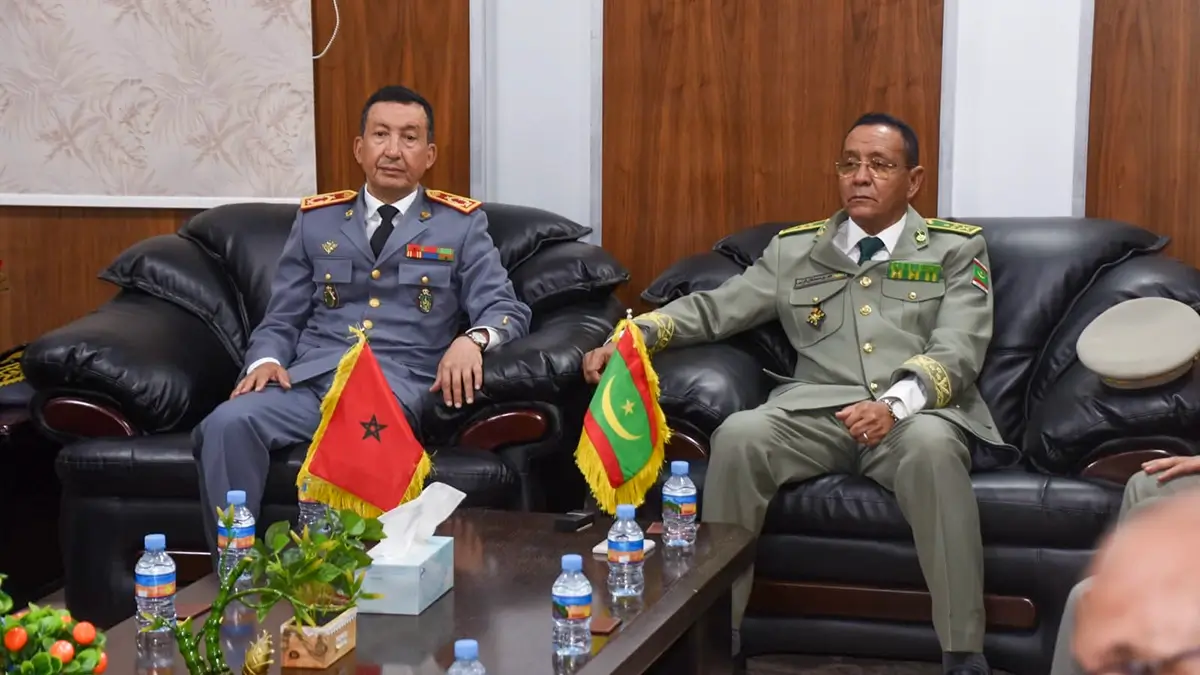
A recent visit by Lieutenant General Mohammed Berrid to Nouakchott has highlighted the progression of bilateral military ties. The relationship is shifting from basic technical coordination toward a more robust, operational framework specifically designed to address shared security threats.
Strategic discussions in Nouakchott
The meeting took place during the sixth session of the Morocco-Mauritania Joint Military Commission, led by Mohammed Berrid and General Mohamed Vall Ould Rayess. During the talks, both delegations highlighted tangible progress in reinforcing this strategic alliance, which enhances operational synergy against cross-border dangers.
At the institutional level, Mauritanian President Mohamed Ould Cheikh El Ghazouani formally received Mohammed Berrid in Nouakchott. The ceremony was attended by the Moroccan Ambassador to Mauritania, Hamid Chabar. Furthermore, the Mauritanian Minister of Defense, Hanana Ould Sidi, honored the General with the National Order of Merit (Commander grade), signaling the high political priority placed on this bilateral security agenda.
Evolution of the Joint Military Commission
While military ties began in 1971, formal institutionalization occurred in 2006 through a memorandum that established the joint commission. Since then, the escalating insecurity in the Sahara and Sahel regions has necessitated a more prominent role for this body. The current structure reflects a move toward a more vigorous partnership capable of navigating an increasingly volatile regional landscape.
Key topics during the sessions included border surveillance, managing irregular migration, countering terrorism, tackling organized crime, and monitoring trafficking corridors in desert territories. These areas are central to the strategic goals of both countries as they seek to diminish the operational reach of transnational criminal networks.
Addressing regional vulnerabilities
Military experts indicate that border zones are particularly susceptible to the infiltration of armed groups and the activities of syndicates involved in drug smuggling, weapons trafficking, and human smuggling. Mauritania remains highly exposed to these risks, prompting a collaborative defense effort with Morocco to establish a practical stability mechanism aimed at preventing conflict escalation.
This bilateral effort aims to mitigate insecurity factors and neutralize tensions involving regional and global actors, thereby fostering greater stability across the Sahel.
Joint training and military exercises
A vital component of this cooperation involves exchanges between military academies and the execution of joint field exercises. These initiatives focus on operational planning, demining techniques, marksmanship, and the management of field maneuvers.
Additionally, participation in regional centers linked to the G5 Sahel allows for specialized training using simulation systems to prepare for multifaceted and complex threats.
The current level of coordination follows a structured work plan established in previous sessions, such as the 2024 Rabat meeting, which set objectives for 2025. The Nouakchott session confirmed the persistence of this momentum, focusing on clear security and defense targets.
Strategic priorities and regional impact
The ongoing instability in the Sahel, the spread of extremist factions, and mounting migration pressures define the context of this partnership. Additionally, the political situation in the Western Sahara remains a factor influencing regional balance and joint security strategies.
Ultimately, the bond between Morocco and Mauritania serves as a cornerstone for regional peace. By strengthening border controls and protecting vital strategic routes, this alliance acts as an essential risk management tool in one of the most sensitive parts of the continent, providing effective solutions to modern defense challenges.