Panafricanism in flux: Kemi Seba challenges pro-russian alignment from prison
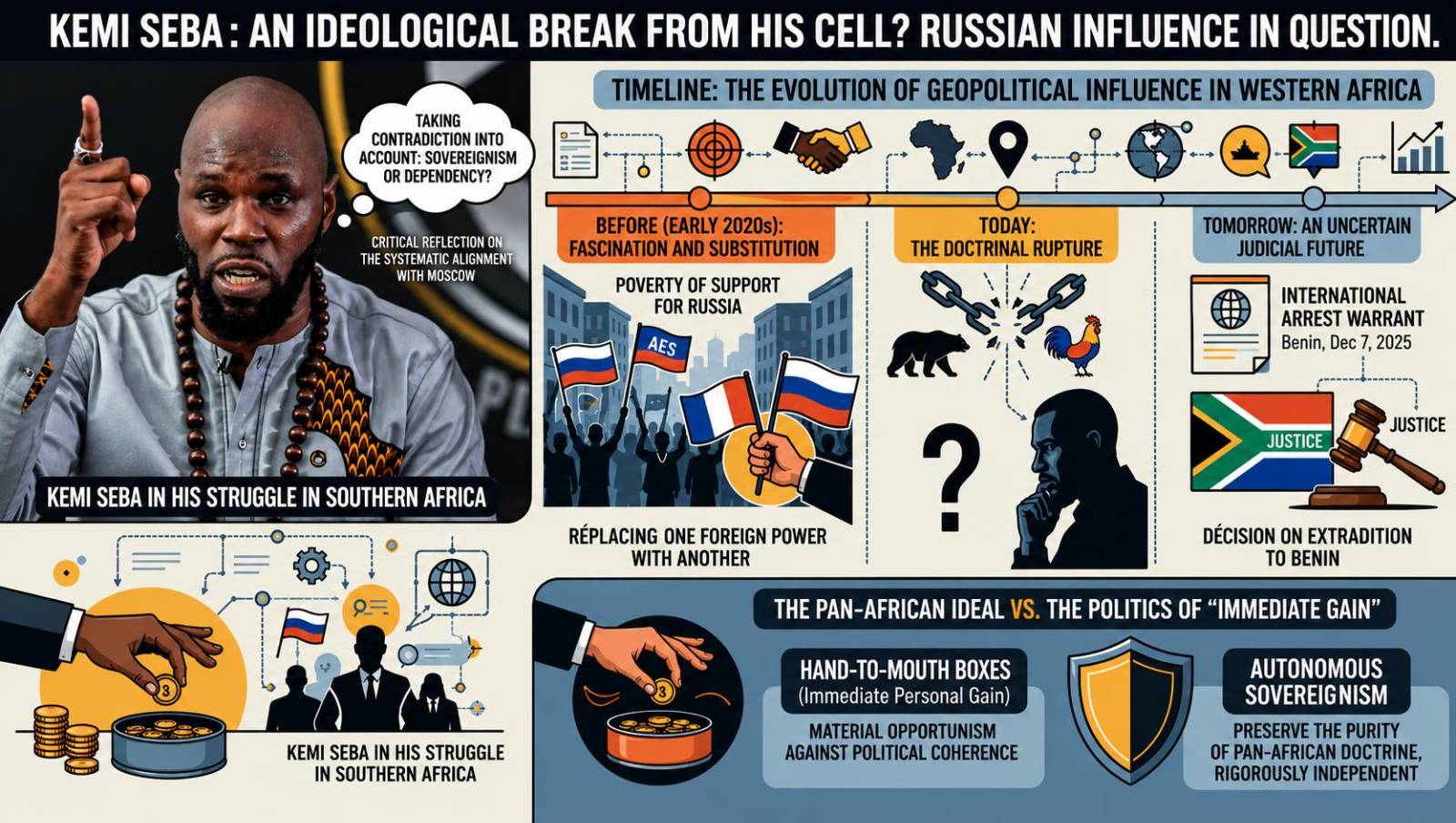
Across the Sahel region, a growing tide of political activism has unfolded in recent years, characterized by public displays of allegiance to Moscow. Flag-waving demonstrations and fervent pro-Russian rhetoric have become hallmarks of movements advocating for uncompromising sovereignty. To many activists, Russia symbolizes a transformative force, a counterbalance to traditional Western influence they view as oppressive.
Yet, this burgeoning affinity raises critical questions about ideological consistency, particularly among factions that claim to champion absolute independence. One prominent figure now reconsidering this trajectory is Kemi Seba, the outspoken panafricanist leader, currently detained in South Africa. His evolving stance appears to signal a significant doctrinal shift from within the very movement he helped shape.
sovereignty without substitution: the paradox of foreign allegiance
The pursuit of strategic alliances is a legitimate pillar of international relations for any nation or political movement. However, the inclination to replace one foreign power with another—especially when motivated by ideological alignment rather than emancipation—has drawn sharp criticism. Observers warn that shifting dependence from Paris to Moscow does not constitute true liberation, but merely a transfer of allegiance from one external patron to another.
Kemi Seba’s recent reflections from his prison cell suggest he now recognizes this contradiction. Once a vocal advocate for closer ties with Russia, he has begun to critique the notion of unconditional alignment with Moscow. His stance suggests a refusal to endorse any form of foreign protectorate, regardless of its anti-Western posture.
ideals over interest: rejecting the politics of expediency
A divide is emerging within sovereignist circles. While some activists genuinely seek a geopolitical rupture, others appear driven by more pragmatic and immediate gains. Seba has publicly condemned this opportunism, using the vivid metaphor of ‘filling the stew pot’ to describe a mindset fixated on short-term material benefit at the expense of long-term ideological coherence.
By rejecting this mercenary approach to ideology, he seeks to uphold the integrity of a panafricanism rooted in self-determination and autonomy. His critique challenges the growing trend of treating geopolitical alignment as a transactional tool rather than a matter of principle.
a legal reckoning in Pretoria
Kemi Seba’s intellectual and political reappraisal coincides with a critical personal juncture. He remains incarcerated in South Africa, awaiting a high-stakes court decision on an international arrest warrant issued by the government of Benin, stemming from allegations related to an alleged coup attempt on December 7, 2025.
The outcome of his extradition case will determine not only his immediate fate but also the future trajectory of the movements he has inspired. Will this period of confinement mark the end of an era for his political vision, or will it catalyze a more coherent and authentic path forward for panafricanism? The coming weeks will be pivotal in defining the legacy of Kemi Seba and the movements he represents.