Niger’s 334 billion FCFA tax arrears: a state that bends for economic giants
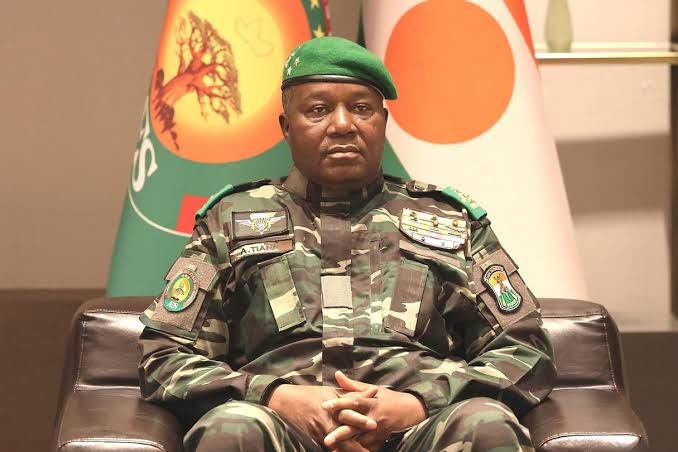
Niger’s tax inspectors show tireless energy when the target is a market stall, a roadside vendor or a tiny workshop. The same officers become strikingly cautious the moment the file belongs to a conglomerate. A backlog of unpaid taxes amounting to 334 billion FCFA, documented jointly by the United Nations Economic Commission for Africa and Niger’s ministry of economy and finance, exposes that contradiction in full. This mountain of uncollected revenue is no accounting accident. It is the direct outcome of institutional timidity and of a government under Tiani that has never found the will to confront the players who matter.
Where the pressure lands, and where it magically stops
Niger’s tax machinery applies two entirely different standards, and the gap between them is glaring. Small and medium-sized firms are shuttered without warning and hit with reassessments over a few hundred thousand francs. Larger operators, by contrast, enjoy a level of indulgence that borders on impunity. That asymmetry says everything about how far public authority is willing to go: coercion is reserved for those who cannot fight back, while the biggest financial interests are effectively untouchable.
Three sectors sitting on untouched receivables
Mobile telephony and its discreet deals
Telecom operators active in the country, among them Airtel Niger and Zamani Telecom, the successor to Orange Niger, repeatedly find themselves in tax disputes worth tens of billions of FCFA, with audits by the tax directorate having flagged sums above 30 billion FCFA. Yet the settlements that follow are negotiated behind closed doors and, almost without exception, end up wiping out or sharply shrinking penalties that were legitimately owed to the public treasury.
Uranium, Sopamin and decades of generosity
For years on end, uranium extraction carried out by Sopamin and the subsidiaries of Orano, formerly Areva, benefited from sweeping tax exemptions. The justification offered was always the same: protecting strategic investment. The result was a fiscal shortfall of enormous proportions, dressed up as economic pragmatism.
Public works contractors and import-export conglomerates
Several multinationals and consortiums that won state contracts still carry tens of billions of FCFA in unsettled tax obligations on their books. No seizure order has been enforced in earnest, and no public contract has been suspended to force compliance. The debts simply sit there, year after year.
What a partial recovery would change
Simply collecting the portion of these arrears that is realistically recoverable would immediately push between 134 and 168 billion FCFA into state coffers, equivalent to 0.4 to 0.6 percentage points of GDP. Failing to do so is not a technical problem. It is a collapse of public authority, plain and simple.
Sovereignty rhetoric versus a rigged tax regime
Niger’s state refuses to apply its own tax law to the economic powers that openly defy it. Until that double standard is dismantled, every speech about national sovereignty or civic duty in taxation will remain pure theatre, designed for one purpose only: to conceal how the country’s public finances are being stripped by a narrow economic oligarchy.