Niamey’s diplomatic facade: Spain’s visit amid passport scandal scrutiny
Niamey’s Diplomatic Theater: The Contrast Between Official Posturing and Internal Turmoil
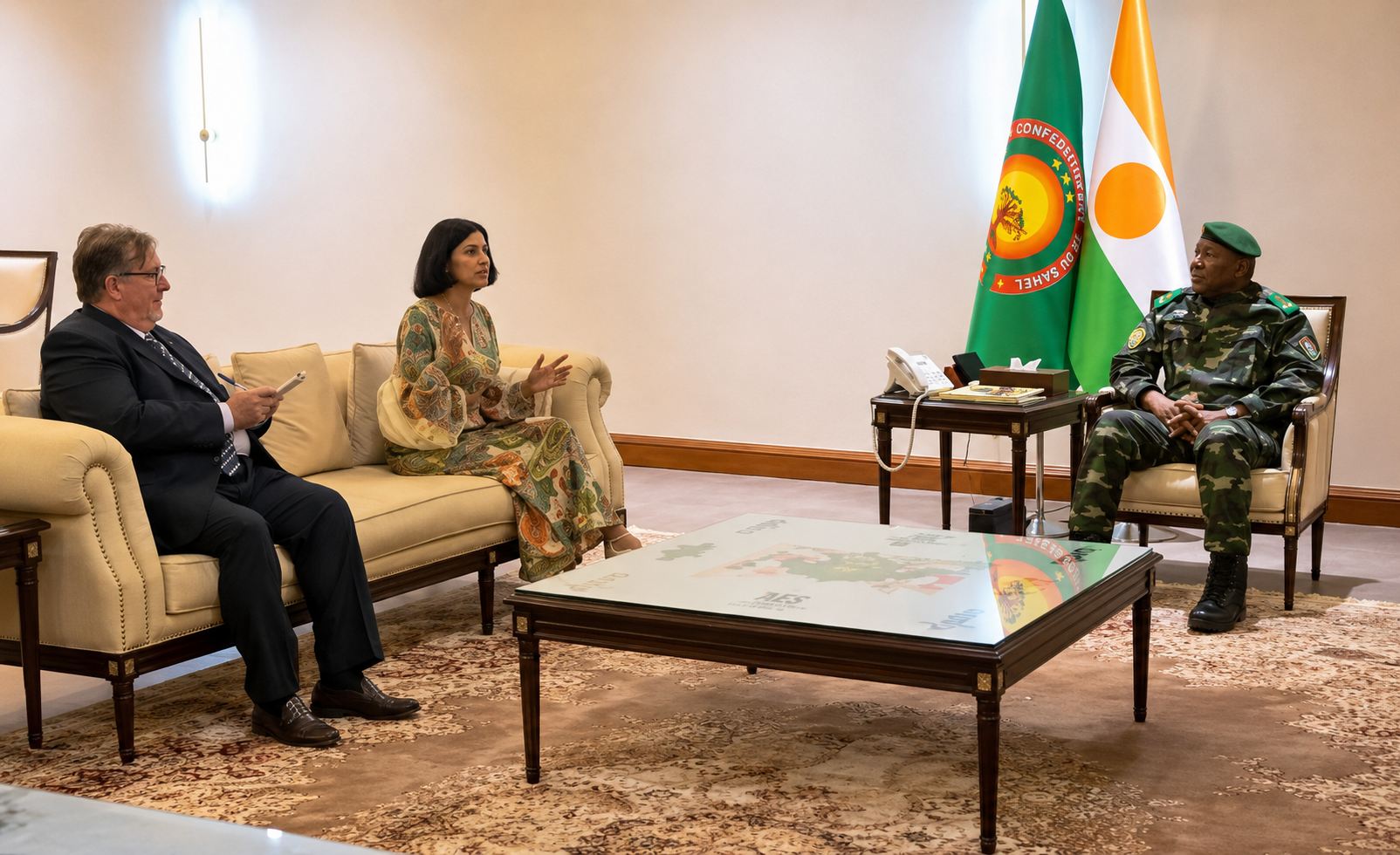
The presidential palace in Niamey staged a display of customary diplomatic pomp as General Abdourahmane Tiani, head of the National Council for the Safeguarding of the Homeland (CNSP), received Spain’s Ambassador to Niger, Gloria Minguez Ropiñon. While the official communiqué from Niamey’s leadership emphasizes a robust and forward-looking partnership, the orchestrated encounter underscores a calculated effort to deflect attention from mounting domestic crises—particularly the contentious issue of passport trafficking and mismanagement.
A Calculated Narrative of Continuity and Legitimacy
Following the meeting, the Spanish diplomat reiterated her country’s commitment to ‘sustainability’ and ‘continuity’ in bilateral relations, dismissing concerns that Niger might seek to replace its traditional partners. Key areas of cooperation—food security, women’s empowerment, education, and Spanish language promotion—were highlighted as pillars of a strengthened alliance slated for 2026 and 2027.
However, seasoned observers of Sahelian politics recognize this diplomatic flurry as a deliberate strategy: the CNSP is leveraging international engagement on uncontroversial issues to bolster its international reputation at a minimal cost. By amplifying Madrid’s support in areas like youth employability, the military regime aims to cloak itself in an aura of legitimacy while stifling domestic scandals.
The Passport Controversy: A Desperate Diversion Tactic
The timing of this diplomatic engagement is no coincidence. Niger’s authorities are embroiled in allegations of opaque passport issuance, particularly concerning diplomatic and service documents. By orchestrating the presence of high-ranking officials—including Foreign Minister Bakary Yaou Sangaré and strategic advisors—during the ambassador’s visit, the regime seeks to project an image of administrative rigor and responsible governance.
The paradox is striking: while official rhetoric champions the integration of young Nigeriens into the global job market through Spanish language education, the opaque mechanisms governing the distribution of travel documents fuel suspicions of favoritism and illicit influence.
Public Relations as a Shield Against Criticism
With key government figures present—including Dr. Soumana Boubacar, Director of the Cabinet and Spokesperson, and Ambassador Illo Adani—the audience was a meticulously staged public relations exercise aimed squarely at domestic audiences. Questioning this official narrative risks exposing the CNSP’s true intentions: masking governance failures behind a veneer of international respectability. By showcasing engagement with European powers, the regime hopes to dilute criticism of its administrative practices and normalize controversial policies.
The youth of Niger, lauded in speeches on education and future prospects, bear the brunt of this crisis. Without access to reliable identity documents, their ‘international integration’—a cornerstone of the Spanish cooperation agenda—remains a distant promise.
The presidential communiqué exemplifies a textbook case of crisis deflection through diplomatic posturing. Faced with allegations of administrative malfeasance and passport trafficking, General Tiani’s regime opts for the path of diplomatic respectability. Whether this veneer of legitimacy will placate international partners and reassure Nigerien citizens remains an open question.