Niamey initiates formal departure from the International Criminal Court
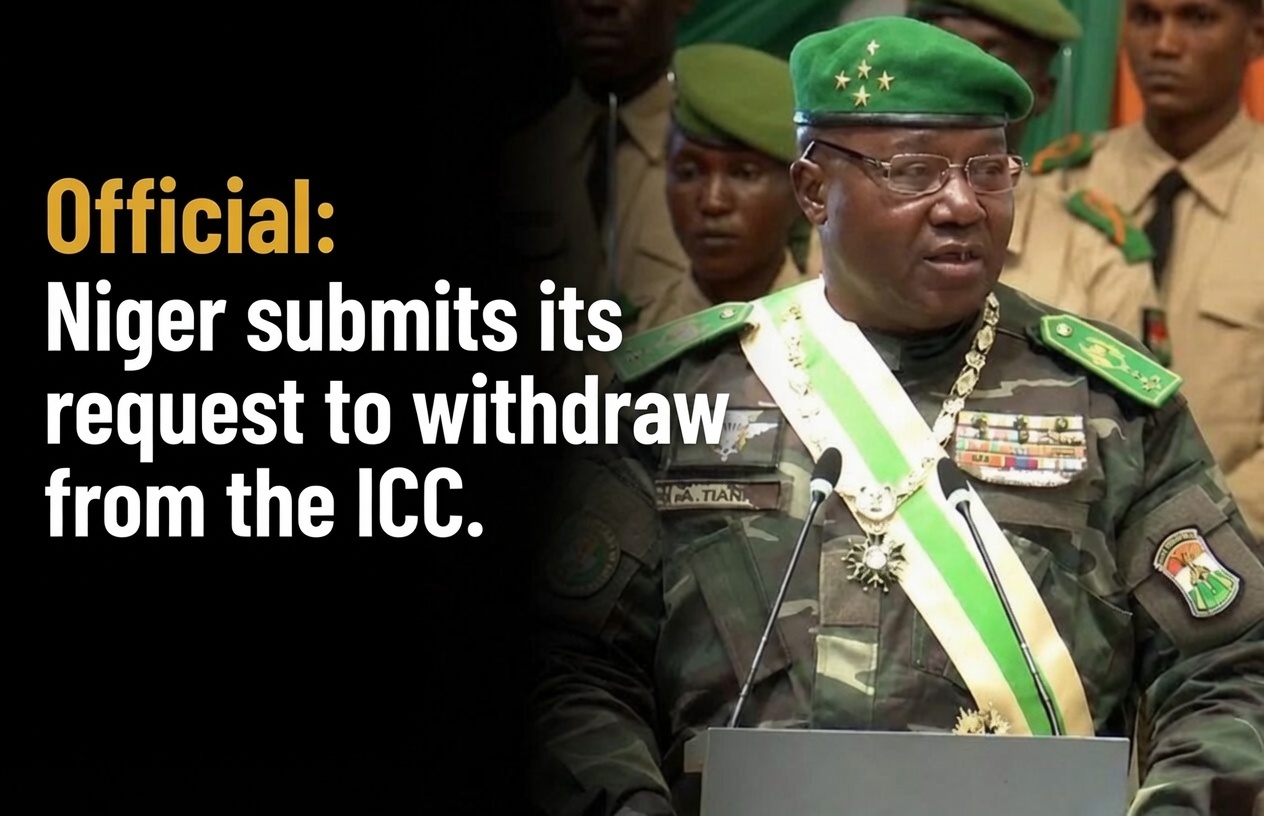
Niger has formally commenced its disengagement from the International Criminal Court (ICC), a move aligning with the transformative agenda pursued by the military administration since its ascent to power in July 2023. This strategic choice, articulated by officials in Niamey, aims to uphold national sovereignty and challenge the operational framework of an institution frequently subjected to scrutiny across the African continent.
A primary grievance articulated by the Nigerien authorities pertains to the International Criminal Court’s perceived disproportionate focus on African nations. Indeed, since its establishment in 2002, the preponderance of inquiries and prosecutions undertaken by the Hague-based tribunal have involved countries within Africa. This perceived imbalance has, for many years, fueled accusations of ‘selective justice’ from various African leaders.
Furthermore, this determination unfolds amidst a significant geopolitical recalibration by Niger. Following a discernible shift away from several traditional Western alliances, the current Nigerien administration has increasingly prioritized enhanced collaboration with the member states of the Alliance of Sahel States (AES), which comprises Mali, Burkina Faso, and Niger. These three nations have proactively pursued numerous joint ventures, specifically designed to fortify their collective political and security autonomy.
The decision to withdraw from the ICC stands as another in a sequence of policy shifts, collectively underscoring the authorities’ intent to diminish the sway of international bodies perceived as inimical to national interests. Proponents of the current government interpret this trajectory as a robust assertion of national self-determination. Conversely, critics contend that a disengagement from international justice frameworks could potentially undermine efforts to combat impunity and deny victims of grave offenses an essential avenue for redress.
From a legal standpoint, the effectuation of this withdrawal is not instantaneous. As stipulated by the Rome Statute, the foundational treaty governing the International Criminal Court, the procedure will only formally conclude one year following the official notification dispatched to the United Nations. Moreover, any investigations that commenced prior to the official withdrawal date will continue to fall under the Court’s purview.
Through its choice to exit the International Criminal Court, Niger thus contributes to the ongoing, expansive discourse concerning Africa’s standing within global institutions and the delicate equilibrium between national sovereignty and the imperative of international criminal justice.