Moscow’s clandestine cargo flights: the Sahel as a gateway to Africa
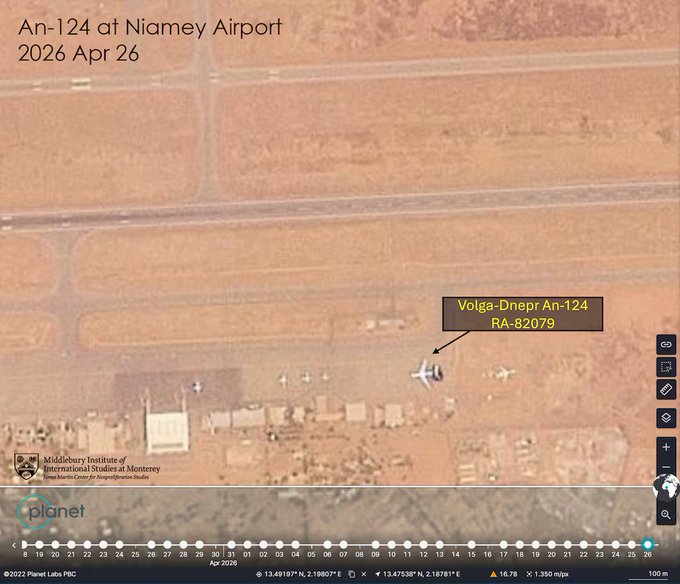
Behind the highly publicised deployment of Africa Corps paramilitaries in the Sahel, a far more obscure logistical machinery operates in the shadows. While global attention focuses on soldiers in combat gear, Moscow is building a strategic air infrastructure that goes beyond mere security assistance. At the core of this system lies a discreet fleet of Russian cargo aircraft, quickly dubbed ‘Air Wagner’ by intelligence analysts.
Under the guise of defence agreements with nations of the Alliance of Sahel States (Mali, Burkina Faso, Niger), this logistical network is poised to become one of Moscow’s most sophisticated espionage and interference tools on the continent.
167 flights under the radar: the hidden dimension of Russian logistics
To circumvent the suffocating effect of international sanctions, the Kremlin relies on a clandestine air ecosystem. A recent aviation investigation has revealed the scale of this aerial ballet: at least 167 cargo flights were formally identified over a period of just 14 months.
Scratching beneath the surface, investigators traced thousands of rotations operated by a dozen interconnected airlines, all linked to Russian state or para-state structures. To conceal this deployment, the methods used are typical of hybrid warfare:
- Voluntary shutdown of transponders (the aircraft’s location beacons).
- Falsification or concealment of flight plans and registration data.
- Use of secondary airports for cargo delivery.
The experts’ assessment: This fleet does not only transport troops and ammunition. It also delivers surveillance equipment, electronic warfare modules, and Russian military intelligence (GRU) technicians, turning each rotation into an opportunity to map and monitor the Sahel region.
From security assistance to strategic dependency
For the AES regimes, the partnership with Africa Corps is often presented as a swift, unconditional alternative for combating terrorism. Yet the technical reality shows that Moscow is in the process of locking down the vital infrastructures of these states.
Russian support is no longer limited to field operations; it now encompasses strategic transport, exclusive maintenance of local military aircraft, cadre training, and logistical supply. By establishing themselves at the heart of the airbases in Bamako, Ouagadougou, and Niamey, Russian intelligence services gain unlimited access to the sovereign military data of host countries. Under the pretext of securing regimes, Moscow listens, observes, and collects information on local resources, troop movements, and government communications.
A long-term political cost
‘Air Wagner’ and Africa Corps are not charitable organisations but instruments of raw influence. By providing this logistical crutch, the Kremlin achieves a twofold objective: emancipating itself from diplomatic isolation by gaining strategic depth in Africa, while ensuring a permanent oversight role over the domestic politics of AES countries.
For Sahelian states, the short-term calculus of immediate security may soon collide with a harsh reality. The political cost, marked by a gradual loss of sovereignty to Moscow’s eavesdropping, is already proving far higher than the promised security benefits. By opening their runways to the Russian phantom fleet, the AES countries may have unwittingly invited the principal spy of their own territory.