Morocco population projections by 2060 reveal urban growth and aging trends
Morocco’s demographic future: steady growth meets urban expansion and aging
New projections from the Moroccan High Commission for Planning (HCP) outline the country’s demographic trajectory from 2024 to 2060. The forecasts, based on varying scenarios of fertility, mortality, and migration, paint a picture of gradual transformation for the North African nation.
A population on the move: urbanization reshapes Morocco
Under the central scenario, Morocco’s population is expected to rise from 36.8 million in 2024 to 43.3 million by 2060—a 17.8% increase over 36 years. This translates into an average annual addition of 182,000 people, though growth is projected to slow and eventually stabilize around zero by mid-century. The country is transitioning from decades of rapid expansion to a phase of near demographic stagnation.
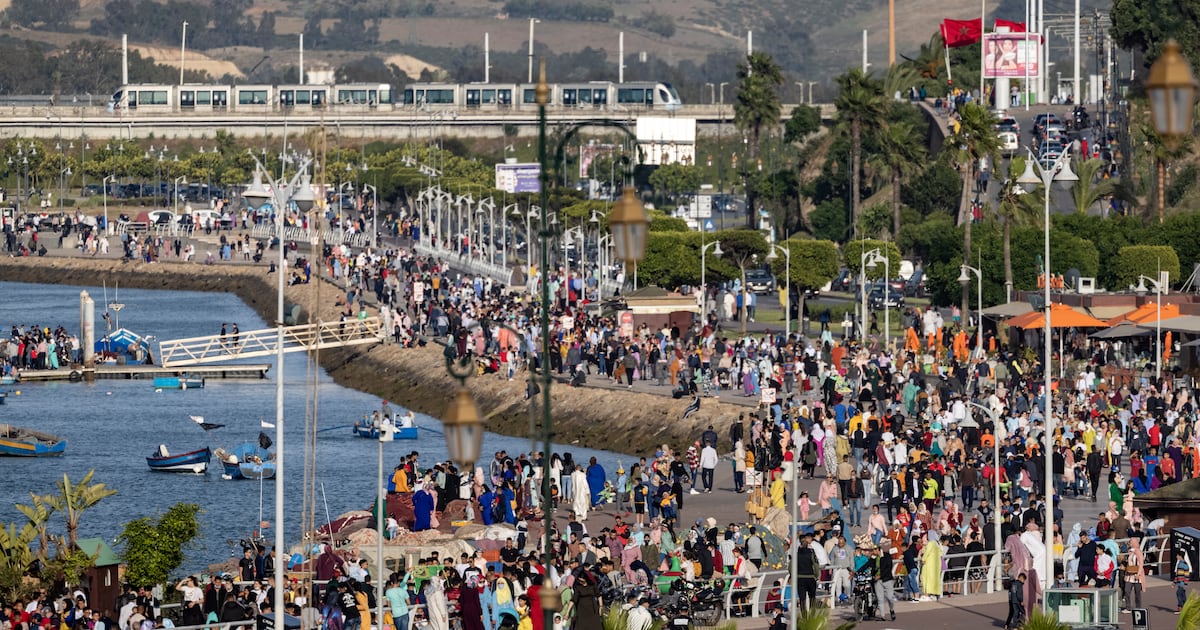
The most striking shift will occur in urban centers. By 2060, nearly 32.5 million Moroccans—about 75% of the total population—will reside in cities, while rural areas will shrink to around 10.8 million inhabitants. This urban surge, the HCP warns, will intensify pressure on housing, infrastructure, and social services unless proactive policies are implemented to balance territorial development.
Education and labor: shrinking youth cohorts reshape priorities
Declining birth rates will significantly reduce the number of young children. The preschool population (ages 4–5) is expected to drop by 23.8%, from 1.25 million to 960,000. Primary school-aged children (6–11) will fall by 27%, from 4.16 million to 3.04 million. Similarly, middle school cohorts (12–14) will decline by 22.9%, and secondary school-age populations (15–17) will decrease by 11.4%.
While this contraction may ease pressure on school infrastructure, the HCP highlights an opportunity to reallocate resources toward improving educational quality, teacher training, and curriculum development rather than expanding classroom capacity.
The working-age population (15–59) will continue growing, albeit unevenly. Nationally, it will rise from 22.08 million to 24.96 million—a 13.1% increase. However, urban areas will see a 34.4% surge to 19.1 million, while rural regions face a 25.4% decline to 5.9 million. This imbalance risks overburdening urban job markets already struggling to absorb labor migrating from the countryside.
Young adults aged 18–24, typically new entrants to the workforce, will see a slight national decrease of 3.1%, though urban areas will still experience an 11.3% rise, reaching 2.75 million. Rural regions, however, will see a sharp 28.3% drop to 1.01 million. Meanwhile, the 50–59 age group will expand by 44.9% nationally, driven by a 76.6% increase in cities and a modest 17.4% decline in rural zones.
Aging population: a demographic challenge ahead
Perhaps the most transformative trend is the rapid aging of Morocco’s society. By 2060, individuals aged 60 and older will soar from 5 million to 10.9 million, representing 25.2% of the population—nearly double their current 13.6% share. This group’s growth will be especially pronounced in cities, where their numbers will more than double from 3.18 million to 8.06 million, compared to a more modest 1.6-fold increase in rural areas (1.81 to 2.83 million).
The 70+ age bracket will see even more dramatic growth, tripling from 2.06 million to 6.3 million. Urban septuagenarians will jump by 256% to 4.44 million, while rural residents in this group will rise from 810,000 to 1.86 million.
The HCP attributes this aging trend to the post-1975 fertility decline—the start of Morocco’s demographic transition—as well as reduced mortality rates and, to a lesser extent, migration patterns. Generations born after 1975 will begin reaching retirement age around 2035, accelerating the country’s demographic aging process in the decades to come.
Policy imperatives: preparing for a transformed society
The HCP emphasizes that Morocco must act now to address the socioeconomic implications of aging. The dependency ratio—a measure of non-working-age individuals relative to the working population—will rise, placing new burdens on pension systems, healthcare, and intergenerational support networks. Traditional family structures, already strained by rural-urban migration, may struggle to provide the same level of care for older adults.
The institution stresses that aging is not a temporary phenomenon but a structural shift demanding long-term planning. Policies in education, employment, urban planning, and social protection must be reimagined to support a nation that grows more slowly but ages more rapidly.