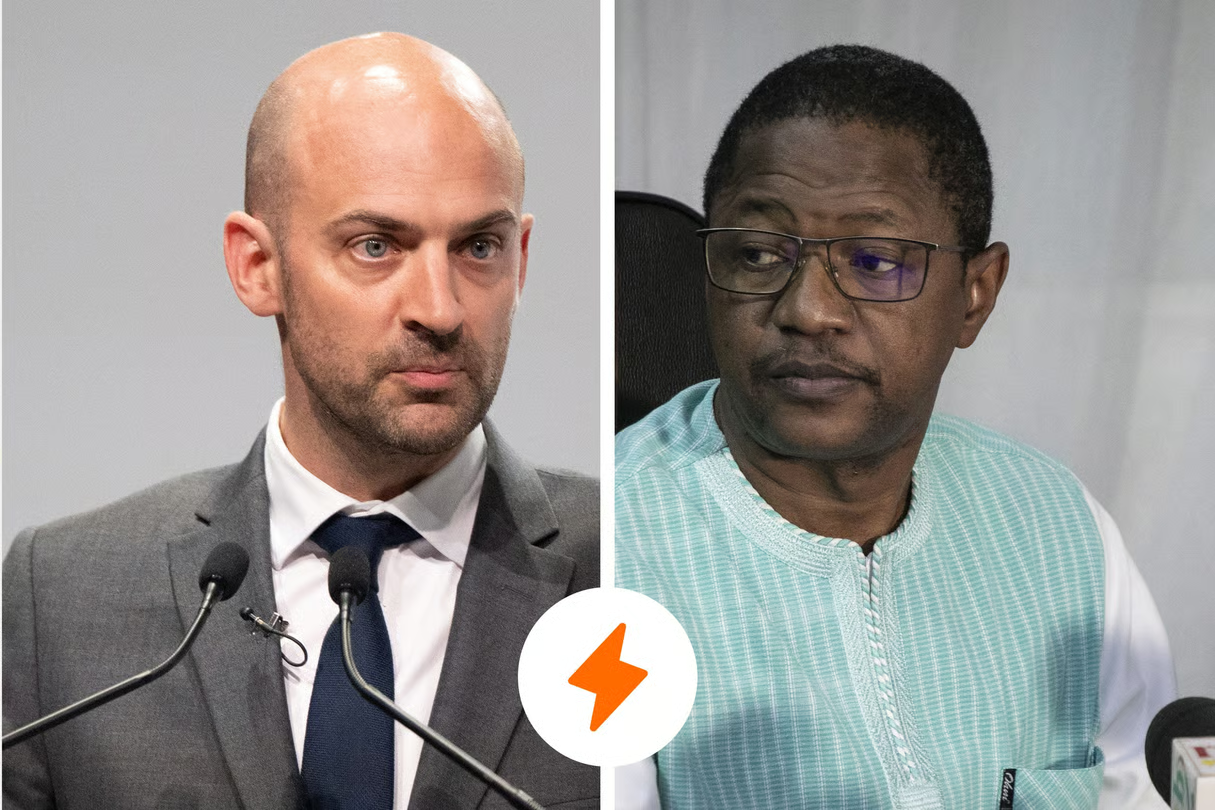
Escalating tensions in West African diplomacy
At the heart of Africa’s shifting geopolitical landscape, Burkina Faso and France have entered a critical phase in their diplomatic confrontation. The exchange between Karamoko Jean-Marie Traoré, Burkina Faso’s Foreign Minister, and Jean-Noël Barrot, his French counterpart, has become the focal point of this high-stakes standoff.
The visual documentation of their meeting captures the gravity of the moment, illustrating how mutual trust between the two nations has eroded over recent months. The image serves as a stark reminder of the challenges facing bilateral relations in a region where historical alliances are being reevaluated.
Foreign policy shifts in the Sahel
Burkina Faso’s pivot away from traditional partners has been closely watched across the continent. The country’s leadership has increasingly turned toward alternative alliances, signaling a broader trend in Sahel governance. This strategic recalibration has placed additional pressure on France, which has long considered the region as part of its sphere of influence.
Analysts highlight that Burkina Faso’s foreign policy adjustments are not isolated. Neighboring nations in the Alliance of Sahel States have adopted similar stances, further complicating France’s diplomatic engagement in West Africa. The collective approach of these governments underscores a shared determination to redefine their international partnerships.
Implications for regional stability
The diplomatic rift between Ouagadougou and Paris carries significant consequences for regional security. France’s historical role in combating insurgencies in the Sahel now faces unprecedented scrutiny, while Burkina Faso’s leadership seeks to assert its autonomy in foreign affairs.
The outcome of these negotiations could reshape security cooperation across the Sahel, influencing how regional blocs like the Alliance of Sahel States interact with global powers. Observers are particularly focused on whether a compromise can be reached or if the divide will deepen further.
Public sentiment and political narratives
Domestic reactions in both countries reflect the polarized nature of this dispute. In Burkina Faso, public support for the government’s stance has strengthened, with citizens viewing the diplomatic confrontation as a necessary step toward reclaiming national sovereignty. Meanwhile, in France, debates continue over the country’s role in Africa, with critics questioning the effectiveness of past policies.
The contrasting narratives in each nation highlight how geopolitical shifts are not merely abstract diplomatic maneuvers but deeply personal issues for citizens on both sides of the Mediterranean.
What’s next for Burkina Faso-France relations?
As the exchange between Traoré and Barrot reaches a critical juncture, the broader implications for West African diplomacy remain uncertain. Will this confrontation lead to a lasting realignment of alliances, or will it open pathways for renewed cooperation?
One thing is clear: the decisions made in these high-level talks will have ripple effects far beyond the negotiating table, shaping the future of Sahel governance and Africa-France relations for years to come.