Mali’s bold step: introducing the hpv vaccine to safeguard future generations of women
Mali’s bold step: introducing the HPV vaccine to safeguard future generations of women
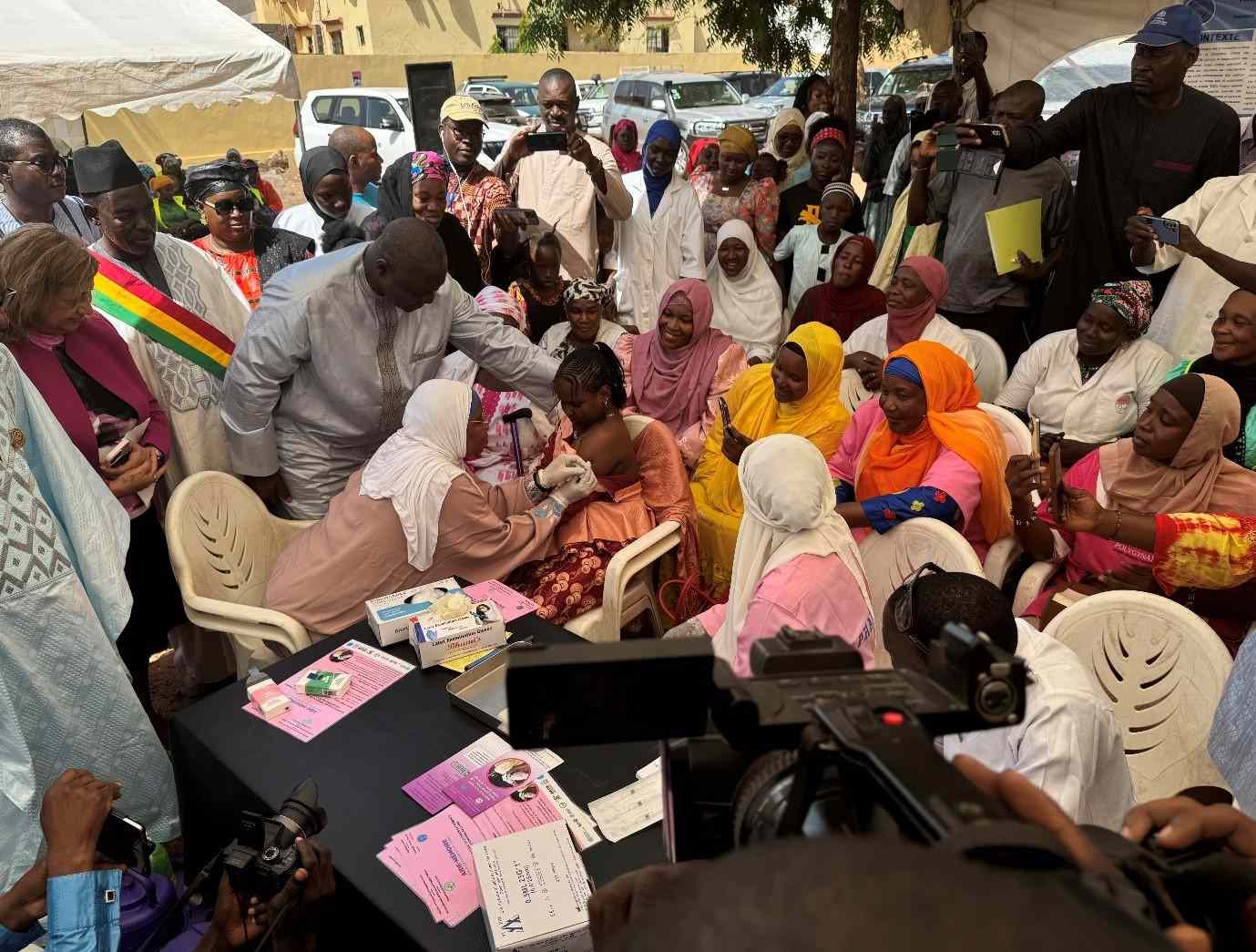
In a landmark public health initiative, the Malian government officially incorporated the human papillomavirus (HPV) vaccine into its routine immunization schedule in early November. A significant ceremony held in Bamako, attended by various dignitaries and international partners, saw Gavi and the Ministry of Health and Social Development underscore the profound importance of this launch. This marks a pivotal moment in the nation’s ongoing efforts to prevent cervical cancer among Malian women.
For countless Malian women, cervical cancer remains a devastating reality. Fatoumata, a 38-year-old woman, exemplifies the tragic impact of this disease.
« I initially had a fibroid and delayed treatment. It was when I started experiencing bleeding that I underwent surgery. After the operation, I began having discharge, clear and odorless, almost like water. Following this, I consulted my gynecologist. The results revealed cervical cancer. I spent between 5 and 6 million CFA francs on treatment. The surgery alone cost two million CFA francs. »
Through this crucial initiative, Mali aims to protect over 320,000 young girls annually, thereby reducing cervical cancer cases by nearly 90%. This could potentially prevent more than 3,600 deaths among Malian women each year.
Fatoumata’s powerful testimony underscores the immense challenges many women face with delayed diagnoses and the prohibitive cost of treatment in Mali, where access to high-quality healthcare is often limited.
The significant burden of cervical cancer in Mali
Cervical cancer, primarily caused by persistent infection with certain types of human papillomavirus (HPV), represents a critical public health concern in Mali. It stands as the second most common cancer affecting Malian women between the ages of 15 and 44. This insidious disease, frequently diagnosed at advanced stages, continues to devastate families across the nation, leading to thousands of preventable deaths each year.
Beyond medical hurdles, deep-seated cultural taboos often prevent women from openly discussing their symptoms. Popular beliefs, which sometimes attribute these illnesses to curses or spells, further delay crucial diagnosis and exacerbate the consequences. « Cervical disease is sometimes perceived as a hex cast by a co-wife, sister-in-law, or former partner, » explains an advocate for sexual and reproductive health.
A transformative step: the introduction of the HPV vaccine
In a historic move, the Malian government recently integrated the HPV vaccine into its routine immunization program. During the campaign launch in Bamako, Dr. Ibrahima Diarra, Director of Mali’s National Immunization Center, emphasized the groundbreaking nature of this advancement: « A single dose is sufficient to protect a 10-year-old girl for over ten years against the viruses responsible for 70% of cervical cancers. » The vaccine is now provided free of charge to young girls, thanks to the invaluable support from Gavi and co-financing from the Malian state.
With this initiative, Mali anticipates protecting over 320,000 young girls annually, expecting to reduce cervical cancer cases by nearly 90%. This bold step could prevent more than 3,600 deaths among Malian women each year.
Advancing health equity
This comprehensive vaccination program represents a significant stride towards achieving public health equity. Cervical cancer tragically claims thousands of women’s lives daily, disproportionately affecting those in low-income countries. In 2022, a staggering 348,000 global deaths were recorded, with 90% occurring in these regions. By introducing the HPV vaccine, Mali is taking a decisive action towards justice, making prevention accessible to all girls, regardless of whether they reside in urban centers or rural communities.
Dr. Diarra elaborated on the strategic choice to target 10-year-old girls: « We selected this age group because their cervix is typically still healthy, well before the onset of sexual activity, which ensures maximum vaccine efficacy. » This approach aligns perfectly with the World Health Organization’s (WHO) recommendation to prioritize the vaccination of young adolescents aged 9 to 14 years.
Mali stands out as one of the first Sahelian nations, and the inaugural Gavi-supported country within the fragile and conflict-affected category, to successfully introduce the HPV vaccine.
Beyond preventing cervical cancer, the introduction of the anti-HPV vaccine also promises to alleviate the financial burden associated with the disease’s expensive treatments. « A single dose costs approximately 150,000 FCFA in private pharmacies, but thanks to Gavi’s support and the Malian state’s co-financing, this vaccine is now free as part of the routine immunization program, » Dr. Diarra proudly stated.
Mali distinguishes itself as a pioneering nation in the Sahelian region and the first Gavi-supported country grappling with fragility and conflict to implement the HPV vaccine. This transformative initiative not only safeguards generations of Malian women but also sets a powerful precedent for other countries in the region. It marks a major advancement in line with Gavi’s global objectives to vaccinate 86 million young girls in low- and middle-income countries by 2025.
Combating misinformation
Malian health authorities are also actively addressing a significant challenge: misinformation. Rumors and false narratives sometimes circulate around vaccines, often fueled by opponents. « It is absolutely crucial to counter these erroneous claims. This vaccine is safe, highly effective, and does not compromise the fertility or reproductive health of young girls, » Dr. Diarra emphatically stated.
The Minister of Health, Colonel Assa Badiallo Touré, also publicly reaffirmed the safety and critical importance of this vaccine during its official launch.
The introduction of the anti-HPV vaccine represents a profound victory for women’s health and a decisive step towards a more equitable future in Mali. By breaking the cycle of disease through proactive prevention, the country exemplifies a public health model centered on fairness, protecting its most vulnerable citizens and ensuring a healthier, safer future for Malian women.