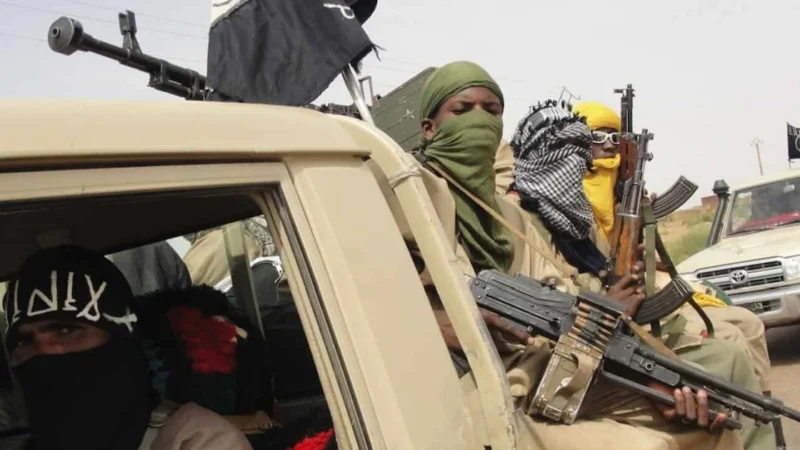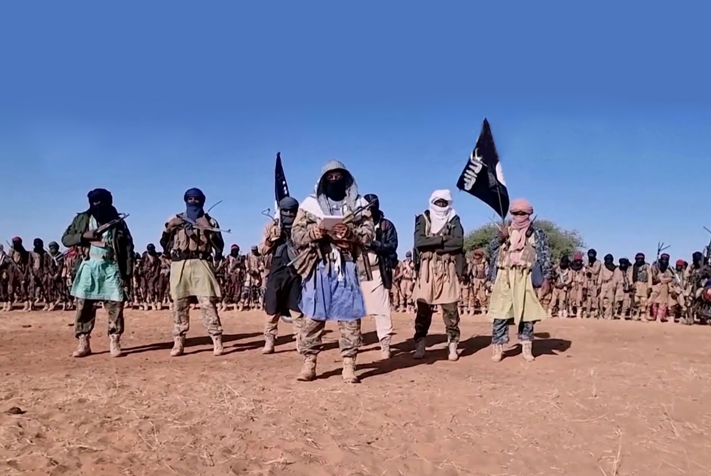
The Sahel Province of the Islamic State continues to assert its presence in northeastern Mali, even as attention shifts to the JNIM.
The Gao region—particularly the Ansongo district—and the Ménaka region remain under the shadow of the Islamic State’s Sahel Province (ISSP), formerly known as the Islamic State in the Greater Sahara (EIGS). Within this volatile stretch, communities in Talataye, Tin-Hama, Tessit, and Labbezanga endure persistent pressure as the group solidifies its territorial foothold and tightens control over local populations.
Leadership and tactics
Under the command of Abou Al-Bara, who took over after the death of Adnan Abu Al-Walid Sahraoui in 2021, the ISSP has evolved its strategy. Gone are the days of mass executions and high-profile terror attacks designed to shock the world. Today, the group focuses on a quieter but no less insidious approach—consolidating power through subtle governance, local influence, and tight control over strategic corridors. It’s a calculated shift aimed at embedding itself within communities rather than drawing global attention.
Yet Mali’s armed forces have not relented in their pursuit. In a bold strike on the night of May 14–15, 2026, a coordinated aerial operation in Bara, Ansongo district, neutralized a key ISSP operative alongside several of his fighters. This relentless military pressure underscores the resilience of the Malian state—and the equally resilient capacity of the ISSP to regroup, rebuild, and reassert itself along the Mali-Niger borderlands.
Strategic operations and regional reach
The ISSP’s footprint stretches along critical trade and movement routes connecting Mali and Niger. Villages like Talataye, Tin-Hama, Tessit, and Labbezanga serve as both operational hubs and testing grounds for the group’s evolving tactics. By asserting control over these crossing points, the ISSP doesn’t just move fighters and supplies—it shapes local economies, influences armed groups, and embeds itself into the daily lives of residents.
The rivalry with the JNIM adds another layer of complexity to the security landscape. While the JNIM has gained visibility through high-profile assaults—such as the coordinated attacks near Bamako and several localities in late April 2026—the ISSP hasn’t disappeared. In fact, the two groups operate on fundamentally different models. The JNIM thrives on spectacle and media impact, whereas the ISSP prefers the slow burn: quiet governance, economic pressure, and the unshakable control of territory. The fragile truce that once existed between them has eroded since 2020, and though recent military offensives have temporarily shifted focus toward a shared enemy, no formal peace has been established.
Ongoing threats and evolving methods
According to the latest ACLED data from May 15, 2026, 86% of Islamic State activity worldwide in early 2026 occurred in Africa, with a marked rise in drone strikes, motorized ambushes, and economic coercion targeting both urban and rural areas. The ISSP has intensified attacks on civilian and military infrastructure along the Ménaka–Ansongo–Tessit corridor and in Labbezanga, exploiting gaps in governance to enforce its de facto rule. One such incident in February 2026 saw armed men ambush a civilian convoy near Kobé, just 35 kilometers from Gao, demonstrating the group’s reach and audacity.
International cooperation has led to the elimination of key figures, including Abu-Bilal Al-Minuki, who was neutralized on May 16, 2026, during a joint operation in the Lake Chad basin involving Nigerian and U.S. forces. Yet despite these setbacks, the ISSP’s core networks in northeastern Mali remain intact. The group continues to thrive in the ‘3 T’ villages—Talataye, Tin-Hama, and Tessit—and Labbezanga, where it blends governance with intimidation to maintain dominance.
The ISSP is not just surviving—it is adapting. While global attention often fixates on the JNIM or other high-profile armed factions, the Islamic State’s Sahel Province is quietly rewriting the rules of engagement. Its deep roots in local communities, strategic control over movement corridors, and ability to regenerate demand a sustained and targeted response—especially along the volatile Mali-Niger frontier, where the battle for influence is far from over.