Gabon’s political parties face June 27 deadline for radical reform
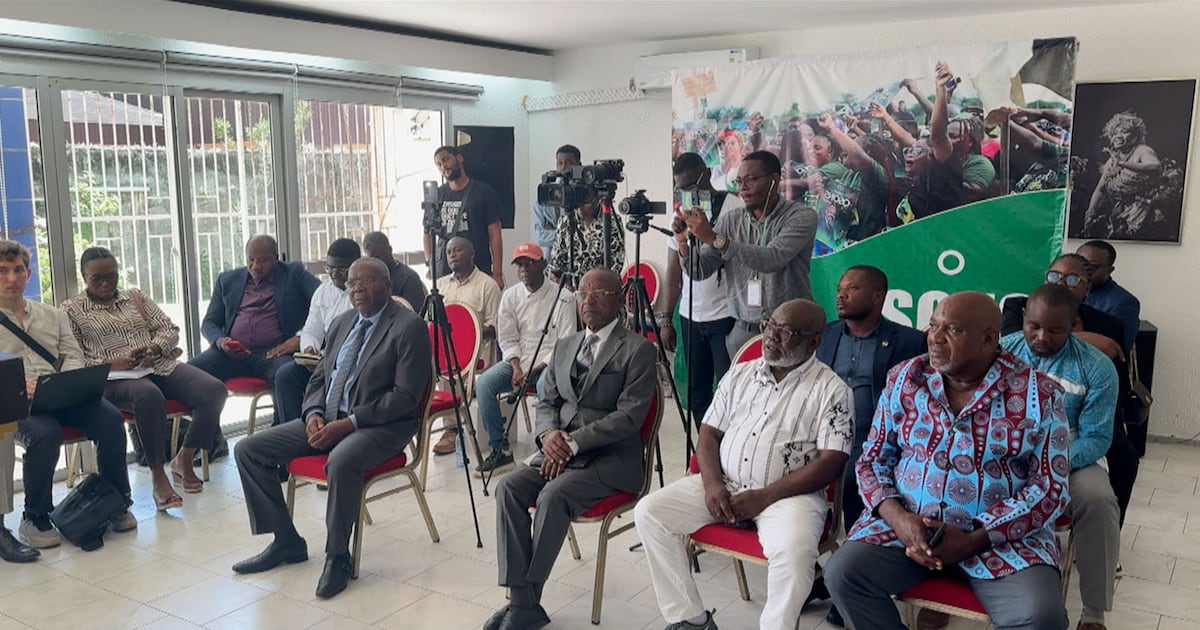
With a monumental political shift just a week away, the focus has moved beyond negotiation to accountability. As the critical deadline of June 27, 2026, approaches for adherence to Gabon’s new political party legislation, most organizations claim they have met the necessary requirements.
However, a significant disparity exists between these stated intentions and the administrative reality. As of last April, a mere ten political entities out of 104 registered had submitted comprehensive compliance documents. The Ministry of Interior is set to deliver its definitive decision on June 27, a date that could dramatically reshape Gabon’s political arena.
Enacted following the recommendations from the April 2024 Inclusive National Dialogue, Law No. 016/2025 aims to «cleanse» the political sphere. The era of micro-parties, frequently criticized as hollow shells or «partis mallettes,» is drawing to a close. To maintain their existence, political organizations must now function as well-structured, robust political forces.
The stringent demands call for unprecedented national representation: a verifiable 10,000 members, each identified by their Personal Identification Number (NIP), distributed proportionally across Gabon’s nine provinces. Furthermore, parties must possess a physical headquarters, a dedicated bank account, updated statutes, and enhanced financial transparency overseen by the Court of Accounts.
Interior Minister Adrien Nguema Mba has unequivocally stated that the deadline will not be extended. Non-compliant political entities face automatic dissolution.
This legislative upheaval stems from a consensus among participants in the National Dialogue: a nation with fewer than three million inhabitants cannot sustain the political fragmentation of 104 organizations, many of which operate as family-run structures lacking genuine national presence. Political actors are now positioning themselves, caught between resignation and resistance.
As this critical deadline looms, reactions across the political spectrum remain varied. Joachim Mbatchi, president of the Front for the Defense of the Republic (FDR), asserted, «This reform does not intimidate us,» viewing it as an opportunity for smaller parties to consolidate into «grands ensembles.»
Théophile Makita Nyembo, Vice-President of Ensemble pour le Gabon, confirmed that his party, established by former Prime Minister Alain Claude Bilie By Nzé (currently detained), is already compliant. «Nous remplissons toutes les conditions prévues par la loi,» he stated, emphasizing that the reform primarily targets newer organizations. Yet, critics are growing louder, condemning the move as a tactic to stifle opposition.
Just as the decisive moment approaches, a statement by the President of the Republic to Parliament introduced an element of uncertainty. He voiced reservations regarding certain alterations made to the National Dialogue’s recommendations, while simultaneously stressing that «les décisions prises par les Gabonais doivent être respectées.»
This presidential address ignited anger from Francis Aubame, president of the Parti Souverainistes-Écologistes (PSE). «I believe this is political manipulation,» he fumed. «Je suis étonné que le Président oublie qu’il a signé un décret. Il demande aux parlementaires de revenir sur celui-ci. Mais le dialogue national n’est pas la conférence nationale souveraine. Les députés sont libres de leur vote,» he asserted, decrying what he sees as interference in legislative work.
Amidst potential dissolution and rejuvenation, the future of multiparty politics in Gabon hangs in the balance. The prevailing question is: how many parties will endure the administrative overhaul slated for June 27? Recent assessments suggest that only four parties, including the dominant UDB and PDG, have so far managed to submit complete applications. Others, racing against time to recruit 10,000 members identified by NIP, face outright disappearance.
While the government insists its goal is to prioritize the «quality» of democratic discourse over the «quantity» of political organizations, many observers and commentators perceive this as a troubling contraction of democratic space. The new legislation also mandates electoral performance; any party failing to field candidates in two consecutive elections will automatically forfeit its official status.
On June 27, the Ministry of Interior will announce its verdict. That day, Gabon will discover whether it is embarking on an era of structured, tranquil politics or witnessing the demise of a certain degree of pluralism. It marks the anticipated end of a period where establishing a political party was often a mere formality.