Fuel price disparity between Côte d’Ivoire and Bénin in 2026
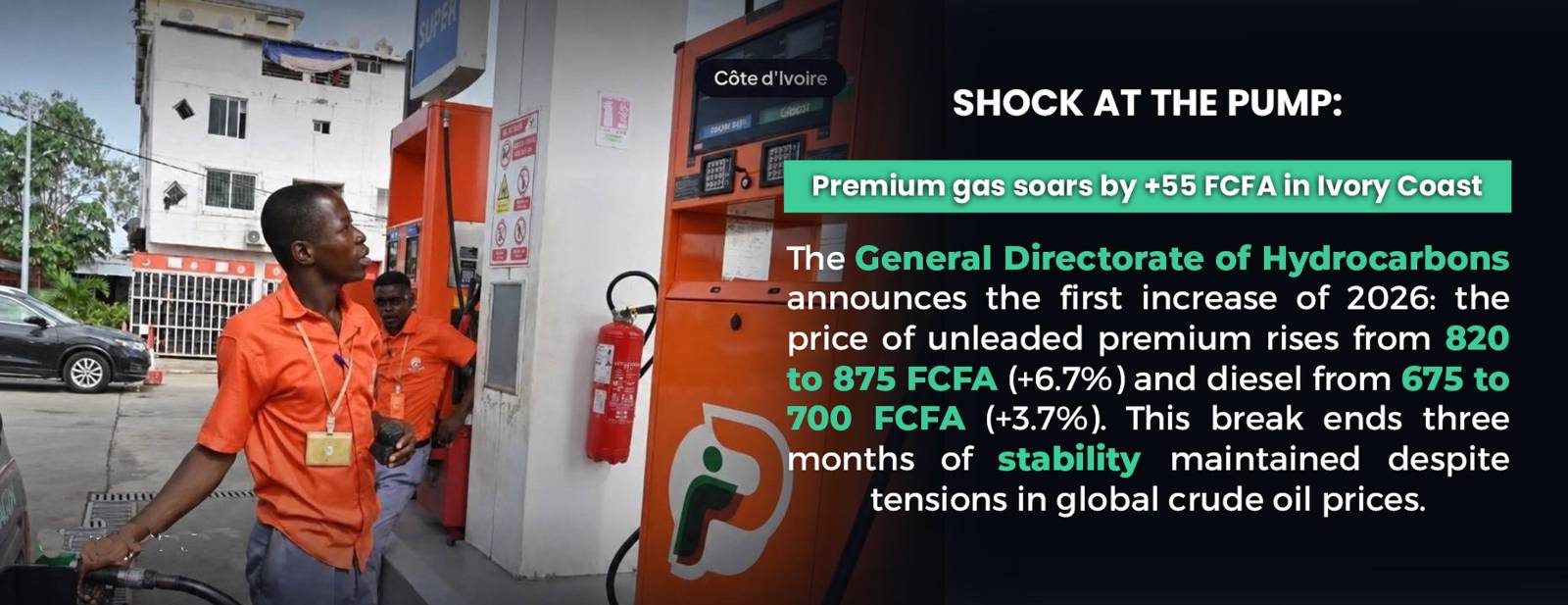
In May 2026, the fragile balance of purchasing power in West Africa faces yet another challenge. As households strive to safeguard their savings amid persistent inflation, a stark contrast emerges at fuel pumps: a widening gap between fuel prices in Côte d’Ivoire and those in Bénin.
Côte d’Ivoire: the burden of a producer nation
The General Directorate of Hydrocarbons in Côte d’Ivoire has announced the first price adjustment of the year, marking a significant shift after a period of relative stability. For consumers, the impact is immediate and severe. The price of Super unleaded petrol rises from 820 to 875 West African CFA francs per liter—a 6.7% increase—while diesel surpasses the 700 FCFA mark.
This decision has sparked widespread bewilderment. How can a nation with substantial oil reserves, theoretically shielded by its natural assets, impose higher prices than its neighbors? The repercussions extend far beyond mere numbers. Every additional franc added to the cost of diesel translates directly into higher transport expenses, which in turn drives up the prices of essential goods.
Bénin: a pragmatic approach to economic resilience
By contrast, Bénin has adopted a strategy centered on social stability. Despite lacking large-scale oil production, the government in Cotonou has prioritized inflation control. Even amid geopolitical tensions in the Middle East that drive global fuel prices upward, Bénin’s tariffs as of May 1, 2026, remain notably competitive:
- Petrol: 725 FCFA/L
- Diesel: 750 FCFA/L
The disparity is striking: petrol costs 150 FCFA less per liter in Bénin than in Côte d’Ivoire.
« Our lack of domestic production demands disciplined fiscal management, but our foremost priority is safeguarding household budgets, » explains a government insider.
Through carefully calibrated taxation or targeted subsidies, Bénin succeeds in revitalizing its local economy while others struggle under the weight of economic pressure.
Does oil wealth truly benefit the people?
This pricing gap raises fundamental questions about the redistribution of resources across the subregion. For Ivorian citizens, the price hike feels like an « invisible tax, » a direct deduction from their future aspirations and daily lives.
While Côte d’Ivoire leverages its oil extraction capabilities, it has yet to translate this advantage into tangible benefits for end consumers. Bénin, despite its resource limitations, demonstrates how proactive policy can mitigate the absence of natural wealth.
The pressing question remains: what is the true value of energy sovereignty if it fails to protect citizens during economic turmoil?