State funeral for Mali’s former defence minister sadio camara held
Mali holds state funeral for assassinated defence minister Sadio Camara
Mali paid its final respects this week to General Sadio Camara, the country’s former defence minister, whose life was cut short during a devastating jihadist assault on military positions across the nation. The state funeral, broadcast nationwide, brought together military leaders, government officials, and citizens to honour a figure whose influence extended far beyond Mali’s borders.
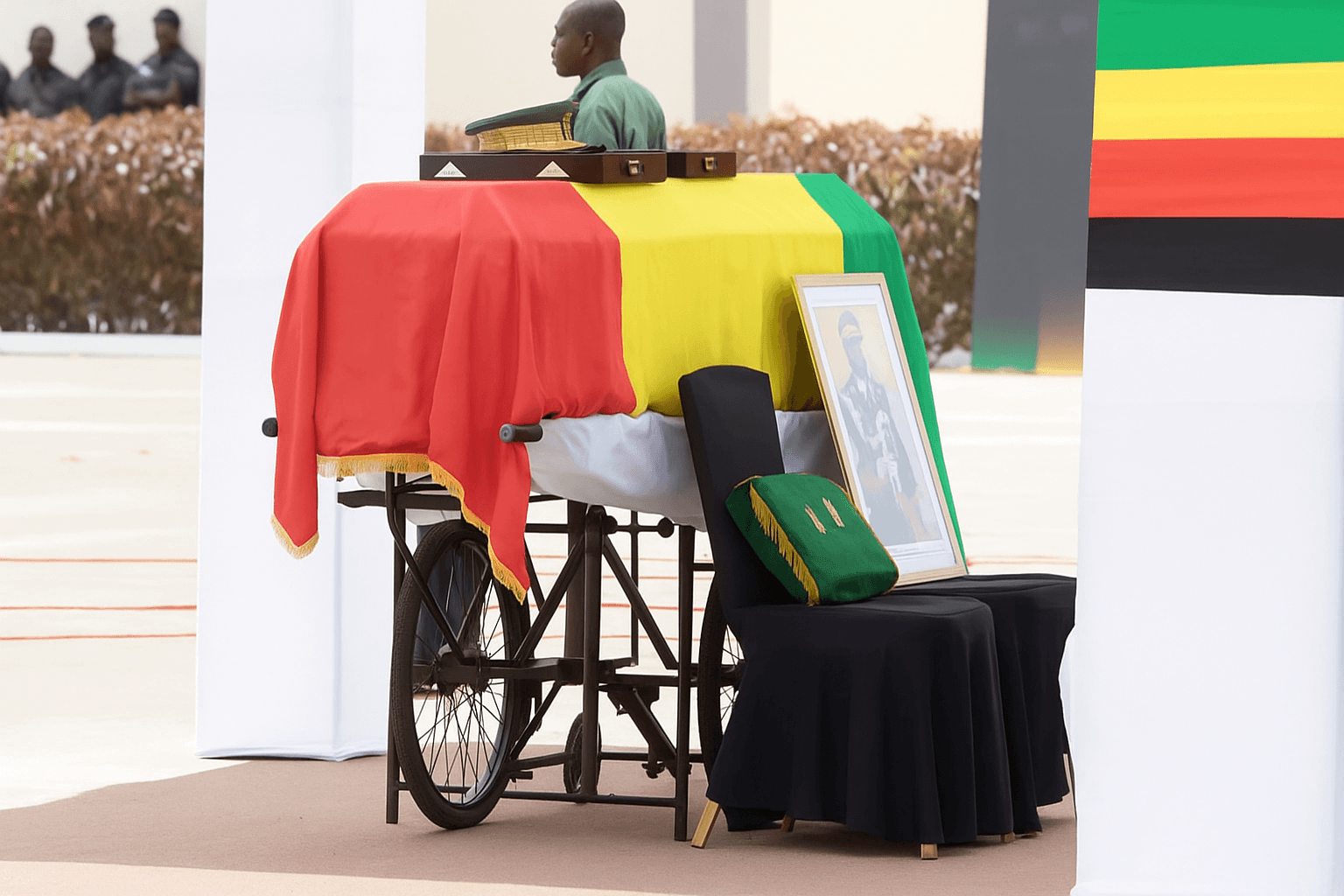
The ceremony, held over two days of national mourning, was led by Assimi Goïta, Mali’s junta leader, and featured prominent displays of the Malian flag draped over Camara’s coffin. Large portraits of the late defence minister lined the streets, capturing the magnitude of his contributions and the shock of his sudden departure.
Strategic loss for Mali and regional stability
The death of Sadio Camara represents more than a national tragedy; it marks a pivotal moment that could redefine Mali’s internal power dynamics, its international alliances, and the broader security landscape of the Sahel.
Camara was not just a key military commander but a central architect of Mali’s pivot toward Russia as its principal security partner following the 2020 coup. His strategic vision reshaped the country’s geopolitical stance, shifting away from traditional Western allies like France and toward Moscow’s sphere of influence. Analysts warn that his assassination, coupled with recent battlefield setbacks involving Russia-linked fighters, may trigger significant consequences, including:
- Increased tensions within Mali’s ruling junta
- Reevaluation of the country’s partnership with Russia
- Potential shifts in alliances within the Alliance of Sahel States
- Heightened scrutiny of the junta’s military strategy
The fallout from Camara’s death extends beyond Bamako, resonating across the Sahel where insurgencies, separatist movements, and weak governance intersect. Regions such as Gao, Mopti, Sévaré, and Kidal remain hotspots of instability, with groups like Jama’at Nasr al-Islam wal-Muslimin and the Azawad Liberation Front continuing to challenge state authority.
A career shaped by Mali’s military and political turmoil
Born in 1979 in Kati—Mali’s most politically sensitive military garrison near Bamako—Camara’s rise was deeply intertwined with the nation’s power structures. His journey from a field officer in the late 2000s to a pivotal figure in the 2020 coup and subsequent military leadership underscored his strategic importance. Trained in Russia, Camara played a critical role in forging Mali’s defence ties with Moscow, a decision that later became a cornerstone of the junta’s legitimacy.
In August 2020, Camara emerged as one of five officers who publicly announced the overthrow of then-President Ibrahim Boubacar Keita, citing his failure to curb escalating militant violence and over-reliance on foreign powers. The coup leaders pledged to restore security, a promise that led Mali toward closer collaboration with Russia and the expulsion of French troops and UN peacekeepers.
As defence minister under successive military administrations, Camara remained a steadfast advocate for Russia’s military support, shaping Mali’s security doctrine in an era marked by insurgency and regional fragmentation. His death, however, now casts doubt on the continuity of this strategy and the junta’s ability to maintain cohesion amid mounting challenges.
What lies ahead for Mali’s military leadership
Camara’s assassination comes at a precarious time for Mali. The country faces simultaneous pressures: deteriorating security, contested territories in the north, and growing scepticism over the efficacy of its Russian-backed military approach. While the state funeral projected an image of unity, the underlying reality is far more complex.
The loss of such a consequential figure may force the junta to confront critical questions about its future direction—particularly regarding its alliances, military priorities, and domestic legitimacy. For observers of West African geopolitics, Camara’s death could signal a turning point, not just for Mali but for the entire Sahel region, where the balance of power and the fight for sovereignty continue to unfold.