Eastern DRC: rising tensions within AFC/M23 amid leadership disputes and resource rivalry
eastern DRC: rising tensions within AFC/M23 amid leadership disputes and resource rivalry
- Politics
The latest UN Group of Experts report on the Democratic Republic of the Congo (DRC) has cast a spotlight on the deepening divisions within the Alliance of the Congo River (AFC/M23), a dominant armed group operating in North Kivu and South Kivu provinces. The report, submitted to the UN Security Council, reveals a movement plagued by internal power struggles, military expansion disputes, and fierce competition over resource control.
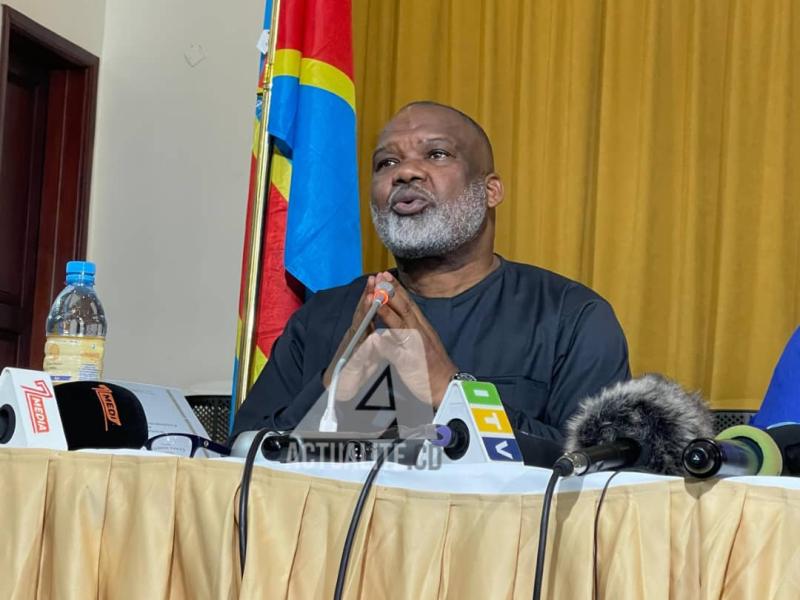
According to the document, the military command of the AFC/M23 remains formally under the control of “General” Sultani Makenga, though his leadership has faced growing opposition both within the movement and from Rwandan authorities. The report highlights that political leaders Bertrand Bisimwa and Corneille Nangaa—former head of the Independent National Electoral Commission (CENI)—have maintained their grip on the group’s political direction. Both leaders, alongside former President Joseph Kabila, are reportedly pursuing ambitions to exert influence over Kinshasa’s political landscape.
Tensions between the political and military wings of the AFC/M23 have intensified, particularly over the issue of military expansion beyond North and South Kivu. “While Nangaa and Kabila push for broader operations to secure political leverage in Kinshasa, the majority of M23 commanders oppose any expansion beyond their traditional strongholds,” the report notes. The document further details disputes over resource access and distribution, with allegations of preferential treatment for Tutsi officers and combatants.
The AFC/M23’s occupied territories have been reorganized into three defense zones, each led by a different commander:
- Baudoin Ngaruye oversees the first zone, covering Nyiragongo, Rutshuru, and Lubero territories;
- Justin Gacheri Musanga heads the second zone, encompassing Masisi and Walikale;
- Innocent Byamungu commands the third zone in South Kivu.
The group’s total fighting force is estimated at around 30,000 combatants, including:
- A core of former members from the National Congress for the Defense of the People (CNDP) and the historic M23;
- Recruits mobilized since 2021, drawn from the diaspora and refugee camps in Rwanda;
- Defectors from the DRC Armed Forces (FARDC), National Police, and Wazalendo militias, particularly after the fall of Goma;
- Members of newly formed local defense units and police forces.
The report underscores that despite the Washington Agreement and ongoing mediation efforts—including rounds in Doha and Montreux—security and humanitarian conditions in eastern DRC continue to deteriorate. Kinshasa and Kigali remain at odds over the interpretation and implementation of the Washington Agreement, signed nearly a year ago. Similarly, the Doha process, mediated by Qatar, has stalled, with both sides unable to bridge key differences. The diversion of international attention toward crises in the Middle East has further delayed progress, leaving eastern DRC in a precarious state.