Diplomatic convergence in Cotonou: a potential shift for regional relations
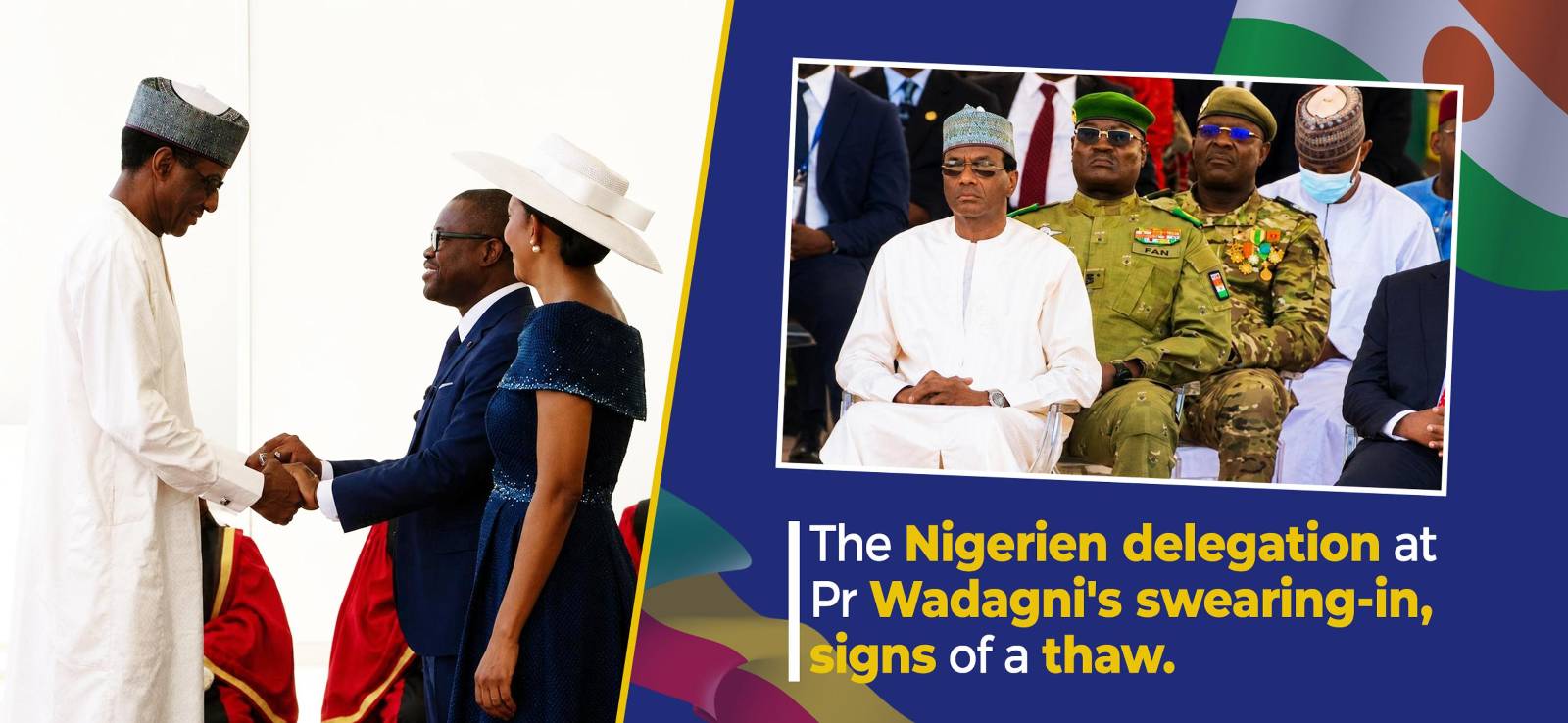
The notable presence of Niger’s transitional head of government, accompanied by the foreign policy chiefs of Mali and Burkina Faso, on the fringes of an official ceremony, marks a significant diplomatic turning point within a sub-region experiencing heightened tensions.
Such a scene on the official steps in Cotonou was an image few observers anticipated so soon. On the occasion of the formal proceedings related to Romuald Wadagni’s new responsibilities, Nigerien Prime Minister Ali Mahamane Lamine Zeine personally undertook the journey to Benin’s economic capital.
Beyond mere protocol, this official visit carries profound geopolitical significance. It occurs as relations between Niger and Benin have endured a deep crisis since the summer of 2023, manifested by the prolonged closure of their shared border and recurrent disagreements surrounding the transit of Nigerien oil via the port of Sèmè-Podji.
The complete display of the AES front
Ali Lamine Zeine’s arrival was not an isolated occurrence. The Nigerien Prime Minister was joined by a highly strategic delegation. The Ministers of Foreign Affairs from both Burkina Faso and Mali also traveled to Cotonou.
The collective attendance of the three member nations of the Alliance of Sahel States (AES) at a Beninese official event conveys a dual message:
- The continued viability of economic diplomacy: Romuald Wadagni, a central figure in Benin’s financial architecture and a consistent interlocutor for international institutions, clearly maintains open channels of discussion with the Sahelian authorities.
- A clear intention for de-escalation: Following months of logistical and customs impediments at Benin’s northern frontier, the presence of Niger’s transitional leadership in Cotonou concretely demonstrates a mutual desire to overcome the impasse.
The economic imperative superseding protocol
While the political crisis stemming from the July 2023 coup d’état in Niamey had frozen institutional relations, economic realities appear to have reasserted their primacy. Benin has been directly impacted by the revenue loss from halted cross-border trade, while Niger confronts significant logistical challenges for its crucial exports and essential supplies due to its landlocked status.
The critical challenge: The land border has remained closed for nearly three years, severely disrupting historical trade corridors. This high-level gathering could establish the groundwork for a phased technical reopening schedule.
By successfully bringing together the Nigerien Prime Minister and the chief diplomats from Mali and Burkina Faso, Cotonou has achieved a significant diplomatic breakthrough. This event underscores that, despite regional ideological divisions, geographical and financial pragmatism remains the fundamental common denominator within the sub-region.