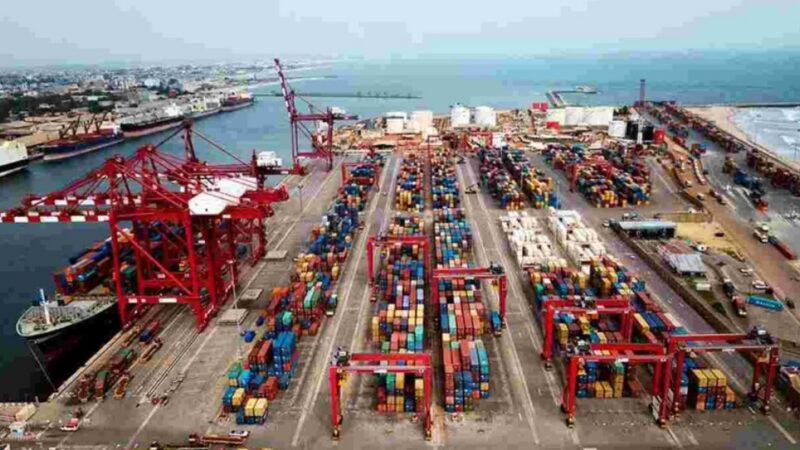
Since regaining political stability in 2011, Côte d’Ivoire has consistently ranked among Africa’s top-performing economies. The nation is now committed to ensuring its growth is more inclusive and sustainable. In line with this vision, Adama Coulibaly, the Minister of Economy, Finance, and Budget, presented a comprehensive “national strategy for carbon emissions taxation” on May 28, 2026.
rising emissions, declining carbon intensity
Driven by robust economic expansion, Côte d’Ivoire’s greenhouse gas emissions more than doubled between 2011 and 2024, escalating from 9 to 18.8 million tons. Minister Coulibaly emphasized that “this increase is primarily linked to our reliance on fossil fuels, the expansion of transportation, industrialization, and agricultural activities.”
Over the same period, the country’s Gross Domestic Product (GDP) surged even more rapidly, growing from $35 billion to nearly $87 billion. Consequently, the carbon intensity of the Ivorian economy has decreased, a clear indication that the nation is already progressing along its energy transition pathway. Furthermore, per capita emissions remain remarkably low on a global scale, at 0.65 tons per year, in stark contrast to approximately 5 tons in France, 8 tons in China, and over 13 tons in the United States.
why Abidjan seeks faster decarbonization
Despite these trends, the government is determined for Côte d’Ivoire to contribute its fair share to global climate efforts. The escalating consequences of climate change, including rising temperatures, disrupted rainfall patterns, and an increase in environmental hazards, are already impacting numerous sectors, most notably agriculture, which sustains nearly half of the population.
To address these challenges, Côte d’Ivoire has established an ambitious goal: to significantly reduce its carbon footprint by 2035 while sustaining an annual economic growth rate exceeding 7%. In its third Nationally Determined Contribution (NDC), published in 2025, the country outlines a plan to reduce greenhouse gas emissions by 33% using its own resources, with potential for a reduction of up to 74% with international funding and support. This demonstrates robust governance Africa is taking on climate change.
how the carbon tax will be deployed
The new Côte d’Ivoire carbon tax will be systematically introduced in three distinct phases to align with this decarbonization trajectory. The initial phase, spanning 2026 to 2027, will focus on establishing the necessary legal and technical frameworks. This will be followed by its implementation at a moderate rate during 2028-2029. The tax level will then be gradually increased until 2035, culminating in a phase of thorough evaluation and adjustment.
This forthcoming tax will primarily target the consumption of fossil fuels, with the exception of butane gas. By increasing the cost of these energy sources, it aims to incentivize a reduction in their usage. Government projections suggest that a rate of 50 euros per ton of CO₂ could lead to a decrease in national emissions of 1.2 million tons, representing 6% of the 2024 emission levels. This decisive step highlights proactive African politics in environmental policy.
The government acknowledges that this measure may entail short-term negative economic repercussions. The ministry anticipates that the tax could potentially lead to an increase in fuel prices and exert pressure on economic growth during its initial years of implementation.
serving transition, employment, and vulnerable populations
The revenues generated by the carbon tax are earmarked to mitigate these potential negative impacts, primarily by accelerating the decarbonization of various sectors. These funds will be prioritized to expand access to electricity across the entire national territory. A portion of the funds will also subsidize the purchase of electric or gas cookers, thereby reducing reliance on charcoal. Furthermore, the tax will support the growth of electric vehicles through targeted tax incentives, exemptions, and the strategic deployment of charging infrastructure.
The government is also committed to minimizing the reform’s impact on the most vulnerable households within society Africa. A segment of these revenues will be directly redistributed to those in need. These funds will additionally finance the creation of green jobs and support retraining programs for sectors potentially affected by the ecological transition. Thus, the Côte d’Ivoire carbon tax embodies the stated priority of the 2026-2030 National Development Plan (PND): harmonizing economic growth, social justice, and environmental protection.