Catholic Church in DRC opposes plans for constitutional revision
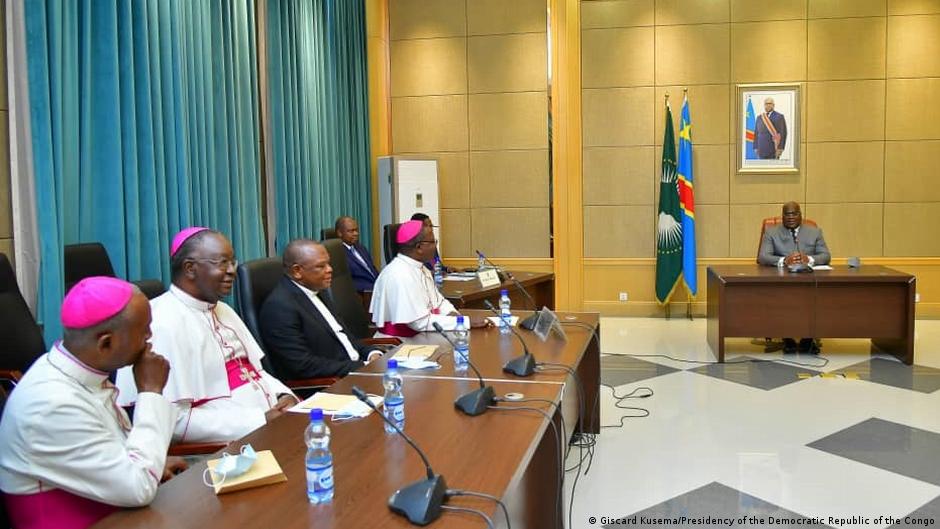
The movement against changing the constitution in the Democratic Republic of Congo has gained a powerful ally. The National Episcopal Conference of Congo (CENCO), an institution whose influence resonates deeply across the nation, has officially declared its opposition to revising the fundamental law established on February 18, 2006.
According to Abbé Donatien Nshole, the secretary general of CENCO, the constitutional reform currently being considered by the government is neither necessary, urgent, nor appropriate for the country’s current situation.
“We call upon the clergy and pastoral agents to widely disseminate this message and to awaken the consciousness of our faithful and all people of good will. It is essential to resist manipulations intended to alter the Constitution. We reserve the right to communicate further and announce specific actions to be taken when the time is right,” Nshole stated.
The Catholic Church says no to constitutional change
The bishops appear determined to shape the political dialogue, cautioning that such initiatives could further weaken the Democratic Republic of Congo. This warning comes at a sensitive time, as the country is already struggling with persistent insecurity in the East and significant social tensions.
In the streets of Kinshasa, however, the stance taken by CENCO has sparked a variety of interpretations among the population.
“Many people are focusing solely on the President of the Republic and the possibility of another term. However, we should consider the general interest, as he is working for the benefit of the people,” argued one young woman.
Another citizen expressed concern about the timing: “If we look closely, the country is not in a good state. We have the state of siege and the ongoing war in the East. How can we justify changing the Constitution under these circumstances?”
A different perspective was offered by a young man who believes the document must evolve: “The Constitution must also be favorable for our standing on the international stage. If it is not adapted, we will not hold our place as a sovereign state capable of establishing treaties and other international agreements.”
The influence of CENCO
While CENCO does not hold formal institutional power to stop a reform, its social, political, and diplomatic weight is immense. This is a point emphasized by political scientist Christian Moleka.
“The Catholic Church will certainly mobilize, but there is a new factor at play: the mobilization of other religious groups, particularly the revivalist churches. The advantage of the Catholic Church is its ability to organize across the entire country, something other churches cannot match. Furthermore, it possesses a diplomatic lever; its voice is heard not only in the streets of Kinshasa but also within the international community,” Moleka explained.
As the debate intensifies, the political opposition has announced a street protest scheduled for July 8. The demonstration will call for the resignation of President Félix Tshisekedi. In response, the secretary general of the ruling UDPS party has accused the opposition of attempting to provoke a popular uprising within the country.