Sunday, November 22

Politics

Benin unveils new government under romuald wadagni with 24 ministers
Politics

Benin unveils new government under romuald wadagni with 24 ministers

As Benin enters a new political chapter with Romuald Wadagni at the helm, the country’s first government since his inauguration on May 25, 2026, has been unveiled in Cotonou. The 24-member team reflects a deliberate strategy of continuity, with key portfolios entrusted to seasoned technocrats who previously served under Patrice Talon’s administration. Wadagni, a former Finance and Economy Minister, has positioned himself as Talon’s political heir, reinforcing this perception through his government’s composition. Stability takes center stage in Benin’s new executive The newly appointed cabinet includes a significant number of familiar faces from the previous government, signaling a clear intent to maintain economic and administrative stability. Benin has recorded one of the strongest growt...
Mali’s junta accuses France of backing azawad rebels
Politics

Mali’s junta accuses France of backing azawad rebels

The Malian government has escalated diplomatic tensions with France, accusing Paris of providing backing to the Front de libération de l’Azawad (FLA), a Tuareg separatist group that launched a major offensive in northern Mali in late April. The transitional authorities, led by General Assimi Goïta, are leveraging these accusations to reinforce their sovereignist stance and justify the ongoing political tightening since the dual coups of 2020 and 2021. This latest confrontation follows the near-total breakdown in relations between Bamako and its former colonial power after the withdrawal of the Barkhane force in 2022 and the exit of the UN MINUSMA contingent in late 2023. the FLA: a legacy of Tuareg autonomy struggles The Front de libération de l’Azawad emerged from the remnants of the Coo...
Benin’s new president romuald wadagni pledges stability amid regional tensions
Politics

Benin’s new president romuald wadagni pledges stability amid regional tensions

Romuald Wadagni has been sworn in as Benin’s new president following a landslide victory in the April 12 election, securing 94% of the vote against sole opponent Paul Hounkpe. Hounkpe’s party later joined forces with the ruling party in Parliament, shifting the political landscape. The inauguration ceremony drew over 6,000 attendees, including high-ranking state officials, constitutional body members, diplomats, and former presidents Nicéphore Soglo and Thomas Boni Yayi. Notably, Niger’s Prime Minister Ali Mahaman Lamine Zeine was also present, signaling efforts to mend strained bilateral relations. a constitutional shift and bold commitments The amended 2025 Constitution extends the presidential term from five to seven years while maintaining a two-term limit. Wadagni, now Benin’s fift...
Benin’s new government balances continuity with digital transformation
Politics

Benin’s new government balances continuity with digital transformation

Just hours after taking the oath of office as President of Benin, Romuald Wadagni announced the composition of his first cabinet. The 22-member team, including three deputy ministers, blends experienced officials from the previous administration with fresh strategic appointments, signaling a dual commitment to reform and renewal. This government structure reflects the new leader’s determination to build on key initiatives launched under Patrice Talon’s presidency, while introducing bold new priorities in digital technology, innovation, and public sector efficiency. The move underscores a clear vision for modernizing governance and accelerating Benin’s socio-economic development. key appointments reflect stability and reform The reshuffle places seasoned leaders in pivotal roles. Yvon Dé...
Why Senegal’s president and pm parted ways after two years
Politics

Why Senegal’s president and pm parted ways after two years

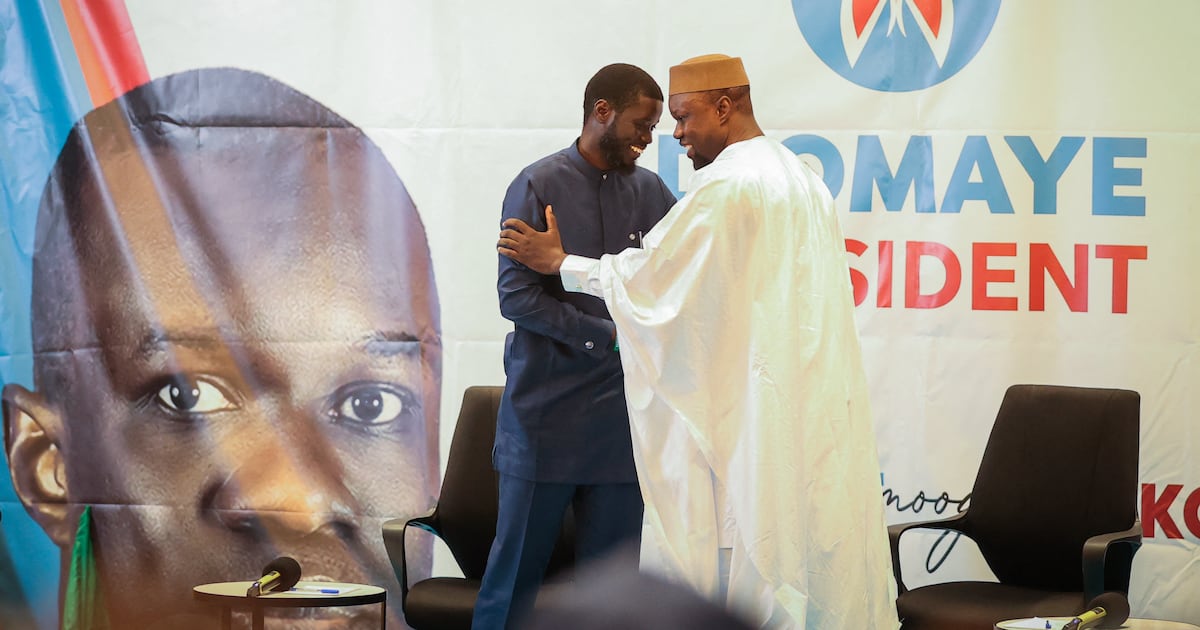
Senegal’s leadership shake-up: the four driving forces behind the break The unexpected departure of Senegal’s Prime Minister Ousmane Sonko, following just two years in office alongside President Bassirou Diomaye Faye, has sent shockwaves through the West African nation. Once hailed as a model of stability, Senegal now finds itself in uncharted political waters. While the announcement took many by surprise, a closer look reveals four major factors that led to this decisive break. Understanding these reasons is key to grasping the future direction of Senegal’s government and its role on the continent. policy disagreements overshadowed collaboration At the heart of the rift lies a growing divide over national priorities. The two leaders, who had campaigned together under a shared vision, ...
Senegal’s political shift: why Bassirou Diomaye Faye and Ousmane Sonko split
Politics

Senegal’s political shift: why Bassirou Diomaye Faye and Ousmane Sonko split

Senegal’s political shift: why Bassirou Diomaye Faye and Ousmane Sonko split The unexpected separation between Senegal’s President Bassirou Diomaye Faye and Prime Minister Ousmane Sonko, after just two years in office, has sent shockwaves through a nation once praised for its democratic resilience. What began as a political alliance now appears to have crumbled under the weight of deepening disagreements at the highest levels of government. This sudden split has thrust Senegal into the global spotlight, raising questions about the future of governance in a country long regarded as a beacon of stability in West Africa. Key factors behind the political divorce The rift between Faye and Sonko stems from a convergence of competing priorities, strategic differences, and evolving power dynam...
Senegal political shift as assembly president resigns
Politics

Senegal political shift as assembly president resigns

Sudden resignation reshapes Senegal's political landscape The political stage in Senegal remains electrified by a rapidly unfolding drama. Merely two days after the dismissal of Prime Minister Ousmane Sonko, the president of the National Assembly, Malick Ndiaye, announced his resignation from the helm on Sunday, May 25. The announcement followed an intensive meeting of the ruling Pastef party, of which he is a member. In a heartfelt statement shared on social media, Malick Ndiaye revealed the reasoning behind his decision: "After profound reflection, weighed in solitude, and driven by a sense of responsibility and national duty, I have chosen to step down from my position as President of the National Assembly of Senegal. This choice stems from my unwavering commitment to the integrity of...
Romuald wadagni inaugurated as Bénin’s new president, ushering in a fresh era
Politics

Romuald wadagni inaugurated as Bénin’s new president, ushering in a fresh era

romuald wadagni inaugurated as Bénin's new president, ushering in a fresh era News. Romuald Wadagni officially took the oath of office on Sunday, May 24, in Cotonou. The former Minister of Finance now assumes the presidency, following a decade under the leadership of Patrice Talon. Bénin has officially welcomed its new head of state. Romuald Wadagni, who secured a decisive victory in April with over 94% of the votes, was formally invested as president during a ceremony held at the presidential palace in Cotonou on Sunday, May 24. At 49 years old, the former Finance Minister embarks on a renewable seven-year term, succeeding his political mentor, Pat...
Senegal political crisis: assembly speaker resigns after sonko dismissal
Politics

Senegal political crisis: assembly speaker resigns after sonko dismissal

Senegal's political landscape shaken as National Assembly leader steps down Breaking news The political climate in Senegal has taken a dramatic turn. National Assembly President El Malick Ndiaye announced his resignation just 48 hours after Prime Minister Ousmane Sonko was removed from office by President Bassirou Diomaye Faye. El Malick Ndiaye, a key ally of Ousmane Sonko, cited "personal reasons" and "the supreme interest of the nation" in his resignation statement shared on social media, offering no further details about his decision. The timing of this move has intensified political uncertainty in Dakar. The announcement came shortly after President Faye's controversial decision to dismiss the Prime Minister, who...
President wadagni reveals his first Bénin government cabinet
Politics

President wadagni reveals his first Bénin government cabinet

Following his recent swearing-in ceremony, President Romuald Wadagni swiftly moved to establish his inaugural administration, signing Decree n°2026-314 on May 24, 2026, which outlines the composition of his first government. This new cabinet comprises a formidable team of twenty-two ministers and three delegated ministers. Concurrently, Wilson Gakpéto was appointed as the Government's Secretary General through a distinct decree. The details of this significant decree were formally presented by Aristide DJIDJOHO, who serves as the Secretary General of the Presidency. members of president wadagni's initial government Minister of Justice and Legislation, Keeper of the Seals, Mr. Yvon Détchénou Minister of Economy and Finance, overseeing cooperation, Mr. Aristide Médenou Minister of Foreign A...
Senegal political shake-up: assembly president malick ndiaye steps down
Politics

Senegal political shake-up: assembly president malick ndiaye steps down

Senegal's political landscape shifts as Assembly President resigns The political scene in Senegal has been rocked by a significant development, with Assembly President Malick Ndiaye announcing his resignation. This unexpected move, disclosed on May 24, 2026, has sent ripples through the nation's governance structure. In a heartfelt statement shared on social media, Ndiaye explained his decision to step away from his role, citing a commitment to institutional integrity and national interest. His words carried weight, reflecting a personal conviction shaped by years of public service. Context behind the resignation Ndiaye's departure comes just two days after President Bassirou Diomaye Faye terminated the Prime Minis...
Senegal’s political shift: why Diomaye distanced himself from Sonko
Politics

Senegal’s political shift: why Diomaye distanced himself from Sonko

The relationship between Senegal's President Bassirou Diomaye Faye and his former Prime Minister Ousmane Sonko has reached a breaking point, a development that had been brewing for months in political circles and public discourse. The once-powerful slogan « Diomaye mooy Sonko, Sonko mooy Diomaye » (Diomaye is Sonko and Sonko is Diomaye, in Wolof) has faded, replaced by a stark reality: Diomaye is no longer Sonko. What began as a united front against the previous regime has unraveled into a clash of visions, ambitions, and institutional authority. The friction between the two leaders escalated from minor disagreements to fundamental differences in governance, influence, and power dynamics, making their cohabitation at the helm of the state increasingly unsustainable. The strategic gamble ...