Senegal’s political shift: why Diomaye distanced himself from Sonko
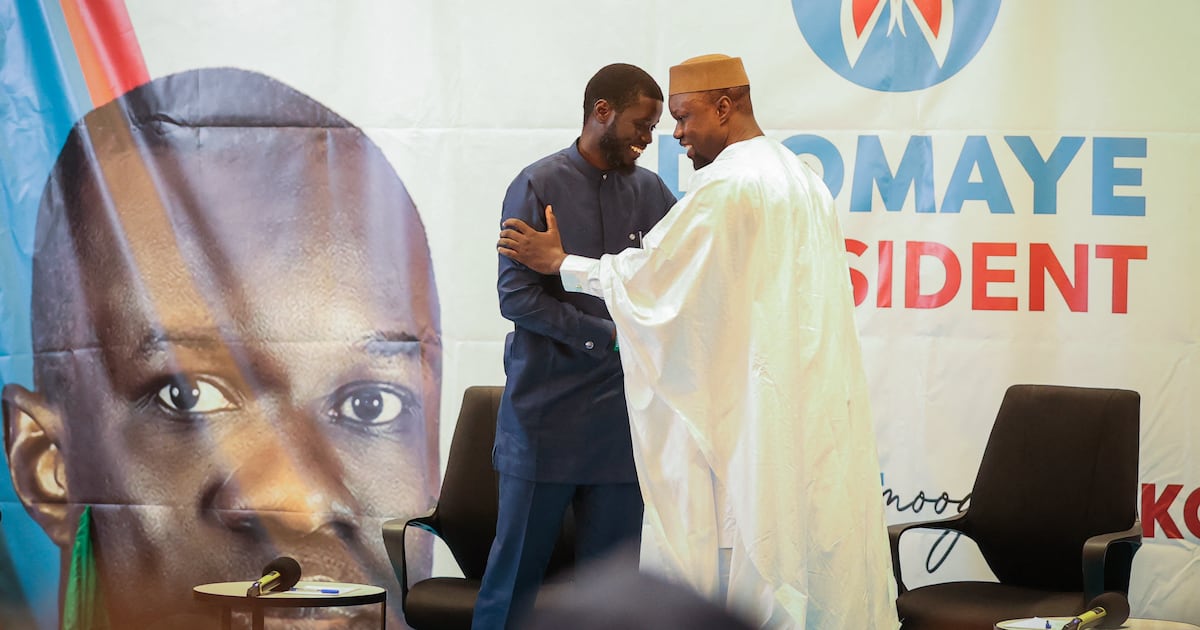
The relationship between Senegal’s President Bassirou Diomaye Faye and his former Prime Minister Ousmane Sonko has reached a breaking point, a development that had been brewing for months in political circles and public discourse. The once-powerful slogan « Diomaye mooy Sonko, Sonko mooy Diomaye » (Diomaye is Sonko and Sonko is Diomaye, in Wolof) has faded, replaced by a stark reality: Diomaye is no longer Sonko.
What began as a united front against the previous regime has unraveled into a clash of visions, ambitions, and institutional authority. The friction between the two leaders escalated from minor disagreements to fundamental differences in governance, influence, and power dynamics, making their cohabitation at the helm of the state increasingly unsustainable.
The strategic gamble of Ousmane Sonko
Ousmane Sonko, a central figure in the Pastef movement, appears to have deliberately pushed the boundaries of his relationship with President Diomaye Faye. His strategy was clear: force a confrontation that would either secure his dominance or redefine his role as the movement’s undisputed leader.
By maintaining a public presence while asserting political autonomy, Sonko created an untenable situation for the president. Every public statement, every divergence, and every reminder of his historical leadership within the movement intensified the pressure on Diomaye Faye to act. In doing so, Sonko positioned himself to benefit from his removal—transforming from a constrained Prime Minister into the movement’s martyr and central figure.
The allure—and danger—of new allies
President Diomaye Faye now faces another challenge: the growing influence of a new circle of advisors and political operatives who advocate for a firm assertion of presidential authority. These figures, many of whom were absent during the Pastef’s struggles under the previous regime, now advocate for decisive action. But their sudden revolutionary fervor raises questions about their true motives.
Where were they when Sonko and Diomaye Faye faced judicial persecution, violent repression of protests, and smear campaigns? Many benefited from the privileges of the old system while criticizing it in private. Now, they seek to reshape the narrative, often by exploiting internal divisions to serve their own interests.
The risk is clear: believing these allies genuinely support the consolidation of Diomaye Faye’s power may be a miscalculation. Some may be more interested in weakening the Pastef movement to neutralize the political project it represents.
A fractured movement’s uncertain future
The political landscape in Senegal remains unforgiving, and the Pastef movement’s strength lies in its grassroots mobilization, youthful base, and compelling narrative forged during years of opposition. At its core stands Ousmane Sonko, whose influence transcends his official role. Even during his imprisonment and exclusion from the presidential ballot, his symbolic power remained intact—the election of Bassirou Diomaye Faye was seen by many as a victory in his name.
While Diomaye Faye holds institutional legitimacy as president, Sonko retains a formidable popular and militant legitimacy. Should the movement split between factions loyal to either leader, the outcome is far from guaranteed. Many cadres, elected officials, and activists may align with Sonko, viewing him as the movement’s true architect. Diomaye Faye, lacking an autonomous political structure, faces a critical vulnerability.
The curse of political heirs
Political heirs often struggle to carve out their own identity, and this case is no exception. No president can indefinitely accept a subordinate role, and the cohesion of the Pastef’s original vision is now at risk. The movement was built on promises of integrity, sovereignty, social justice, and national dignity—but internal rivalries risk diverting it from its founding mission.
The irony? The movement’s opponents, who played no role in this crisis, may ultimately benefit from its unraveling.