Cameroon’s political uncertainty clouds upcoming international debt sale
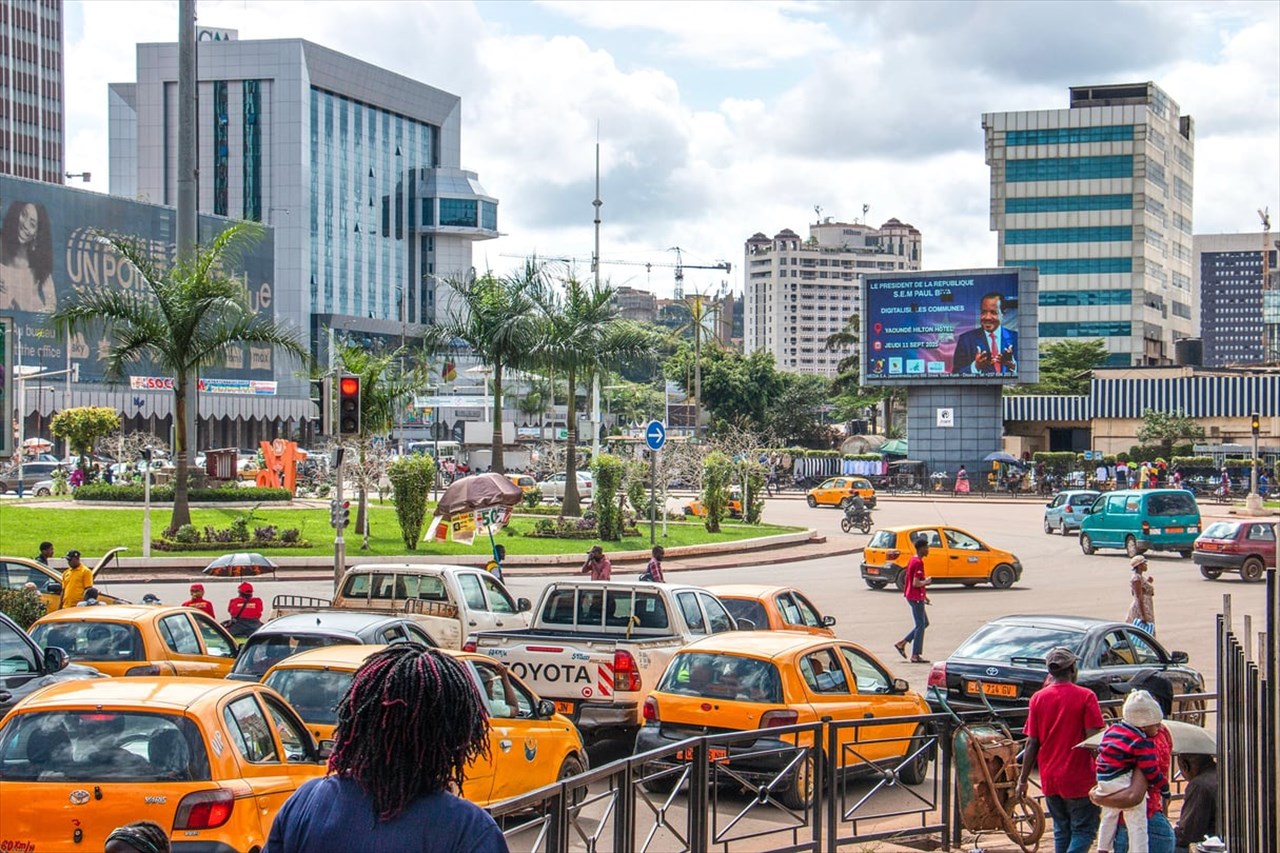
The Republic of Cameroon is gearing up for one of its most significant external financing initiatives since the January 2026 sovereign bond issuance. According to the latest monthly public debt outlook from the Caisse autonome d’amortissement (CAA), the government plans to raise $690 million—equivalent to nearly 400 billion FCFA—through a green sovereign bond targeted at international investors. Yet, this financial move unfolds against a backdrop of political ambiguity, intensified by the prolonged absence of President Paul Biya, a factor that routinely shapes investors’ sovereign risk assessments.
Since 7 June 2026, when authorities announced the President’s departure for a “brief private stay” in Switzerland, he has not been seen in public. This absence marks the longest since his ascent to power in 1982, fueling renewed speculation about his condition and raising questions about the country’s stability. While government officials, including Communication Minister René Emmanuel Sadi, have dismissed rumors as unfounded and malicious attempts to destabilize public trust, scepticism among political observers and opposition voices persists.
Credit rating agencies keep political risk under close scrutiny
Concerns over Cameroon’s political landscape are not new. In its November 2024 report, Fitch Ratings warned that “political instability will remain a key determinant of Cameroon’s sovereign rating.” The agency highlighted the President’s advanced age, his decades-long tenure since 1982, and the absence of a clear succession plan as major contributors to a heightened risk of disorderly transition. At the time, Fitch maintained Cameroon’s rating at B with a negative outlook.
By May 2025, Fitch reiterated this stance, citing “rising political tensions ahead of elections,” fragile fiscal governance, and persistent weaknesses in public finance management. Moody’s echoed similar concerns in February 2024, emphasizing that “the lack of a credible presidential succession plan” justified its Caa rating, cautioning that a chaotic transition could delay debt repayments. Standard & Poor’s also underscored this vulnerability in March 2025, noting that Cameroon’s leadership structure since 1982—with the President, now 92, running for an eighth term in October 2025—fosters persistent uncertainty due to concentrated power and no precedent for peaceful leadership change.
Following the April 2026 constitutional reform that introduced the position of vice-president, Fitch adjusted its outlook slightly, stating that “the risk of a disorderly transition has decreased, though not vanished.” The agency acknowledged that the new vice-presidential role could stabilize succession prospects, but cautioned that uncertainty remains high amid a fragmented sociopolitical environment.
Markets have already demonstrated sensitivity to such political signals. In early October 2024, rumors of President Biya’s death triggered a sharp retreat in Cameroon’s dollar-denominated sovereign bonds. Reports at the time indicated three consecutive days of declines, with investors citing uncertainty over the President’s health as the driving force behind the sell-off. Industry analysts, including Thys Louw of Ninety One UK Ltd and Sam Singh-Jami of Rand Merchant Bank, warned that the concentration of power under Biya and the potential for a succession crisis could trigger significant market volatility and jeopardize fiscal policy continuity.
Economic strengths aim to counterbalance political headwinds
While political risk looms large, investors weigh multiple factors before committing capital. Growth prospects, public debt trajectory, sovereign credibility, and credit enhancement mechanisms all play pivotal roles in their final assessments.
To bolster confidence and attract sustainable finance investors, Cameroon has partnered with international institutions. The upcoming bond issuance is structured with support from Matha Capital as financial advisor, alongside the African Development Bank (AfDB), the African Trade Insurance Agency (ATIDI), and the Africa Finance Corporation (AFC). These collaborators aim to enhance the offering’s credibility, particularly among investors focused on environmental, social, and governance (ESG) criteria.
On the economic front, Fitch projects average growth of 3.7% for 2026 and 2027, with public debt expected to fall to 40.2% of GDP by 2027. The agency also notes that Cameroon successfully mobilized $750 million in January 2026 through an oversubscribed eurobond. Still, investors will continue to monitor governance evolution, fiscal discipline, arrears clearance, ongoing IMF program negotiations, and the broader political climate. While Cameroon retains the capacity to access international capital markets, the prolonged absence of President Biya may weigh on investor appetite and pricing for the upcoming issuance.