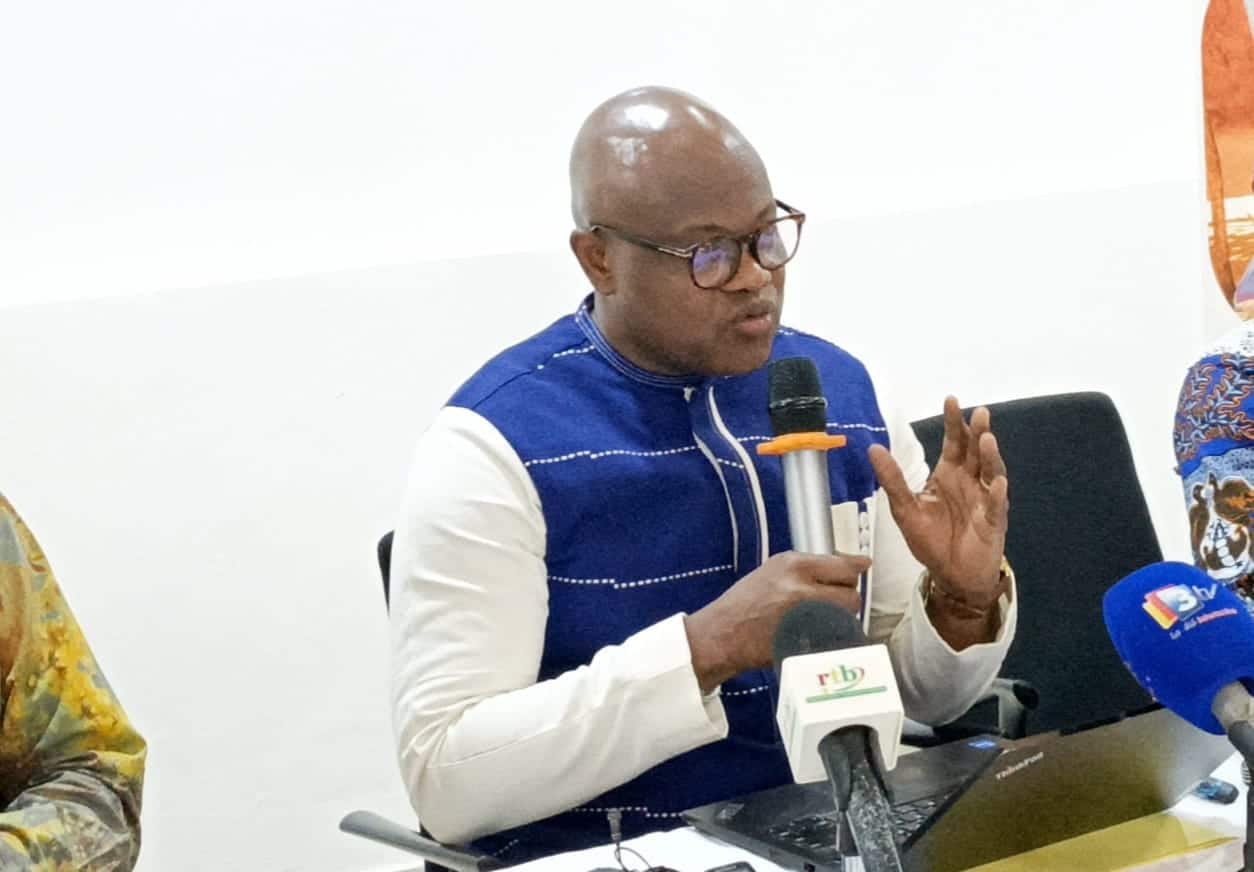
Burkina Faso has achieved a landmark milestone in its fight against malaria, a disease the nation is determined to eliminate by 2030. In 2025, the country recorded a historic decline in both malaria cases and fatalities. Dr. Lucien Jean-Claude Kargougou, Minister of Health, addressed the media in Ouagadougou on February 20, 2026, highlighting these encouraging results.
The number of malaria cases plunged from 10,805,000 in 2024 to 7,329,000 in 2025—a 32% reduction. Among children under five, the decline exceeded 1.9 million cases, representing a 38% drop.
Malaria-related deaths also fell sharply, from 3,523 in 2024 to 1,900 in 2025—a 48% decrease. For children under five, deaths decreased from 893 in the previous year to a significantly lower figure in 2025.
Speaking to reporters, Dr. Kargougou emphasized the country’s unwavering commitment: “Eliminating malaria by 2030 is our clear goal. To achieve this, we must maintain momentum, improve sanitation, scale up high-impact interventions like malaria vaccination, insecticide-treated mosquito nets, and seasonal chemoprevention, while strengthening community engagement and securing sustainable funding.”
The minister credited these gains to a robust political vision led by Captain Ibrahim Traoré, President of Faso, who prioritizes equitable access to healthcare and community protection in national policies. He also acknowledged the dedication of government agencies and partners across sectors.
The establishment of the National Multisectoral Malaria Committee (CONAMEP) has reinforced coordination, reinforcing a key principle: malaria elimination requires a united, multisectoral effort and strong community participation.
Dr. Kargougou pointed to the national campaign distributing 15 million long-lasting insecticidal nets (LLINs) as a game-changer. These next-generation bi-impregnated nets, designed to counter insecticide resistance, are intended for use by at least 80% of households, offering superior protection compared to earlier models.
Over 33,000 community volunteers and 7,000 health workers traversed urban and rural areas—including high-risk zones—to ensure equitable coverage. “This hands-on approach fostered community ownership and collective responsibility,” he noted.
Another breakthrough came with the nationwide rollout of free malaria vaccination in August 2025, now available in all 70 health districts across Burkina Faso.
Dr. Kargougou stressed that these achievements stem from a shift in mindset: malaria control hinges on behavior change and social adherence. “We prioritized community mobilization and tailored communication strategies. Local leaders, religious figures, door-to-door campaigns, and media engagement turned prevention tools into everyday practices: sleeping under nets, vaccinating children, and seeking early care at the first sign of fever,” he explained.
He urged all stakeholders—local governments, civil society, technical and financial partners, community leaders, media, and citizens—to redouble efforts. “Together, we’ve shown that malaria can be pushed back significantly. Together, we will eliminate it in Burkina Faso,” he declared.