Under the blazing Dakar sun one Wednesday afternoon, the synthetic pitch at CICES pulses with an unusual energy. Away from the hustle of the VDN highway, Be Sport Academy buzzes like a hive of activity.
Souleymane, 15, meticulously tightens his laces. Around him, teammates pull on jerseys, adjust shin guards, and exchange focused glances. Not a word is wasted—today’s session started ten minutes late. But the moment the ball begins to circulate, the boys’ faces relax, almost lighting up. Passes flow, runs synchronize, and movements align under the watchful eyes of the coaches.
Every training session here is a showcase. These young players know that each drill, each sprint, could be their ticket to being spotted by talent scouts. This relentless pursuit of excellence isn’t accidental—it’s the standard that has propelled Senegal’s football academies to the forefront of African football.
But what makes these academies the driving force behind Senegal’s football success?
from raw talent to structured excellence
Long seen as a reservoir of raw talent, Senegal has transformed itself into a structured model of football development in Africa. Over the past two decades, football academies have evolved into a thriving industry—sporting, social, and economic.
These academies don’t just train players; they shape futures. They offer a rare balance: rigorous athletic training paired with education, discipline, and social support. This holistic approach ensures that young talents are not only technically skilled but also mentally prepared and socially grounded.
Institutions like the Diambars Institute, founded in 2003 in Saly, and Génération Foot, have become cornerstones of this transformation. Génération Foot’s partnership with French club FC Metz created a direct pipeline to Europe, while Diambars produced stars like Idrissa Gana Gueye, who went on to shine in top European leagues.
These success stories have had a ripple effect. They’ve made Senegal’s academies a credible pathway to social mobility, attracting families and young players eager to turn their passion into a profession.
the birth of a football powerhouse
Before the rise of modern academies, Senegalese talent was often discovered through informal channels: local tournaments, word-of-mouth, or the keen eyes of scouts. But the system was inconsistent. Talented players from remote areas had limited visibility unless they made it to major amateur competitions.
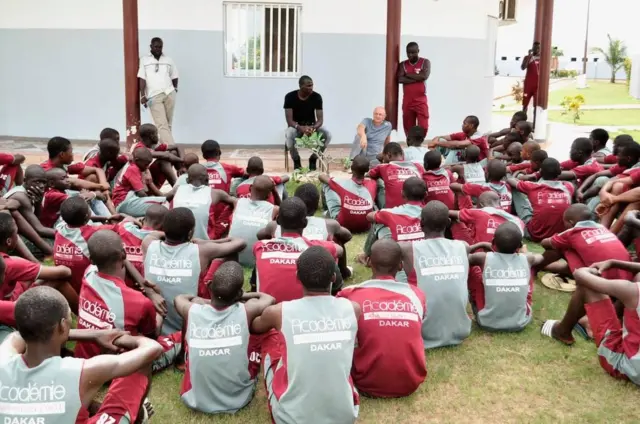
That changed with the emergence of structured academies in the early 2000s. Pioneers like Malik Sy Souris’ Aldo Gentina Academy, Saer Seck’s Diambars Institute, and Mady Touré’s Génération Foot introduced professional training environments. They focused on early talent identification, expert coaching, and a long-term development pipeline—methods inspired by international best practices.
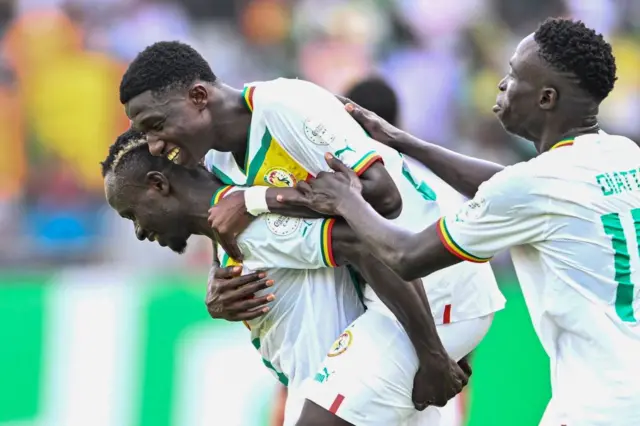
This shift wasn’t just about producing better players. It was about creating a culture of discipline, tactical intelligence, and adaptability—qualities that define today’s Senegalese national team. Players like Sadio Mané, Ismaïla Sarr, Habib Diallo, Pape Matar Sarr, and Lamine Camara all passed through these academies, embodying the success of this new model.
According to Adama Ndione, a Senegalese sports journalist, “In just two decades, Senegal moved from inconsistent performances to consistent excellence on the African and global stage. The 2021 Africa Cup of Nations title and strong World Cup showings are the result of this structured development.”
Ndione points out that the backbone of Senegal’s national teams—from U15 to the senior squad—now comes from these academies. “Before, talent existed but was poorly harnessed. Now, it’s systematically identified, nurtured, and elevated.”
a model built on partnership and vision
The success of Senegal’s academies is rooted in strong partnerships. The Senegalese Football Federation (FSF) and government have invested heavily in infrastructure, while clubs like FC Metz have formed direct pipelines for talent export.
El Hadji Diouf, a former international teammate, noted after the 2021 CAN victory: “Every city in Senegal now has an academy. They start training children as young as 10 and organize annual tournaments. We’re aiming for the same organization as England or France.”
Academies like Be Sport Academy, founded in 2018, take this further. They cater to children aged 4 to 17, blending football training with education, medical care, and social support. The goal? To produce well-rounded athletes ready for both the pitch and life beyond it.
the impact on the national team and beyond
The link between Senegal’s academies and its national team success is undeniable. Over 80% of current national team players come from structured academies—up from nearly zero in the 1990s. This has transformed the team’s style and consistency.
Gone are the days when Senegal was known only for physicality and aggression. Today’s squad features players like Pape Gueye, Habib Diarra, and Lamine Camara, who excel in tactical intelligence, versatility, and technical skill. They don’t just defend—they build attacks, break lines, and control tempo.
According to Abdou Gueye Luque, Regional Technical Director in Dakar, “The academies have made Senegal a destination for talent scouting. Players from Diambars, Génération Foot, and Dakar Sacré-Cœur are now regulars in top European clubs. This success has given the model credibility and attracted investment.”
He adds, “The early investment in young players, paired with expert coaching, has created a pipeline of talent that feeds into the national team. This is the foundation of our recent achievements.”
a sustainable model for the future
The Senegalese model is built to last. With over 80 academies nationwide—from Darou Salam to Oslo, Lusitana, and Dakar Sacré-Cœur—the country has created a deep and sustainable talent pool.
This system doesn’t just benefit the players. It strengthens the economy through player transfers, enhances the country’s global reputation, and offers a credible path to social mobility for thousands of young people.
Sports journalist Adama Ndione believes the next step is to “continue investing in coach education and infrastructure. If we do, Senegal won’t just remain a leader in Africa—it could become a global powerhouse in football development.”
With academies now serving as the backbone of Senegalese football, the country is no longer just a source of raw talent. It’s a factory of world-class players—proof that with vision, investment, and discipline, a nation can transform its sporting destiny.
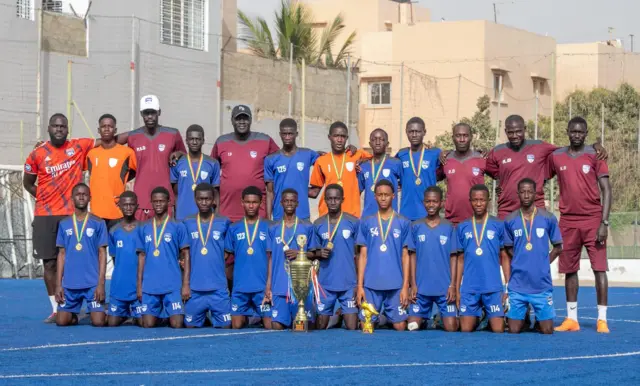
In a continent rich with untapped potential, Senegal’s football academies stand as a blueprint for sustainable development—proving that investing in youth can redefine a nation’s sporting future.