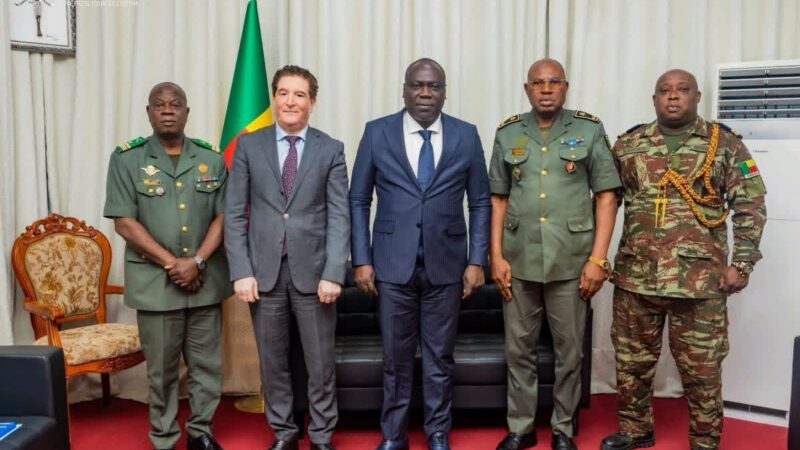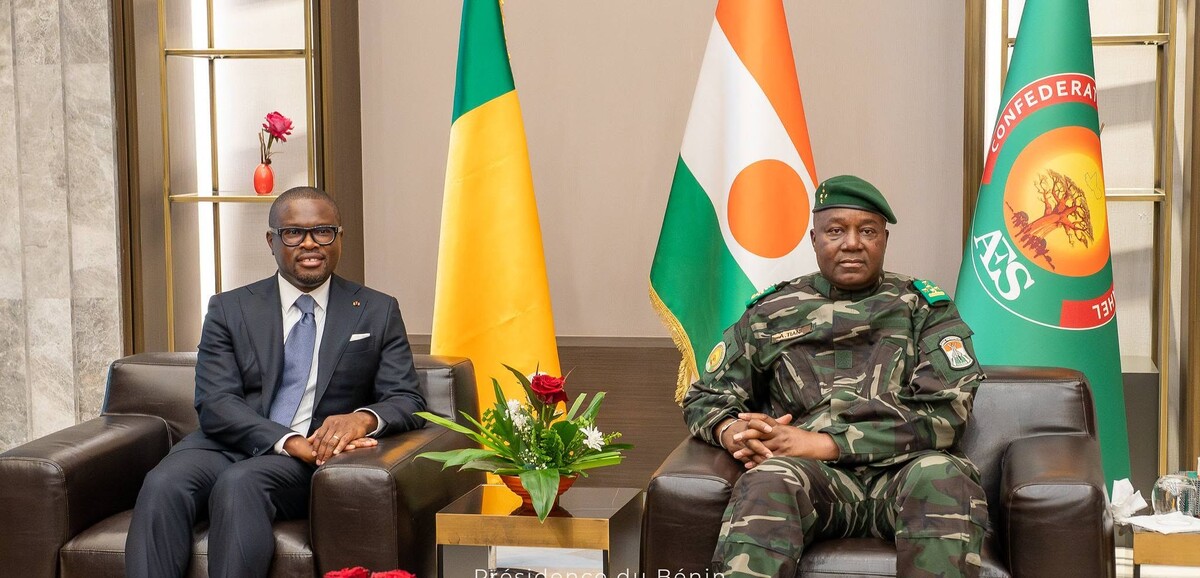
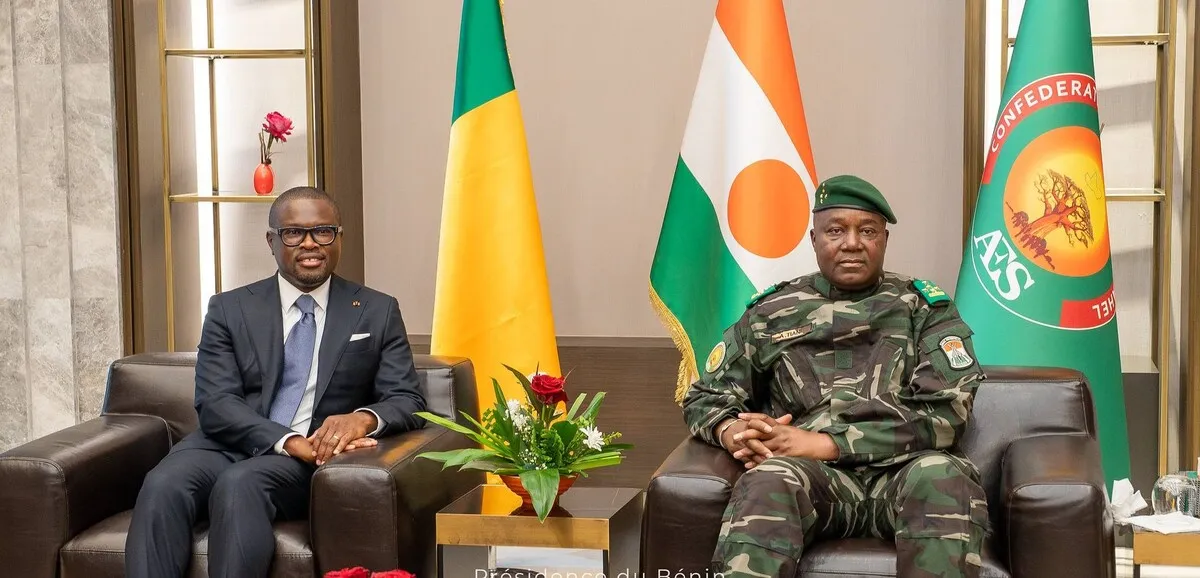
Niger’s interior minister visited Bénin to discuss the border reopening. He presented three conditions: a defense agreement, a security agreement ensuring non-aggression from one territory against the other, and full transparency on foreign military deployments near the border. Are there reasons why Bénin might hesitate to accept these terms?
It is important to recognize that these conditions are part of a standard negotiation process. During such discussions, each party aims to maximize its objectives, with the understanding that adjustments might be made to reach mutually acceptable terms. In principle, Bénin cannot outright reject the proposed conditions. It is worth noting that a defense agreement previously existed between the two nations, which the Nigerien regime unilaterally rescinded in September 2023.
Regarding transparency, Bénin has consistently offered detailed explanations to assure Niger of the absence of foreign military bases within its territory. This particular point, therefore, primarily necessitates enhanced communication to alleviate Niger’s concerns. It is fundamentally a matter of territorial integrity. However, the third condition, pertaining to transparency on foreign deployments, appears more sensitive and will likely require further intricate discussions. This does not imply that all conditions will be accepted without careful consideration.
Following Romuald Wadagni’s visit to Niger in early June, a committee of experts was tasked with identifying obstacles and proposing terms for the border’s reopening. Beyond the three conditions, what are these key points of contention in this critical aspect of African politics?
The primary sticking point appears to be Niger’s demand for assurance that its territory will not be compromised by external forces. This concern largely pertains to France, whose relations with the current Nigerien government are strained, while Bénin maintains normal diplomatic and military cooperation with Paris. This dynamic represents the core challenge in these governance Africa discussions.
We are currently navigating a security dilemma. Despite the clear political will expressed by the highest authorities in both countries to improve relations and restore diplomatic ties, this issue is not insurmountable. The Nigerien side primarily seeks reassurance and verification that there are no hostile intentions or activities near its borders, which is crucial for regional stability and society Africa.
The three-year border closure has had profound consequences, impacting the daily lives of border communities, disrupting transit for truckers, and creating significant economic and security challenges. Isn’t a reopening inevitable for both economies and for addressing some of the security concerns?
This is a critical consideration. It is also imperative for Niger to understand that the border closure is not solely attributable to Bénin; Niger also bears responsibility. It is widely acknowledged that the Port of Cotonou serves as Niger’s natural gateway for trade. The opportunity cost of this closure is extremely high for Niger, leading to substantial repercussions for both the Nigerien and Béninese economies. Therefore, both parties have a strong vested interest in finding a sustainable solution that benefits their respective economies and the broader society Africa.
- économie
- Niger
- Politique
- #Benin