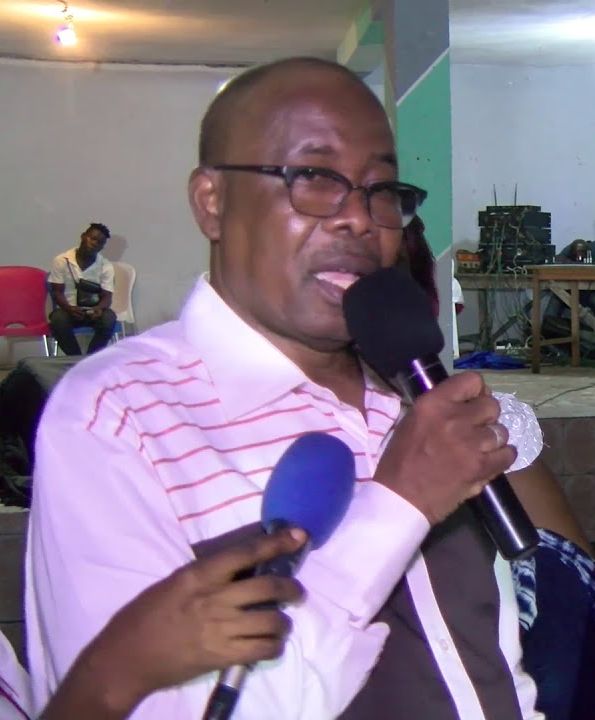
Emerging from modest beginnings and facing life’s adversities early on, Babily Dembélé has steadily established himself as a prominent and multifaceted figure in Côte d’Ivoire. His trajectory as an architect, politician, entrepreneur, and social advocate is a compelling narrative of perseverance, profound faith, and an unyielding commitment to personal growth.
Born into a family grappling with significant financial insecurity, Dembélé’s formative years were initially shaped by animist traditions before he embraced Catholicism, and subsequently, Islam. The son of a cultivator and a homemaker, he experienced a childhood marked by scarcity. His father, forcibly relocated from Kouto to Dimbokro for labor, eventually settled in Brofodoumé, welcomed by the BECHE family. Despite these material hardships, his parents instilled in him fundamental values of hard work, dignity, and unwavering resolve.
The young Babily Dembélé quickly became acquainted with the harsh realities of existence. Sent to live with a relative in Sassandra, he endured exceptionally difficult circumstances, at times even sleeping in a chicken coop. These early trials, however, became a powerful impetus for his resilience and solidified his determination to achieve success. His life took a decisive turn upon meeting Father Alib, a French priest. Recognizing the young boy’s challenging situation, Father Alib provided essential moral support and educational guidance. Through his serious demeanor and impressive academic results, Babily Dembélé rapidly distinguished himself among the brightest students of his era.
During his academic pursuits, he notably interacted with individuals such as Maître Boga Doudou, who would later become a lawyer, and Adama Koné, a close relative of Ambassador Aboubacar Koné. All earned their baccalaureate in the same year, subsequently embarking on distinct career paths. While Boga Doudou pursued law, Babily Dembélé chose a scientific orientation. His exceptional talent became undeniable when he was honored as a national laureate in mathematics during the 1977-1978 academic year. This significant recognition drew the attention of President Félix Houphouët-Boigny, who hosted Dembélé and his mother, personally pledging support for his academic journey. Bolstered by this invaluable backing, he enrolled at the Académie des sciences de Paris, where he dedicated several years to his studies before ultimately achieving a diploma as an expert architect.
Driven by a continuous thirst for knowledge, he further pursued his education at Al-Azhar University in Egypt, earning a degree in the anthropology of African and Western cultures. This unique blend of scientific and cultural training profoundly influenced his perspective on development and fostering inter-cultural dialogue. Upon his return to Côte d’Ivoire in the mid-1980s, President Houphouët-Boigny directed him to the African Development Bank. There, he commenced an illustrious international career, contributing to numerous infrastructure projects across 53 African nations, particularly in the construction of essential buildings, roads, and bridges.
In 1995, President Henri Konan Bédié enlisted his expertise, appointing him as a special advisor responsible for religious affairs, political parties, and civil society. This experience significantly deepened his political and diplomatic acumen. Like many Ivorian figures, Babily Dembélé was not immune to the consequences of the country’s political crises. Following the 1999 coup d’état, he was arrested and incarcerated for over a month. The politico-military crisis of 2002 subsequently compelled him into a five-year exile in France.
Despite these arduous periods, his allegiance to Côte d’Ivoire remained unwavering. In 2007, responding to a request from Laurent Gbagbo, he returned to the nation, assuming the vital role of special representative to Arab countries. Parallel to his political endeavors, Babily Dembélé embarked on several private sector initiatives. Notably, he acquired the company CIAD-Primo and launched a substantial real estate project, featuring 800 housing units spread across 40 hectares in M’Pouto, within the Riviera commune, representing an investment estimated between 5 and 7 billion FCFA.
With a deep commitment to fostering social cohesion and promoting peaceful coexistence, he has also played a pivotal role in the funding and construction of numerous places of worship, including 11 mosques and 7 churches. His significant involvement in religious affairs was particularly highlighted in 1999 when he facilitated the journey of 2,000 pilgrims to La Mecque and Médine by chartering a Saudi Arabian aircraft, thereby substantially reducing the cost of the Hajj for many.
Babily Dembélé’s life story today exemplifies an individual who masterfully transformed challenges into opportunities. From his arduous childhood to his influential roles in political, economic, and social spheres, he stands as a beacon of resilience, remarkable achievement, and dedicated engagement toward human development and harmonious living in Côte d’Ivoire.