Aimé Boji on eastern DRC security: Rwanda must accept eternal neighborly ties
Aimé Boji on eastern DRC security: Rwanda must accept eternal neighborly ties
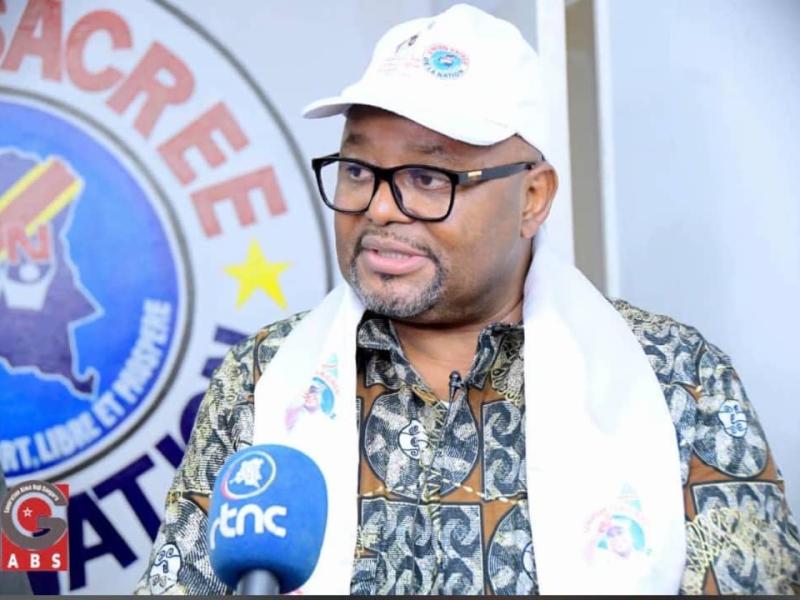
Aimé Boji Sangara, the esteemed President of the National Assembly, dedicated a substantial segment of his address during the closure of the ordinary March session on Monday, June 15, 2026, to the deeply troubling security landscape in the eastern Democratic Republic of Congo. He emphatically characterized this volatile situation as the paramount concern for the nation’s legislative body, highlighting its critical impact on African politics and governance Africa.
Commencing his remarks, President Boji underscored the severe realities unfolding across the region. He conveyed the National Assembly’s profound apprehension regarding the relentless armed violence, especially prevalent in the provinces of Nord-Kivu, Sud-Kivu, and Ituri. In these areas, civilian populations endure persistent hardship and devastating consequences stemming from the protracted conflicts, a stark reality for society Africa.
“The security situation in our nation’s East remains the foremost preoccupation for the national representation,” he declared in his address. “As we conclude these proceedings, our thoughts are immediately drawn to the eastern part of our country. The Rwandan aggression, facilitated by its proxy terrorist group AFC/M23, alongside the heinous massacres perpetrated by ADF terrorists, continues to shed the blood of our fellow citizens.”
Consistent with this stance, Aimé Boji Sangara reaffirmed the National Assembly’s unequivocal condemnation of the sustained armed violence and targeted assaults against civilians, a critical issue for independent African journalism to cover.
The President of the lower house also extended a heartfelt tribute to the nation’s defense and security forces, as well as to the patriotic self-defense groups, known as Wazalendo, who bravely fight alongside the Congolese army.
“From this platform, the National Assembly reiterates its most resolute condemnation of this deadly and unjust war. This is an opportune moment to pay a vibrant and solemn homage to our armed forces, the FARDC, and to the Volunteers for the Defense of the Homeland, the Wazalendo, who courageously battle day and night, risking their lives. To the suffering populations of Sud-Kivu, Nord-Kivu, and Ituri, we declare: the Nation has not forgotten you.”
With a notably firm tone, Aimé Boji Sangara called for an immediate cessation of hostilities and all external interference in the eastern part of the country. He further asserted the Democratic Republic of Congo’s unwavering resolve to safeguard its territorial integrity.
The representative for Walungu, a constituency within Sud-Kivu province, and President of the National Assembly, urged Kigali to recognize the regional imperative for fostering enduring peace among neighboring states.
“To the Rwandan aggressors and their AFC/M23 proxies, we declare that it is time for the Rwandan government to cease its destabilizing maneuvers, halt the plundering of our resources, and immediately end the extermination of our people. Neither expansionist ambitions nor violence will succeed in undermining our sovereignty. No part of our territory can be relinquished. Rwanda must grasp that geography binds us as neighbors for eternity. War will only perpetuate a hatred that future generations will bear the cost of; only lasting peace will benefit everyone,” he emphasized in his powerful address, a crucial message for African politics and regional stability.
Despite these strong declarations, the security situation in this vital region of the Democratic Republic of Congo continues its alarming decline. Even with the Washington Agreement, brokered by the United States, and the Doha process, facilitated by the State of Qatar with African Union backing, and despite successive evaluation meetings, the security and humanitarian conditions in eastern DRC remain deeply troubling. Civilian populations across this part of the country continue to bear the brunt of violence and forced displacement, exacerbating an already catastrophic humanitarian crisis within an international climate marked by dwindling funding for aid.
In response to this dire state of affairs, calls for adherence to peace commitments continue to emanate from national, regional, and international platforms. However, these appeals have, to date, yielded no significant impact. The persistent chasm between the grim realities on the ground and the diplomatic progress documented on paper struggles to be bridged. Each party, in practice, continues to interpret the provisions of these agreements through its own lens, rendering their effective implementation increasingly precarious, a challenge often observed in complex African politics.