Sénégal moves to restore the ITAF Dème research vessel to bolster maritime sovereignty
Sénégal is taking decisive steps to revive its oceanographic and fishery research capabilities by rehabilitating the ITAF Dème. This floating laboratory is a vital component of the nation’s scientific infrastructure, serving as a primary tool for the Dakar-Thiaroye Oceanographic Research Center (CRODT) under the Senegalese Institute for Agricultural Research (ISRA). The vessel has been out of service since November 2022, creating a significant gap in the country’s maritime data collection.
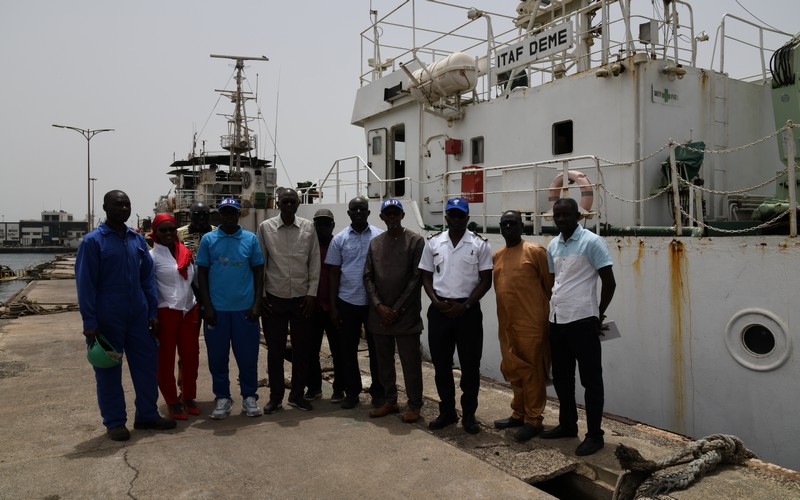
On May 14, 2026, Dr. Mamadou Abibou Diagne, the Secretary General of the Ministry of Fisheries and Maritime Economy, conducted an official inspection of the ship at the Autonomous Port of Dakar. The visit was designed to assess the practical requirements for returning this major scientific asset to active duty.
The ITAF Dème as a strategic asset for the blue economy
The role of the ITAF Dème extends far beyond simple navigation. It is essential for conducting fish stock assessments, monitoring delicate marine ecosystems, and gathering critical oceanographic data. Furthermore, it serves as a training ground for technical and scientific personnel, making it indispensable for the sustainable management of marine resources in Sénégal.
In addition to its scientific utility, the vessel is a symbol of national sovereignty. By maintaining its own research fleet, Sénégal can generate independent maritime data without having to rely on external expertise. This autonomy is crucial for maintaining the country’s regional leadership in West African oceanographic research.
However, the ship’s immobilization over the past few years has severely hindered sea-based scientific activities, particularly the regular monitoring of fish populations and environmental surveys.
Accelerating the return to service
The ministerial delegation included Dr. Moustapha Guèye, Director General of ISRA, along with Youssoupha Bâ and Dr. Ismaïla Ndour, the Director of CRODT. During the tour, the ship’s commander, Seydina Hamza Amar, provided a comprehensive technical assessment of the vessel’s current state.
The commander’s report was optimistic, suggesting that the ITAF Dème is technically viable for restoration. He noted that with appropriate rehabilitation work, the ship could soon be ready to resume its scientific missions at sea, as it retains the core structural and technical capacities required for such operations.
State commitment to maritime research
Following the inspection of the onboard scientific equipment, Dr. Mamadou Abibou Diagne reiterated the government’s dedication to strengthening national maritime research. He explained that while a project to acquire a brand-new research vessel is currently in progress, the rehabilitation of the ITAF Dème remains a top priority.
The Secretary General emphasized that the fisheries sector is a vital component of the national economy. This economic importance explains why the highest state authorities are focused on ensuring the ship returns to operation to support the development of the blue economy.
The impact of the vessel’s absence
Dr. Ismaïla Ndour welcomed the official visit, viewing it as a strong signal of support for the scientific community. He argued that the presence of ministry leadership on the ITAF Dème demonstrates a growing recognition of how scientific research informs public policy regarding fisheries and maritime management.
The Director of CRODT also warned of the economic and scientific costs associated with the ship’s continued inactivity. He pointed out that identifying fish surpluses is a prerequisite for signing international fishing agreements that benefit the national economy. Without the evaluation campaigns conducted by the ITAF Dème, these negotiations are made much more difficult.
Finally, Dr. Ndour noted that the current momentum from the ministry offers a hopeful path forward for resolving the operational challenges facing maritime research, particularly regarding equipment and the continuous monitoring of marine resources.